• Skip to primary navigation
  • Skip to main content
  • Skip to primary sidebar
  • Skip to footer
  • Home
  • DIS blog
  • Definition of terms – DHS
  • Birthright Citizenship
  • Contact us

Immigration Politics Georgia

looking for a better life • news and pro-enforcement opinion

  • Illegal Alien Lobby
  • georgiafornia
  • SPLC
  • report illegal aliens/illegal employers
  • Fast Facts from the original DIS blog

Search Results for: school choice

HB 999 & HB 60 from Rep Wes Cantrell and the Cato Institute (via the Federation for Children) are as dead as Pancho Villa

February 23, 2022 By D.A. King

March 18, 2022. These bills are officially dead.

Update: Feb 25: Hold the Happy Dance.

In two days, radio talker and part time conservative Erick Erickson has flipped from condemning the Federation for Children for sending the below mentioned flyer attacking Republicans who opposed the “school choice” HB 999 to doing exactly that himself. He is now urging voters to call Reps to revive the bill that does not actually exclude illegal alien students or illegal aliens parents from participating in the $6 k a yr K-12 scholarship. Neither is he telling listeners that it was the Cato-tied Federation for Children who supplied the model language for Cantrell’s bills.


Happy Dance here!

With special “thanks for the help!”” to Christy Riggins and Cory DeAngelis

More tomorrow. But HB 999 is dead and so is HB 60. To see our educational work on these bills use the search box and bill numbers on this website. An even more extensive list of groups that lobbied for these bills and cosponsors coming soon as well.

Related: More on Rep Wes Cantrell’s HB 60 & HB 999 – his secret verification system will not work

______

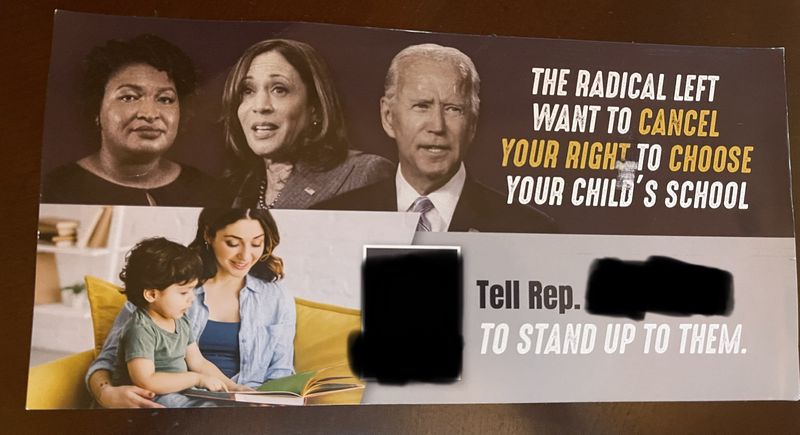
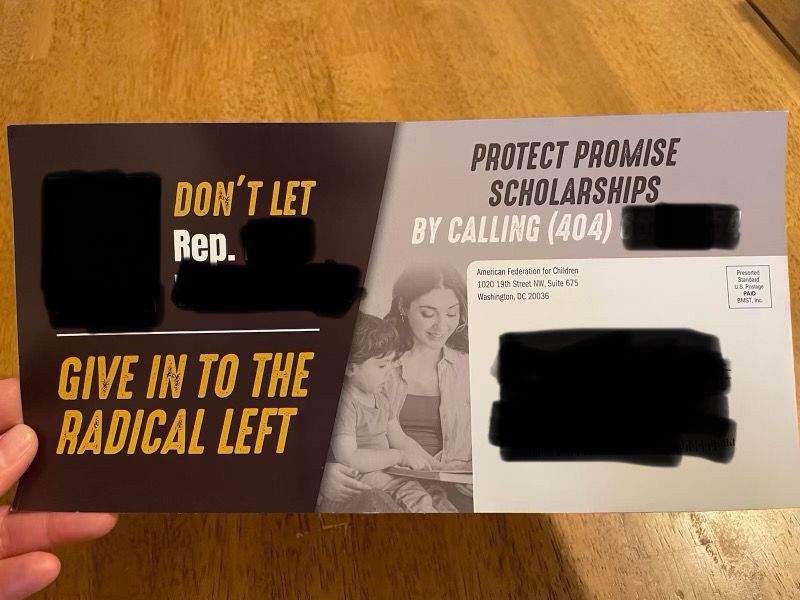
An “educational” lobbying group killed their own legislation through direct mail, according to the AJC.

“A national advocacy group promoting school vouchers bombarded conservative Georgia voters with glossy mailers tying their Republican state legislator to Stacey Abrams and other “radical left” figures. It backfired in spectacular fashion.

Just days after the American Federation for Children financed the mailers in about 16 Republican-controlled legislative districts, House Speaker David Ralston told The Atlanta Journal-Constitution that the voucher proposal the group sought to pass is dead for the year.”
 

Filed Under: Recent Posts Achrives

Who lobbies for Rep Wes Cantrell’s “Americans last” HB 999 & HB 932 (and HB 120 from Rep Kasey Carpenter)? Connecting the dots *Updated

February 10, 2022 By D.A. King

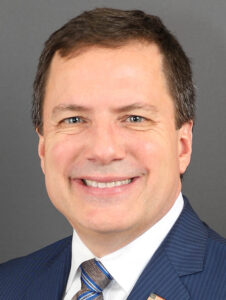
Rep Wes Cantrell, Republican, Woodstock

If you don’t hit the links, you will not learn much.

Correction made on bill numbers in the copy below and the headline: 7:40 PM, Feb 10. My fault. I apologize for the typos.

Note to all concerned: The model language for HB 60 & HB 999 came from the Federation for Children. The flyers attacking Republicans who didn’t immediately swoon and support the bills came from…the Federation for Children.

More info on HB 932 here & HB 999 here , here and here.

Info on HB 120 here.

Related: A Breitbart news report on the entire train wreck: Georgia Republicans draft legal giveaways to illegals.

Mark Zuckerburg’s FWD.us is lobbying for Rep Wes Cantrell’s “Americans Last” (HB 932 here.)

It may help people to “get it” if they realize that the corporate-funded FWD.us lobbyist under the Gold Dome lobbying against immigration enforcement is an illegal alien.

Former Gwinnett Republican state Rep Buzz Brockway at the Georgia Center for Opportunity is pushing hard for HB 999. So is state Rep Chuck Eftrastion (R). See also Erick Erickson.

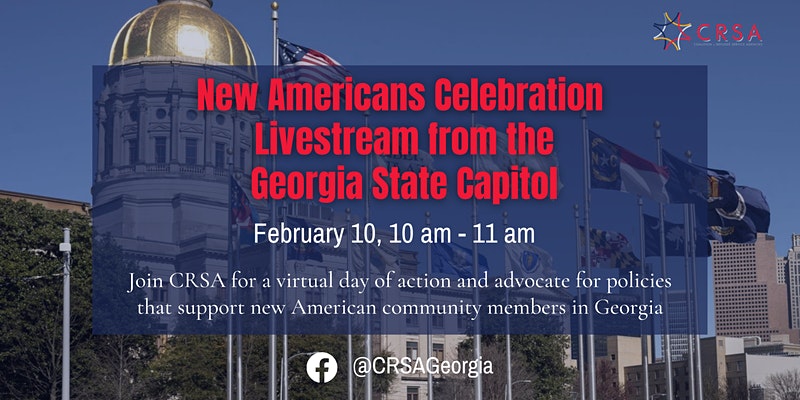
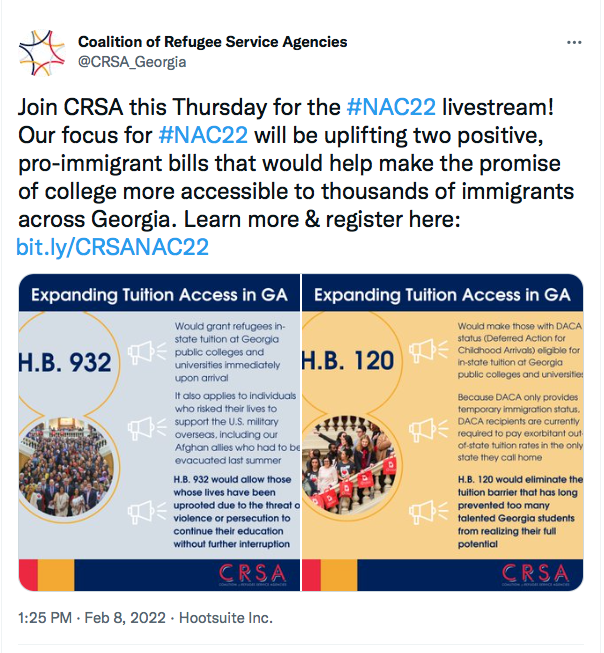
The Coalition of Refugee Services (CRSA) put on a large lobbying event in the Georgia Capitol today for HB 932 & HB 120. It was also available online. CRSA is part of the “BIG” partnership and works closely with the Georgia Chamber of Commerce.*

Info on the CRSA (part of the refugee resettlement industry) Capitol lobbying event for Rep Wes Cantrell’s HB 932 & Kasey Carpenter’s HB 120. (click on “view details” on top)

HB 932 is a product of a special House committee chaired by Rep Wes Cantrell

A “Progressive” woman named Darlene C. Lynch works for both CRSA and the “BIG Partnership” and organized and ran the Georgia House Special Committee “Innovative ways to Maximize Global Talent” that saw three 2021 Summer and Fall meetings – with two in Georgia’s public colleges. HB 932 is a product of those committee hearings. The special committee was created by a resolution that passed unanimously in the House at the end of the 2021 session. Rep Wes Cantrell was the sponsor of the resolution (be sure to see all cosponsors) and served as the chairman of the agenda-driven committee that took zero pubic comment and arranged the witnesses.

*Updated, 5:25: PM Some of the agenda items from the hand-picked, pre-screened witnesses at the special committee mentioned above:


  • Changing state law so as to allow foreigners to be law enforcement officers in Georgia
  • Reciprocal agreements on occupational licensing rules with other states and foreign nations.
  • “Relaxing” state law that requires immigration verification of applicants for occupational and professional licensing.
  • Lower tuition rates in public colleges for illegal aliens living in Georgia with DACA  status than the rate Americans and legal immigrants fro other states pay.
  • Removing the existing 12 month residency waiting period before new Georgia residents can access instate tuition in public colleges for refugees – but not for Americans moving here from other states.
  • Reducing the educational period to become a medical doctor by two years, student loan forgiveness for foreign medical students and “relaxing the immigration issues for foreign medical graduates.”
  • Creating a new state bureaucracy to accommodate “an office or a division of cultural and linguistic responsiveness.”

I lost track of the number of times “…the number one state for business” was tossed out.

I covered the meetings extensively here.

Darlene C. Lynch

Related: Where do refugees resettle in the U.S.?

Related: The Libertarian Cato Institute is pushing the “school choice” concept in Cantrell’s HB 99 & HB 60  (see Corey DeAngelis). What is the Cato Institute and what else do they push? Open borders, that’s what. Bonus info: The liberal AJC on open borders.

No public comment allowed on HB 60 committee substitute in the House Education Committee – at Rep Cantrell’s request.


Filed Under: Recent Posts Achrives

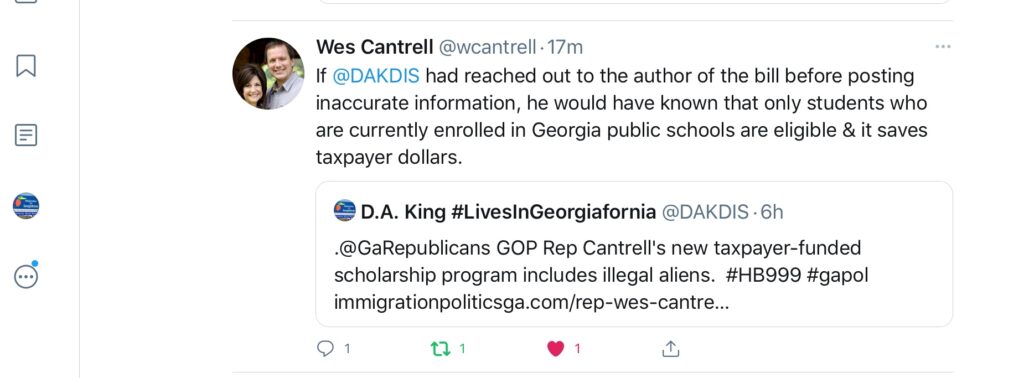
Republican Rep Wes Cantrell’s proposed new taxpayer-funded scholarship program includes illegal aliens – HB 999

January 27, 2022 By D.A. King

Photo: Ga. Health News

Note: Feb. 1, 2022: “They” are in hurry up mode. HB 999 passed out of House Education committee today on a voice vote. A very similar bill, HB 60 passed out of full committee today too. Number of committee members who asked about benefits going to illegal aliens? Zero.

* How’s this for speedy service? HB 999 House hopper Jan. 25. Voted out of subcommittee Feb 1 – that’s four session days.  

State payments (grants/cash allowance/state grant or loan) to illegal alien students handled by illegal alien parents with official oversight on compliance by illegal alien parents – what could go wrong?

 Georgia is home to more illegals than Arizona.


Erick Erickson. Photo: Wikipedia.

Update again, Jan. 28 2022, 1:30 PM : Erick Erickson just promoted HB 999 on his national radio show. Listen here. I was allowed on the air for 56 seconds and made the point that the bill won’t fly for many people here and he should consider explaining the reality of payments to illegals in his next pitch for the bill. He hung up, but kept on topic for another few minutes. Listen here.

Update: Jan 28, 2022, 7:50 AM : Radio show host Erick Erickson is on WSB Radio during this morning’s drive time news segment promoting HB 999.” Three Democrats on the bill!” “A bipartisian coalition!” “Sponsor is a preacher!” “First time ever in Georgia!” He is also advancing the cause of this “school choice” legislation on his Twitter feed.  Don’t miss it!

—

  • Related: Breitbart News has taken note of this and other Georgia bills with a January 30, 2022 news story.

“The Georgia Educational Freedom Act”

HB 999 – as introduced                                                                                        

LC 49 0739 <–

Sponsors: Rep Wes Cantrell (R) of the 22nd, Mike Glanton (D) of the 75th, Angela Moore (D) of the 90th, Heath Clark (R) of the 147th, Patty Bentley (D) of the 139th, Kasey Carpenter (R) of the 4th and others (names of “others” coming soon).

Rep Wes Cantrell, Republican, Woodstock

______

 We see no requirement for student recipients or parents to prove legal immigration status. We don’t see mention of any immigration verification system or check.

Note: The 1982 Plyler v Doe SCOTUS decision mandates states to provide K-12 public education regardless of immigration status. It does not address creation of a special or alternative K-12 system or scholarships.

Reminder to all concerned on amendments to this train wreck: Plyler V Doe prohibits even asking K-12 students about immigration status and that restriction applies to the student’s parents.

______

Image: Twitter

Executive version at first reading Jan. 27, 2022 1:00 PM (not final analysis):

* Creates state law to provide $6000 per school year “Promise Scholarship” for an alternative to public K-12 school for any student who has a parent, guardian or custodian who lives in Georgia. This would apparently include illegal alien students and/or parents.

* The student must have attended a Georgia public school for six weeks prior to participation in the new taxpayer-funded ‘Promise Scholarship.’ This would apparently include illegal aliens.

* The new “Promise Scholarship” would be funded by the state taxpayers and subject to appropriations. The legislation authorizes the Georgia Student Finance Commission to participate in the new scholarship account program.

* Quarterly payments would be made to an account set up for the student and then parents are designated to handle payment to the alternative schools. This would apparently include illegal aliens.

* A “participating student shall continue to be eligible to receive account funds until the student returns to a public school, graduates from high school, or reaches the age of 20 years, or for special education students, reaches the age of 21 years.” This would apparently include illegal aliens.

* Funds paid shall not constitute taxable income of the parent of the participating student. This would apparently include illegal aliens.

* Establishes an executive director who would appoint a review committee made up of eight parents to monitor compliance in administering the state-provided funds. These review committee parents apparently could be illegal aliens.

* Creates a lottery process governed by chance to award funding to students if either the number of participating students or the number of applications for accounts exceeds the funds available for the new scholarship. This lottery would apparently include illegal aliens.

* “Student information shall be reported and collected in a manner that allows the state to aggregate data by grade level, gender, family income level, and race.” This aggregated data would not include immigration status.

  • Related: More from Republican Reps Wes Cantrell and Kasey Carpenter.

HB 999: Covered “qualified education expenses’ means any one or more of the following:
(A) Tuition, fees, and required textbooks at a participating school;
(B) Tuition, fees, and required textbooks at a community college or accredited postsecondary institution;
(C) Tutoring services provided by an educator certified by the Professional Standards Commission;
(D) Payment for the purchase of a curriculum, including any supplemental materials required by the curriculum;
(E) Tuition and fees for a nonpublic online learning program or course;
(F) Services from a physician or therapist licensed pursuant to Chapter 10A, 28, 33, 34, or 44 of Title 43, including, but not limited to, for occupational, behavioral, physical, or speech-language therapies;
(G) No more than $500.00 per year to a fee-for-service transportation provider for transportation to or from a participating school or service provider;
(H) Fees for the management of account funds in accordance with subsection (e) of Code Section 20-2B-7; or
(I) Computer hardware or other technological devices approved by the commission or a physician if the computer hardware or other technological device is used to meet the student’s educational needs.”


Filed Under: Recent Posts Achrives

GEORGIA IMMIGRATION-RELATED LEGISLATION, 2022

January 23, 2022 By D.A. King


–> Update: January 31, 2022 Breitbart has pick up the story on the below bills and our work here in Georgia. We hope you read it!

Update: August 28, 2022 This will be an issue next session, say the corporate-funded lobbyists, here.

GEORGIA IMMIGRATION-RELATED LEGISLATION, 2022

* Added April 7, 2022: We stopped a committee hearing and a floor vote on this gem:

SR 376

Cause of death? It’s an election year and we know too much.

SR 376 was designed to create a special senate “study committee” to begin the process of creating legislation for next year to “relax” current state laws on verifying legal immigration status before issuing occupational and professional licenses. It came from the same people and had the same agenda as this Dog and Pony show in the House from last year.

Senate Resolution 376
By: Senators Thompson of the 14th, Brass of the 28th, Kirkpatrick of the 32nd, Cowsert of the 46th, Summers of the 13th and others

A RESOLUTION

Creating the Senate Occupational Licensing Study Committee; and for other purposes.

WHEREAS, the Georgia General Assembly strives to foster a robust workforce and thriving business environment in this state; and

WHEREAS, onerous occupational licensing requirements can inhibit economic mobility,  limit job prospects, and hinder small businesses; and  WHEREAS, research has shown that Georgia has some of the country’s most burdensome  occupational licensing laws; and

WHEREAS, it is in the state’s best interests to examine its current occupational licensing  laws and requirements to determine if they should be modified or restructured so as to  encourage, promote, and foster employment and healthy business growth in this state; an

WHEREAS, it is important to review how other states have responsibly reformed  occupational licensing to streamline processes, reduce barriers to work, and eliminate  unnecessary rules and regulations to determine if Georgia could benefit from similar reforms.

SB 601

Update: Noon, March 16, 2022: SB 601 failed to see final passage on the senate floor yesterday by a vote of 20-29. It’s dead. More here.

Essentially a rerun of HB 999/HB 60. This one has incomplete and unworkable language intended to present the idea that it excludes illegal aliens. This legislation was dropped on Thursday, March 3 assigned a committee on Friday March 4 and scheduled to be heard in committee Monday, March 7 at 8:00 AM.

Breitbart story here.

The bill was not heard on Monday, but was passed out in a one-hour, 9:00 AM meeting on Tuesday, March 8, 2022 with a 6-4 vote. No public comment was allowed. Much more here.

The Dustin Inman Society opposes SB 601

HB 60   FEB 23, 2020 – Happy dance! HB 60 is as dead as Pancho Villa.  Very close to HB 999 below, also from Rep. Wes Cantrell. 

HB 999  FEB 23, 2020 – Happy dance! HB 999 is as dead as Pancho Villa. 

HB 999 would create a state funded alternative K-12 school system for all student who have spent six weeks in a public school and have a parent, guardian or custodian living in Georgia. A new “Promise Scholarship” payment of $6000 per school year would be sent from state coffers directly to an account set up for the student. Parents/guardians/custodians would be in charge of distributing the funds. A committee made up of parents would be appointed to oversee compliance with the state’s scholarship laws. The bill is being sold as “school choice” and is gaining support. Radio personality Erick Erickson is pitching it on his national radio show. Nothing in the language of the legislation as presented mentions or deals with the fact that Georgia’s public schools are packed with illegal aliens who also have illegal alien parents. The scenario if passed as introduced would be that the state of Georgia sends money directly to the account of an illegal aliens child, an illegal alien parent has authority to disburse those funds and could easily be appointed to be a member of the oversight committee.Read more here.

K-12 private school scholarship should be limited to U.S. citizens and Lawful Permanent Residents HB 999 HB 60.    Here is the fix 

The Dustin Inman Society opposes HB 999.

 * HB 120 Update: March 16, 2022: HB 120 is deceased. – would give illegal alien college students living in Georgia with a deferral on deportation in Obama’s DACA program the much lower instate tuition rate in the state’s university system. Americans and legal immigrants from other states who attend the same schools are not eligible for that lower rate.

  • Related: For academic year 2020-2021, the average tuition & fees for colleges in Georgia was $4,739 for instate and $17,008 for out-of-state according to experts at collegetuition.com.

Last year a federal judge ruled the DACA program to be unlawful. The 11th circuit appellate court ruled in 2019 that illegal aliens with DACA are still illegal aliens. They do not have legal status and are removable at any time. The Georgia Attorney General’s office takes a similar position. There are about 20K DACA recipients in GA.

Republican Rep. Kasey Carpenter introduced HB 120 in 2021. It puts DACA illegal aliens in front of Americans and legal immigrants. We regard that as un-American. The instate tuition for illegals concept is publicly pushed by the Georgia Chamber of Commerce because it would lower wages for Americans and raise corporate profits.

The Dustin Inman Society opposes HB120.

* HB 932  Update: HB 932 was denied a vote in the House Higher Ed committee and is dead for the year. It is possible for a Kamikaze legislator to try to attach it to a live bill. We hope so. That would be fun…

would allow refugees, foreigners here on Special Immigrant Visas (SIV) and Afghans on “humanitarian parole” to be excluded from the current state law and BOR policy that says newly arrived college students must be GA residents for 12 months before they can access the much lower instate tuition rate in Georgia’s public colleges and tech schools. (The Special Immigrant Visa grants permanent residence to foreign nationals who claim to have helped the U.S. government abroad).

HB 932 does not cover Americans and immigrants outside the above description who move to Georgia from other states– they would still be required to pay the higher tuition rate for public colleges/tech schools for the first year of their residence. HB 932 is sponsored by Republican Rep Wes Cantrell and has Democrat cosponsors. We regard HB 932 as un-American.

The Dustin Inman Society opposes HB 932.

 * HB 228  HB 228 is dead for the year. The GOP Establishment killed it. (Republican Rep Charlice Byrd) addresses the fact that Georgia issues drivers licenses and ID Cards to foreigners but has no law that excludes these credentials from acceptance as “proper identification” for voting purposes. The bill fixes that loophole and adds the wording “BEARER NOT U.S. CITIZEN-NOT VOTER ID” to the front of the non-citizen drivers licenses and ID Cards. It also requires DDS to change the first two characters of the serial number of these credentials to “NC” to reflect non-U.S. citizen status for mail-in vote security. We regard this bill to be a commonsense fix to a needless gap in election integrity.

The Dustin Inman supports HB 228.

 More information is easily accessed at ImmigrationPoliticsGA.com and NewDustinInmanSociety.org.        


Filed Under: Recent Posts Achrives

More from Martha Zoller: We need another amnesty, but “I am as strongly anti-illegal immigration as I ever was”

February 14, 2024 By D.A. King


The below is from the Martha Zoller Show on WDUN radio Feb. 14, 2024

I hadn’t had time or inclination to listen to Martha for weeks but had to catch her today after Gov. Kemp made his big splash announcement about sending more GA National Guard troops to the Texas border. She didn’t disappoint – she’s still pushing amnesty for illegal aliens and still trying to convince people that illegal immigration has gotten so very bad that Kemp had no choice but to abandon his duty and oath of office to enforce the state laws aimed at illegal immigration here in Georgia.

That apparently includes the two laws against sanctuary policies. For our many new readers, see here to get an idea.

Transcript by Rev.com

My cost: $40.00 and about 2 hours.

https://immigrationpoliticsga.com/wp-content/uploads/2024/02/martha-zoller-amnesty-kemp-14feb24.m4a

Republican radio show host Martha Zoller:

It is the Martha Zoller Show. There are there seats currently, uh, unfilled, uh, in the United States Congress, that’s why sometimes when you look at the numbers, the total numbers, they don’t add up to 435. Um, one of those people were replaced by a Democrat last night, um, and, you know, Trump, President Trump comes out and says because, uh, Mazi Pilip would not endorse him, that’s why she lost and then there was a big old snow storm that came in. And it’s very easy to say after somebody lost, you know, that you’re the reason why they lost. It’s also easy to say that if somebody wins, you’re the reason why they won.

Um, I do think there’s some merit to, uh, Mr. Suozzi said related to running around for Trump instead of running the country. Now, look, I don’t, I’m not a Democrat, I don’t think like a Democrat, but I have had a number of elected officials who are Republicans in the last two weeks express concern about the fact that, uh, eh- I don’t wanna say, “About the fact,” about the reporting that President Trump is intervening in legislation that is being heard on the House. So I, I’m gonna ask the question, okay, and I’m gonna talk to Andrew Clyde later on in the program, they’ve gotta conference meeting, uh, this morning, began at 9:00, the House conference, and so we scheduled him for 10:45 because he thinks by then the meeting’ll be out ’cause he wanted to be on today.

Uh, so we’re gonna ask him this question is that, is that I want the Congress of the United States, Democrats, Republicans, Independents, to govern between now and November 3rd or 5th or 7th or whatever, every day. I want them to govern. I do not want them to block things because the person who might be the nominee for the party, I don’t care if they’re Democrats or Republicans, doesn’t want them to do it. I, and I don’t want to believe that there were things that were blocked because of that. I think it was right to block the legislation that had only or had border or had some kind of border, I mean, it really wasn’t border security. It had this border package, let’s call it, in it, along with foreign aid and it wasn’t what Republicans wanted.

But what needs to happen is you pass a version in the Senate which will probably happen today, okay? Then when the House takes up that version, instead of saying, “Dead on arrival,” you add back in what you want in the version that you pass. Then it has to go back to the Senate and then eventually you gotta go to a conference committee. That’s what should happen because we, you know, border security, and this is something I’ve come, come to, is border security is no immigration policy, okay? Securing [inaudible 00:04:03] reforming immigration policy because the border should be secure regardless of what your immigration policy is. Okay? So it should be separate. So that’s one of the things that I’m looking at.

Also, ah- there’s this group of people out there that don’t like me very much and that’s okay, you know? And it’s ironic because it’s a group of people that I’ve helped raise a lotta money. I’ve done a lot of things for them over the years related to their issues. But they have decided that I have become a pro-immigration person. And look, I am pro-immigration from the stance of legal immigration, okay? But I am as strongly anti-immi- illegal immigration as I ever was, but I also do acknowledge there are different groups of people that have been here doff lengths of time. I acknowledge that the average American, when they moved here as a kid, who maybe now is 35 years old, but got brought to the United States by their parents when they were two to 10 years old and now they’ve lived here for 25 years and they have no path of citizenship, those are called the DACA kids.

This is why Donald Trump, in his first month, well, not first month, it was April of 2017, he offered to Nancy Pelosi amnesty for the DACA kids and for their parents, which was more than what she asked for, okay? Donald Trump did this and I said it was a good idea at the time. I still think it’s a good idea. Donald Trump offered the DACA kids and their parents, in exchange for $5 billion for the wall and she wouldn’t do it. It was a good deal. It was a very good deal. It was a better deal than she was ever gonna get because she was playing politics. Our answer to that should not be, “Then we’ll play politics harder than they will.” Our answer to that ought to be, “We are going to govern.” So what ought to happen is one side passes something, the other side passes something, to get together with a conference committee, then they come up with something they have to both pass or reject because that’s the way the system works. The system should not be everything’s dead on arrival. No to everything is not a policy. No to everything is not the way to do something. So we’ve got a lotta work to do.

So this particular group that’s not very happy with me had their big break with me came over the fact that I believe that the issue of immigration changed after Governor Kemp was elected and that he had to approach it differently, and that he has adjusted that approach up to and including National Guard on the border with Texas, supporting Texas and all the things that they do, and up until yes- you know, including yesterday, talking about how he’s going to help Texas and help immigration policy. The immigration issue changed, he had to change his approach. But we ought to all be on the same page as far as illegal immigration. It is Martha Zoller Show and we’re always here, always local.

a little later in the show:

https://immigrationpoliticsga.com/wp-content/uploads/2024/02/zoller-2feb-14.m4a
Screenshot, Brian Kemp TY campaign ad.

Martha Zoller:

I’m gonna call them friends even though they’ve been pretty mean to me lately. Um, but I did. I will tell you, they are the only two people I’ve ever blocked on Twitter. Uh, unless if you use profanity, um, I will probably block you on Twitter also. I just… If, if you go as far as using the F word in a post, I generally avoid to block you. But and that’s… Those are people I don’t know, because why do I need to see you in my feed if I don’t know you? But, uh, there’s a couple of people that I have blocked, and it’s because they just keep attacking me and lying about me. And I don’t really care if they put it out there for other people to see, honestly, because I know what the truth is and anybody who knows me knows what the truth is. Uh, but, uh, I don’t have to see it in my feed. I’m being a lot more intentional in what I do on social media and what I- I’m a part of.

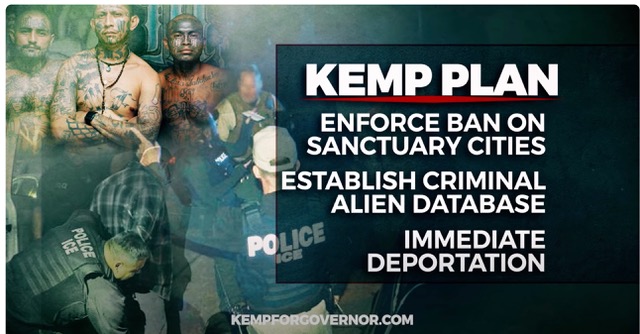
But, um, I just don’t understand the frustration with Governor Kemp related to immigration policy. Georgia still has some of the toughest immigration policy in the country. Uh, he has… I think the immigration problem and I think anybody who’s being objective and looking in a mirror will tell you that we had immigration pretty much under control in the… 2018, 2019, 2020. Uh, those are the first three years of the governor’s term… or 2019 and 2020 were. And then, we… everything went out of control related to Biden and the game had to change. And what I mean by that is what we did had to change. It couldn’t be a newly [inaudible 00:01:38]… Everybody talks about that ad he ran in the primary where he said, “I’ll round up illegal immigrants in my truck and I’ll deport them.”

Okay, first of all, I never liked that ad, I was on that campaign, because the governor cannot depot people, okay? It’s only the federal government that can depot people, and there are 1.5 million people that have been adjudicated by the system and are supposed to be deported that the Biden administration is not supporting, okay? So it is the federal government. We should not be angry at our governors, we should be angry at the federal government about this. We got to be mad at the right people if we’re gonna accomplish things. And I know that goes against what I’ve said related to not being mad at everybody. But I mean, using mad in the generic term, opposing, you know, making sure that you’re, you’re aligning with people who are on your side in order to get better policy from the other side. That makes sense.

Anyway, so my friend, Libby, who’s been friends with me since high school, uh, sent me this message saying, “You have a lot of support on your approach to legislation. I had to laugh at the newly-elected congressman’s comments about Republicans shouldn’t fall in line behind Trump. Didn’t the Democrats perfect that? And this guy will fall in line with Biden as well when he gets there.” At that, you know what, you are absolutely right, Libby. And I’ve been perfecting this thing that I’m gonna say on the George Gang, um, [inaudible 00:03:16] because I know I’m gonna be asked to denounce something that Trump did. Okay, every week I get, I get asked… Every week I’m on I get asked to denounce something that Trump did. And my answer to them a couple of weeks ago was, “Look, I’m not… you know, I’m… Nobody’s my candidate. I- I’m supporting someone else in the primary, so I don’t really care.” But I get tired of being told, “Are you gonna be on the, quote, ‘right side of history’ and stand up against Donald Trump?”

Are you gonna be on the right side of history and stand up against the guy that can’t put his sentence together and Joe Biden? The fact that any Democrat is asking any Republican, any Democrat that is still supporting Joe Biden and then is criticizing a person for supporting Donald Trump, there’s a word for that, and that’s disingenuous. Okay, there’s a word for that, and that is hypocritical. Okay, there is a word for that, and that is lunacy. All right, if you’re sitting there saying, “Oh, people, the economy’s really good and the people are really good and the things are really good,” what your lying eyes are seeing is just not true. But conversely, we have to do the same thing, okay? If we don’t want our candidate, meaning Republicans, to get involved in local politics, which, let’s look, I tell you what, Brian Kemp just gets better every day. Because he’s never said a bad word about Donald Trump. He has never said… He has, He has threaded that needle along with Glenn Youngkin properly better than anybody to be able to do what’s right.

Because there’s a guy named Larry Hogan, who was the governor of Maryland… Republican governor of Maryland. Very conservative guy. He’s gonna run for Senate. The people… The Democrats are really worried about that, uh, because, um, he’s very popular, and he’s very popular in a blue Maryland state because, wait for it, he did the right thing. He communicated well with people. He did the right thing. That is singly what I like the most about Na-, about… Um, I almost called her Nancy Pelosi like Trump did, so I guess I’ve got problems too. Anyway, Nikki Hayley. Here’s what I like about her. Go back and look at her debate performances, okay? She lays out what her positions are, whether it’s about spending or about national security or about abortion, and then she says what the numbers are of the situation we’re in right now. Because it’s all well and good to have a, a firm position on the things that you stand for, okay? But then you also have to understand, in a republic, for we have a representative democracy, that you have to then convince a majority of your colleagues to vote for something. Which means you’re not going to get everything you want, okay?

Now, if you want to change that, then elect more Republicans to the House and elect more Democrat Senate. The Democrats actually have the worst Senate math that they’ve had in 40 years. Now, we can screw it up, okay, but we should pick up a bunch of seats in the United States’ Senate this time, and they’re worried about that. That’s why they’re trying to get us off our game. But I understand this argument conversely that time and time again we have given Republicans the majority and they haven’t acted like Republicans. And I’m not talking about this two-seat majority they got right now, okay? I’m talking about 30 seats or five or six in the Senate. I’m talking about a real majority, okay? I understand that we’ve given Republicans that a couple of times in the last 25 years and they didn’t really do anything with it, okay? So… And we also have to understand that within the Republican caucus there are very conservative Republicans, which are about 30%, there are more moderate Republicans, or… I don’t wanna call them moderate. I’m gonna call them by anybody else’s definition conservative, because there are some real conservative people in the caucus that would call these people conservative. But anybody from the outside looking in would be… would, okay?

And then there are the people that are the, the left-leaning Republicans that are in districts that Joe Biden wants, okay, so they’re concerned about certain things. You’ve got to wrangle all those people and get them on the same page if you’re gonna pass anything. You can have one or two defections. If you do… If you have more than that right now, that’s like a darn… I almost said bad word, Logan. That’s like a darn tightrope you got to walk on. One wrong step and you fall through the net. So we’ve got to start telling the truth about how to get things done, and we’re gonna keep talking about it right here.


Filed Under: Recent Posts Achrives

Eric Erickson and an amnesty trial balloon

October 1, 2023 By D.A. King

About halfway through pecking out this post it occurred to me that Erick Erickson could well be on an appointed, long-term mission to set up acceptance of a “it’s not amnesty!” future senate floor vote or a pro-legalization plank in a 2026 GOP Senate campaign for Georgia Gov. Brian Kemp. That’s how things are done here. If so, we suspect that the occasional, softer, less direct points from Kemp ally Martha Zoller on her Georgia radio show are part of the same plan.

Martha Zoller

Legalization for illegal aliens is amnesty for illegal aliens.

__

Original audio and transcript below.

In a September 28, 2023 (hour 2) broadcast (access entire show podcast here), Republican radio talker Erick Erickson broached the topic of legalization for illegal aliens and said he would support it. For experienced amnesty opponents who remember the 1986 debacle and the talking points from the many attempts at a repeat since then, there wasn’t much new in the Erick Erickson amnesty balloon.

Top of the list for Erickson amnesty are what the anti-enforcement mob has labeled “dreamers.” He put a “whose parents dragged them here 30 years ago…” qualification on it to get the sympathy ball rolling. We assume the “why not support amnesty for the children when many of the millions of illegal border crossers are bringing dreamer replacement children over the border literally every day now?” push will come after the 2026 Senate election.

Next in line for Erickson amnesty it’s (you may have seen this coming)…the parents. In Erickson’s amnesty balloon the eligibility period of avoiding enforcement of immigration law for consideration is 40 years.

Essentially, Erickson is promoting the now worn and ridiculous concept that there are somehow illegal aliens in the U.S. who have not violated any other American laws other than “existing” here. And that amnesty for the illegals who have easily managed to be “undocumented workers” for a long period of time a viable solution to the problem.

Erickson threw in the worn and ridiculous concept that amnesty-again would be a demonstration of “humanity” if the border was secured and somehow “the number of illegal crossings go down to zero” (which is impossible – note to Erickson: run, don’t walk to arrange a trip to the southern border with expert guidance). Again, the early eligibility period example in his amnesty float is for illegals who dodged enforcement for 40 years – and apparently who produced kids.

I suspect that Erickson promotes the idea of legalization without a path to citizenship being fully aware that about ten minutes after any such legalization legislation was signed into law the corporate-funded leftists would be back to screaming in the streets of the remains of the Republic carrying pre-printed placards demanding “citizenship for all!” yada-yada. But, omitting this idea does likely help serve to keep the fact that amnestied illegal aliens do not vote for Republicans and legalization does not produce many new GOP votes out of the equation for a while.

I would go on Erickson’s show and offer a fact-filled, pro-enforcement response  but he has my phone number blocked and will not put me on the air when I do get through to his call screener using another number.

A few more pesky and very basic facts Erickson has so far kept from his easily-led Republican listeners – most of whom in Georgia are trusting and immigration-ignorant, “we’ll follow you anywhere” Kemp Republicans. Note to new readers, this is not a complimentary term.

  • The “never-broke-the-law-except-for-immigration-law is an old hustle. It is mostly impossible for an “undocumented worker” to get and keep a job/employment in the U.S. without committing a crime because eventually, the employer will need a Social Security Number.
  • Use of a false Social Security Number is a felony.
  • Use of a stolen Social Security Number (Aggravated Identity Theft) is a felony.
  • See also: Fraud and False Statements (18 U.S.C. § 1001). It is common for illegal aliens to make false statements to the government or on official documents. An illegal alien violates this law when claiming to be a U.S. citizen on an I-9 Employment Eligibility form and faces a fine and up to five years imprisonment.
  • Even if it were within the realm of reality to cut illegal border crossings to zero, that alone would not end the organized crime of illegal immigration. Because Erickson doesn’t do it, we note that until the Biden administration illegally opened the southern border, about half of all illegal aliens in the nation did not come over the border illegally. They came on temporary visas and then refused to leave. We have made this point to Erickson before.

Related: DHS Reports Record Number of Visa Overstays in 2022

Erickson’s amnesty balloon is aimed at the most willingly ignorant amongst the Republicans and is apparently the beginning of the beginning of what we suspect is the long-haul effort to have Republicans (especially Kemp Republicans in Georgia) warmed up for a future amnesty push.

_____

The below transcript was done by Rev.com.
Original audio on the bottom.

Erick Erickson, Sept 28, 2023 on WSB radio in Atlanta (hour 2)

Erick Erickson:

“… for those of you who take that position, you need at an intellectually honest level to say, “What about the kids whose parents dragged them here 30 years ago when they were one or two years old and now they’re in their thirties, do we deport them or do we find a way to keep them here?” That’s one of the big immigration arguments. And I’m… I’m all about… Look, if you’ve been in this country for 30 years, your parents brought you here, and your parents themselves have not broken the law since they’ve been here other than by existing here, I’m okay letting you stay if you’ve been contributing, but… I mean i-if you’re not a lawbreaker, but I don’t want to give you citizenship.

On… I… I think before we can have those conversations though, you got to build a very high wall with a very big moat and fill it with alligators and… and… and stop the rest of… of the… the… the wave of illegal immigrants from coming over. I… I… I… I think we’ve got to secure our border.

And I actually am one of the people, [inaudible 00:00:51] optimistic in humanity, but I am one of those people that does believe if you secure the border and the number of illegals crossing goes down to zero, I think a lot of the people who were very reticent about deporting everybody might actually say, “Okay, since nobody else can get in here, let’s… let’s talk about the people who’ve been here for 40 years illegally.” And I think they need to be treated [inaudible 00:01:20] the people who have been here for a year or two.

I… We… We have the ability to exercise some discretion. If you’ve been here for 40 years a-and you… y-you now have kids, some of whom were born here, they’re American citizens and you haven’t broken the law, maybe we don’t give you citizenship, but we just let you stay. But if you’re a criminal or you’ve only been here for the last five years or so, well, okay, you’ve got to go. Go home, get in line like everybody else, like the legal aliens who came here and took the time to do it, but…

Audio

https://immigrationpoliticsga.com/wp-content/uploads/2023/09/ewe-sept-29.m4a


Filed Under: Recent Posts Achrives

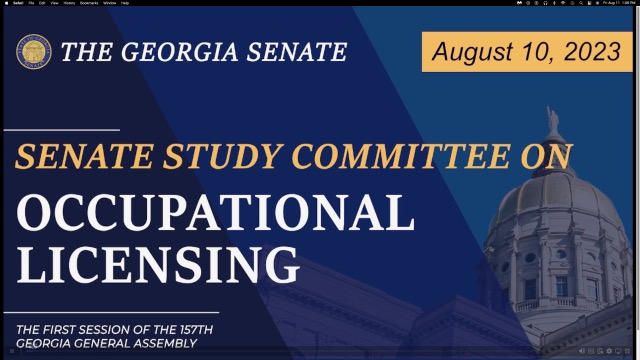
GA Senate Study Committee on Occupational Licensing August 10, 2023 meeting transcript and video

August 14, 2023 By D.A. King


Transcript by Rev.com. My cost: $150.00 and about 3.5 hours.

This committee is a result of SR 85 that passed despite our educated warnings on its goals. SR 85 is the product of the lobbying by the Georgia Chamber of Commerce.

Video here.

Begin meeting ( Chairman’s mic was off for a few seconds)…

Chairman Sen Walker:

… uh, visiting with each other. Um, but we’ve got a, a good agenda today, and we want to not take too much of your time, more than we have to. Um, I wanna call on the, uh, Ms. Wanda Jaffe. She’s the deputy director of the Professional Licensing Boards, and she has been gracious enough to allow us to meet here in her facility. So I’m gonna invite her to come forward and, uh, give us a few words of welcome and maybe some logistics.

Ms. Wanda, you… If you don’t mind, because we’re livestreaming. All the presenters will need to present from here. And we- we’ve got, uh, Senate press here that’s gonna help us with that, make sure we’re on board. Am I on?

Wanda Jaffe:

Yes, sir.

: Chairman Sen Walker:

Okay. Is that mic on?

Wanda Jaffe:

Yes, sir.

 Chairman Sen Walker:

Okay. Okay. All right. The floor is yours.

Wanda Jaffe:

Good morning.

 Chairman Sen Walker:

Morning.

Wanda Jaffe:

Um, I’m Wanda Jaffe, as he stated. I’m the deputy director here at the Professional Licensing Boards. Um, as many of you know, we have, um, 43 boards, 197 license types, and we are in the process of trying to get Georgians’ licenses as quickly as possible. We’re the only division that’s located down in Macon, so welcome to Macon everybody (laughs).

And, um, I just want to tell y’all, thank you for coming down here. And I’m, uh, gracious to open up our building to you guys. We are transparent. We are doing the best we can to get Georgians’ licenses as quickly as possible. We are fully involved with trying to remove blockers and get Georgians to work, so whatever we can do to be of help, just let us know.

 Chairman Sen Walker:

Thank you, Wanda. And how many employees are here?

Wanda Jaffe:

So I have a total of 110 employees here in Macon. Um, that does include some of our investigators and inspectors that are here in Macon.

 Chairman Sen Walker:

And you all are back open and, and not, not… You… The pandemic’s been over quite a while. You’re open for business, people are working here in their offices, is that correct?

Wanda Jaffe:

Well, yes and no. So we never closed during the pandemic. Um, during the COVID pandemic, I was here every day, five days a week. Um, I… But I did… We did send our staff home, um, to do some remote working. So we are now doing kind of a partial remote, partial in-person. So every board that works here operates has somebody here every day. So if a customer comes in and walks in off the street, if they have an occupational therapy license, there’s someone here to help them. So what we did was kind of rotated our staff out. Some of them can work from home as long as somebody is here every day that can assist a client. I’m here Monday through Friday every day to make sure that if something comes up that they’ve got somebody that they can talk to.

: Chairman Sen Walker:

Okay. Thank you.

Wanda Jaffe:

You’re welcome.

Chairman Sen Walker:

Any questions for Wanda? Thank you, ma’am.

Wanda Jaffe:

Okay.

1/3 start: Chairman Sen Walker:

(laughs).

Wanda Jaffe:

(laughs).

Audience:

[inaudible].

 Chairman Sen Walker:

Uh, I also want to recognize Maggie Hasty, with the Secretary of State’s Office. She’s been instrumental in helping us put this together. Thank you, Maggie, uh, very much for that. Again, Senate Press, thank you for the- their work. Um, as far as the committee members, we have, uh, S- Senator Brian Strickland here. Senator Mike Dugan here, Senator Anavitarte is, um, with us virtually, uh, watching the meeting as it’s livestreamed. Uh, and if he has questions, he’s gonna text them to Ky and I. Um, and then Senator Halpern had a prior commitment, uh, on the West Coast, so, uh, but we do have a quorum. And with that, I will, uh, call the meeting to order.

Um, also I do want to recognize my legislative assistant, Kylynn Gallagher. Thank you, Ky for all your help with, with this. Um, just… I’m gonna make a couple remarks to start off with. The… This topic, uh, as I have dug into it, has been kicked around for literally decades. I suspect that my father, uh, worked on this issue. Uh, it’s a tough nut to crack. Um, there are, as, as Wanda said, under, under this office, 43 licensing boards (laughs). And, uh, and, and they’re, they’re not any of them one the s- same as the other, really. And they all have different nuances to them. And everybody kind of has a, a, ve- uh, you know, the turf issues and the- their agenda and their vested interests. So it’s a difficult politically to… Uh, uh, uh, it’s a challenge. But we are in, uh, 2023, and as you’ll hear from Daniela in a minute, we have a serious workforce, uh, needs in Georgia, thankfully, under Governor Kemp and prior good leadership. We’ve got a growing economy, uh, and we’ve, we’ve got to get into the modern world with this licensing, professional licensing issue if we’re gonna continue to grow our economy.

Um, I do wanna recognize my very good friend, uh, uh, Representative Patty Bentley, uh, for joining us. And, uh, we’re always glad to see you, Patty. And Patty has recently gotten engaged, and, um, I’m real, uh, proud for her. But, um, uh, I, I hope she doesn’t decide to run for the Senate. I’d be in in trouble.

Audience:

(laughs).

 Chairman Sen Walker:

Uh, so our first speaker, uh, just to give us some information on what we’re… Where we’re at in Georgia with workforce is, uh, Daniela Perry. So, Daniela, the floor is yours. And if you’d like to sit and adjust that mic down, or if you want to move that chair and stand and just talking in the mic, um, you, you may can work your PowerPoint.

Daniela Perry:

Thank you.

Wanda Jaffe:

Adjusted.

Daniela Perry:

Can y’all hear me okay?

Audience:

Yeah.

Daniela Perry:

Well, um, Chairman Walker, again, thank you for the invitation to be here today and to share a little bit of information, um, that we’re looking at from a Georgia Chamber perspective. Um, my name is Daniela Perry. I serve as the vice president of the Georgia Chamber Foundation. Um, and our… The foundation is really the research, um, and data arm of the Georgia Chamber. So a lot of our work, um, you know, focuses on these big trends and what we’re looking at, um, moving forward.

So, as Chairman Walker mentioned, um, we’ve experienced tremendous economic growth. Um, the last four years, again, has been record economic growth year over year. And, of course, Governor Kemp announced another year of record economic growth for FY23. Um, so while many states are trying to still recover from the pandemic and find their footing, we, um, have continued to seen prosperity, um, year over year. I think a key point to mention is the fact that 77% of this economic activity has occurred outside of metro Atlanta, which is the state chamber, is really important to us, um, because we wanna make sure that in every corner of the peach state, whatever your zip code is, that you are experiencing opportunity and able to find good employment and grow your economy.

So while we’ve experienced this tremendous economic growth, um, it hasn’t come without its challenges, although these are really, really good problems to have. So we’ve been tracking unique job postings, um, since 2020, um, with, with COVID. You’ll see on the graph here, it looks at 2021. Um, and y’all can see, there’s been some variation over the years. You’ll see that dip in Q3 of 2021, which was the Delta variant of COVID. Um, and you’ll see it rebounded very quickly to mo- over 450,000 job postings. And now we are kind of in a little bit of a plateau around 350,000.

The top occupations we’ve seen this quarter, um, our registered nurf- nurses, software developers, and retail salesperson. The other one that often ends up in this category is tractor trailer truck drivers, which obviously with our freight logistics infrastructure, it’s a huge demand. Of course, too, I wanna note that all of these are very different skill levels, require different education, but again, we’re just seeing tremendous need across the state.

Uh, another key point to mention is the number of unemployed Georgians is about half of what these job postings are. So as we’re thinking about how do we combat with our workforce shortages, simply getting people off of unemployment and into jobs is not going to, to fix our problem. We really need to think strategically about how we can, you know, bring folks in. And then also think about folks that are not engaged in the workforce, um, make sure that we’re able to get them back into the workforce, whatever barrier they might face, which is where I’d like to point you to our labor force participation rate, which is around 61.3%.

So we have nearly 40% of Georgians that are not engaged in the workforce presently. Um, they’re of working age. So again, as we’re thinking about how do we get these folks in, we wanna make sure we’re looking at any barriers that would prevent them to getting to employment or maybe, um, individuals that are also underemployed or looking at that.

So I mentioned labor force, um, participation rate because we like it, um, a little bit better than unemployment because it looks at kind of that full working age population. This, um, goes back to 2000, um, and you’ll kind of see that there’ve been some spikes and jumps, um, and you can see where the great recession’s been, as well as COVID. Um, but overall, we’ve seen a, a decline in individuals that are participating in the workforce. Um, I’ve got numbers for the last, um, couple of years. We actually had our peak, um, in November of 1998, around 69, a little over 69%.

So again, as we’re thinking about the fact that we’ve seen this decline overall, we wanna make sure that we’re thinking about what are those barriers, um, understanding that the nature of work has changed. Um, the, the skills that are needed in the workforce are changing too, especially as we’re seeing technology, um, become a bigger part of everyone’s job.

So I’ve pulled some, um, occupations from our labor market software. Um, these are all required licenses in the state, um, included the job posting over the last year. Um, I also included retiring soon. Um, so as we’re thinking about not only our current workforce shortages, but what’s the need over the near term. Um, wanna be cognizant of that shortage that’s coming, and then also the number of employers competing. So when we say war for talent, you’ll know that we’re not over-exaggerating. Um, this is a, a tremendous need. Of course, I’d love to point you to registered nurses. We’ve got almost 3,000 employers that are trying to hire registered nurses in the state, and there’ve been, um, more than 82,000 postings.

Again, you’ll also see that there are other, um, health occupations for, um, you know, nursing home, certified nursing assistants, home health aides, and, um, tractor trailer truck drivers, the top ones, but of course, childcare workers, pharmacist, accountants. And again, this ranges over different skill levels, different education levels, but tremendous growth, um, in all of them.

So we like to look at the long term an- and know where we’re going. Um, by… In the next 10 years, we are gonna need… Where our… The number of jobs will increase, um, by a little more than 2 million, and our population’s going to increase, um, by 1.2 million individuals. So again, as we’re thinking about the fact that we are experiencing this tremendous growth, um, a- and this is kind of just that projection that we, we certainly could get larger announcements that’ll bring more need. Um, also thinking about the fact that in the back rearview mirror, we’ve got all those retirements of people that are, um, moving towards that, people are working longer. Um, so there’s a little bit of variability, but over the long term, we’re really gonna need to think strategically and systematically about how we do things differently, um, how we are able to innovate, um, whether it’s reducing regulations, um, but making sure that we’re able to meet our workforce needs long term.

So, uh, we’ve, um, you know, at the Georgia Chamber have looked at a number of opportunities, um, to improve occupational licensing, to get more folks, um, into these, um, occupations because generally, occupations that are licensed have higher salaries, so better, um, opportunities for folks. There’s around 40% of Georgians that have a criminal history. Um, and we’ve seen that, um, salaries actually are 10 to 20 percent lower for individuals that have been incarcerated. And too, the unemployment rate is significantly higher for those that are formerly incarcerated. Um, as well, I know there was some legislation from Chairman Strickland last session that addressed this. Um, and the Georgia Chamber was, um, supportive of it because it really looks at how do we get folks that have skills and talents for facing some logistical barriers within our, um, occupational licensing system.

Georgia also has a huge military population. Um, we actually have the ninth biggest veteran population and then the fifth biggest active duty, um, population in the state. But portability, um, of licensing for military spouses has become more and more important for the Department of Defense. In order for them to designate Georgia as a military friendly state, you need to have that 30-day near term licensing. Um, of course, as we’re looking statewide and seeing the big need, all of our military installations are huge economic drivers across the state. Um, an- and so we know what they mean to the communities, but as well what they mean to the state as a whole.

We wanna certainly protect our military installations because we know the tremendous growth that they add, especially with Robins Air Force Base being, um, just down the road here. The healthcare industry, um, as I’ve kind of shared some data, you’ll see again, there’s tremendous need in growth. Um, but the Georgia Healthcare Workforce Commission had a few statistics again that, that look about what this looks like long-term. Um, and estimate around 20% of nurses, behavioral health and specialty care, um, workers are over 55 years old and so might be looking to retire, um, over the next 10 years.

Also found that around 3.7% of the healthcare workforce is leaving annually and is not being replaced by new graduates. And then, of course, as we’re thinking about all those opportunities, um, with legal i- immigrants that have come here, um, opportunities to make sure that we are using their skill sets well. Um, of course, there’s also op- opportunity at the federal level with visa reform, but not within the scope of that, so we’ll leave that to Washington. And that’s, um, all I have for y’all this morning. So certainly, happy to answer questions, but again, I appreciate the opportunity to be here, and appreciate y’all service on, um, this committee to address this issue.

: Chairman Sen Walker:

Thank you, Daniela. It’s good information. Uh, so you, you hear the challenge we face with these, uh, the growth we’re having, and the statistics she gave us, um, and licensure. It certainly is a barrier to entry into the workforce for a lot of people. Um, and I, I know I didn’t ask you this to prepare this, but it’s… And it may be somebody in the room knows, but what percentage of the, uh, job postings that we have require a occupational license?

Daniela Perry:

I can look that up for you.

: Chairman Sen Walker:

I think I’ve seen that in a recent meeting-

Daniela Perry:

Yeah.

1/3 start: Chairman Sen Walker:

… but I… It’s, it’s a pretty, uh, high percentage. It’s pretty un- uh, uh, surprising how high that is. So certainly, that’s a challenge. Um, I’ve got… And I’m sure my colleagues will have some questions too, but on the workforce participation percentage, is this kind of a national trend?

Daniela Perry:

Yes.

1/3 start: Chairman Sen Walker:

I mean, are we an anomaly or is this?

Daniela Perry:

No, Georgia… We- we’ve certainly kind of seen this nationally. Um, other states are going through, through similar things. Um, certainly, you know, Georgia, you know, I think is… I think is in the middle in terms of where we stack with our labor force participation rate. Um, but we certainly have other states that we’re competing with that are doing better in this arena. Um, obviously, it’s something that’s an opportunity. And when we look to different communities around the state, um, we see lower numbers in the state average. Um, I think Bibb County was around 55%. Um, so again, as we’re thinking about the statewide need, we’ve got different pockets depending on community need, um, where you are even seeing lower, um, numbers than that, 61.3%.

1/3 start: Chairman Sen Walker:

Is part of that just lifestyle choices and, and maybe wanting to have, uh, uh, one parent, you know, dedicated to parenting the children and staying home, raising the family?

Daniela Perry:

Absolutely.

1/3 start: Chairman Sen Walker:

Uh, versus, I mean, you know, both parents working in the children in daycare.

Daniela Perry:

Yes. So certainly, this is gonna encompass individuals that are choosing to stay home, um, because it is better for their family to have one parent working or one parent, um, at home. Um, it also could include individuals that may have disabilities that have trouble accessing the workforce. Um, so there’s a wide range of, of why you have this 40% that is opted to not participate in the workforce. And certainly, ag- again, you know, um, the high point of this i- in recent history was around 68 or a little over 69%. Um, and so, you know, a seven point drop is still very significant. And if we had those folks in the workforce, we would certainly be meeting a lot more of our current workforce shortages.

Um, but, you know, I, I think it’s fair to say that you would always have a portion of the workforce that would not opt in for, for various reasons.

 Chairman Sen Walker:

So we have 350,000 unique job postings currently, a little over 350,000. And your projection is that the, uh, number of jobs is gon- over the next decade is gonna increase by, uh, over two, um, two and a half million, looks like to me, from 5,285,000 to 7,000,845.

Daniela Perry:

Yes, sir.

 Sen Walker:

And yet, our population is only gonna increase 1.2 million so that, uh, that makes the delta… So we’re gonna go… That’s, that’s one point. So we’re gonna be like 1.6 or 7 million in open positions if these, uh, projections hold true.

Daniela Perry:

Absolutely. And so, I think that’s-

1/3 start: Chairman Sen Walker:

Even if 100% of the population growth went to work-

Daniela Perry:

Right.

: Chairman Sen Walker:

… which they’re not. So it’s actually gonna be a big, big deficit in workers. So it, uh, seems clear to me that we’re gonna have to recruit workers from other states to grow, you know, to fi- fill the need in our economy. And as we do that, I think the licensure issue becomes even more of a, a problem for that. Um, the other thing that I think is happening and, and COVID accelerated this is, we’ve got Georgians that are, you know, live here, but they’re working for, they’re working for companies virtually outta state because their licensing requirements are maybe they don’t even have to have a license to do that job, or maybe it’s easier to get a license.

Uh, and I think we are seeing that in, uh, all the fields, but I think in like psychology, and psychologists, and some of the medical fields, uh, they’re, you know, able to make more money maybe doing it that way and have less barriers to entry. So we’re at a competitive disadvantage. Um, we’re not gonna be able to recruit these people from other states if we have a burdensome licensure system, which we do have, which we’ll hear about that later.

Um, and we’re competing, you know, with the ability to really work anywhere in the world, uh, in certain jobs virtually. So I think we are… Uh, uh, it’s imperative and, and incumbent upon us to try to fix this problem. Um, Senate Bill 157 sponsored by Senator Strickland, uh, is of high, high priority for the Senate. It passed unanimously in the Senate, and we are… I guess it’ll come back being committee in the Senate or does it-

Senator Strickland:

It’s in the house.

1/3 start: Chairman Sen Walker:

In the house.

Daniela Perry:

Okay.

 Chairman Sen Walker:

Um, but that’s gonna be a high priority, uh, for us that deals with the, uh, some criminal history and, uh, Senator Dugan and I are on the Georgia Works Commission, and we got a lot of good information about that at our meeting Tuesday. Um, and people that are, apparently people that are arrested and not convicted, it still creates a problem for them with employment. And um, so I applaud Senator Strickland for his work on that. And, um, uh, um, uh, you know, the lieutenant governor is, uh, this is a high priority for him. I’ll just, for the public that’s watching that we get this passed.

Um, and then for me and a, a lot of us in, in the legislature, um, I represent Robins Air Force Base and the spousal licensure, which we’re gonna talk hear about more today too, is something that I’m real, uh, passionate about. And we have, uh, you know, had legislation that got out of Senator Dugan’s committee that was really… He helped me improve it and perfect it. It was really good legislation and again, got hung up in the house with some, uh, just, you know, things going on there. So we’re gonna continue to work on that. Um, all right, I’ve talked enough, uh, Senator Strickland.

Senator Strickland:

Thank you. Um, Daniela, as Senator Walker was saying, thank y’all for your support as Senate Bill 157. Um, I think that bill is gonna go a long ways in really making more of a uniform process as to how criminal records are handled by all these different boards. You mentioned 40% of our state having a criminal record. And what we learned in working on that issue, wanna applaud Representative Bentley who’s here as well. We, um, spent a, a last year in a separate study group that was kind of unofficial looking at that issue. And we saw and heard from people that were not trying to work because they thought they couldn’t.

Daniela Perry:

Yeah.

Senator Strickland:

They didn’t know how their record would affect them, even getting in industries, and then word from an attorney that was handling appeals for people that were denied licensing, who does this for a living and has trouble navigating that. We realized how difficult it is for individuals to ever navigate that process. So it now sits in the house, and we have, um, broad support in the house, I believe as well. Just got caught up in the back and forth last year. So that’ll be… I believe it’ll back in the judiciary committee, I think, in the house this year coming up next year.

Um, question for you, in the labor force participation rates, some of the same things that Chairman Walker was asking, um, you mentioned how this compares nationally. Do you know if, if the aging population does this, does this include people of working age, or is this everyone, is this… Is the aging population that we have impacted by this, or they’re not counted in that rate, do you know?

Daniela Perry:

Sure. So it’s usually defined by, um, USBLS by 25 to 64.

Senator Strickland:

Okay.

Daniela Perry:

So there is the potential to that is individuals are maybe older and, you know, choosing to still participate in the workforce that some of those are captured as well. Um, and, and we are certainly encouraging, you know, businesses across the state to think creatively how to use, um, you know, individuals that have lots of expertise to offer and still wanna contribute a lot to make sure they’re utilizing things well.

Senator Strickland:

But also goes to show it’s not just because people are getting older then, so they’re not counted in that. Um, the other question I have, you may not know the answer to this, and I’m not sure if anybody does, but has there been any study that goes the next step and ask people why they’re not working? There’s many reasons people may choose not to work, um, but it’d be great to know…… knows, just even from a just, survey standpoint, what the reason is. I, I look at the childcare shortage-

Speaker 2:

Okay.

1/3 start: Chairman Sen Walker:

Um, I mean, I, I know people, maybe it’s just people I know, that are young parents that, uh, aren’t able to work because they can’t find childcare. I know someone right now, that’s considering taking a leave of absence from a professional job, because she can’t find anybody to take care of her child. She lost her childcare purse. She’s on a waitlist at places.

And so, that’s just one little factor that could be in there, that we saw related to, uh, the overall issue of workforce. I’d be curious if we have seen any studies that would show why people are choosing more and more s-, around the country, more so, not to work.

Speaker 2:

Absolutely. Um, we can pull some information, but I have not seen a great survey. I think it is one of those things that people do consistently ask, you know, where are these individuals. I think we’d love to show them some of our TCSD programs, and things that are options.

But absolutely, childcare’s a huge issue and we do have a shortage of childcare workers. Um, speaking from personal experience with it, a dire… in childcare, uh, we were on a waitlist for a long time, too, uh, to get her into the, the right place where she’s safe. Um, so absolutely, it’s a huge challenge.

Um, and certainly one of the reasons, too, when we saw a tremendous levels of women leaving the workforce during the pandemic. Um, and so, still trying to make sure we’ve got folks into the workforce that, um, want to contribute, but all those other factors need to be right for them a- able to make that choice.

Speaker 3:

Senator Dugan.

Senator Dugan:

Thank you Mr. Chairman. Uh, Senator Strickland, I’m sorry, I looked to you and said I wasn’t gonna ask anything.

Senator Strickland:

Uh-

Senator Dugan:

Uh-

Senator Strickland:

That’s why I talked so long.

Senator Dugan:

Yeah.

Speaker 2:

(laughing).

Senator Dugan:

Thank you, and always good to see you.

Speaker 2:

Thank you.

Senator Dugan:

And, I’m gonna, I’m gonna tag on that one too, the 177,000 one. Uh, we need more context with that. How many of the 177,000 are actually looking for jobs that require certification, which would be pertinent to this particular committee? Um, and it’s not only childcare availability, uh, some of these are childcare cost.

Speaker 2:

Okay.

Senator Dugan:

Uh, so you got one that’s availability. You have three, you start looking at, is it more economically feasible for one of these to stay at home with children while the other one works, because it, of the, the cost portion of it. Sec-, the second one i- is a question. If you could look back at 1998-

Speaker 2:

Yeah.

Senator Dugan:

What were we doing differently then, than we’re doing now?

Speaker 2:

Probably, a couple different things. Um, but certainly, um, you know, eh, it… there’s been a lot of conversation again, why we’ve seen this decline, because it is something that we’ve seen nationally.

Um, and, you know, there’s a number of different reasons, but there’s not one silver bullet. You know, um, people are choosing to, want more flexibility, um, a- and so they’re, you know, thinking about these options differently. Um, there are a lot of costs that have arisen over the years and maybe, always haven’t tracked, um, with salary growth.

Um, a- and so, we’ve seen a lot of different trends, kind of, impact this number. Um, but I would say, there’s not one clear factor. Um, I would say Georgia has experienced this in a little different way, because, um, you know, we were able to bring a lot of folks into the state, to meet our workforce needs for a lot of years. Um, having the fact that we’ve got lots of people from other southern states that were moving in and filling our workforce shortages. Um, but we’ve kind of, seen that slow in recent years. And then with the tremendous growth, um, it’s created more of a challenge.

Um, there was actually some recent research that showed that Georgia has 159% more unfilled positions, than unemployed individuals, in the state. And the national average is 67%.

So again, as we’re thinking about what’s unique about Georgia, it’s that our needs are a lot more acute than other places. Um, of course, other people are very envious of what we’ve seen from an economic growth prospective. They want the economy that we have. Um, but that certainly requires, you know, innovative and strategic thinking about how to use the people that we have here, and then how to strategically recruit folks into the state, that meet those workforce, um, needs that we’re seeing from an industry perspective, just grow and expand.

Senator Dugan:

When you go back and look at 1998, uh-

Speaker 2:

Yes, sir.

Senator Dugan:

And I understand the types of jobs have changed significantly-

Speaker 2:

Yes.

Senator Dugan:

… since then. Um, a matter fact, they didn’t have smartphones, back then. Uh, but when you go back and look at that-

Speaker 2:

Yes, sir.

Senator Dugan:

Did you get the percented population that was involved in agriculture, in ’98 that was considered employed, versus now?

Speaker 2:

Yes.

Senator Dugan:

And that the only… The last question I have, is on the, Georgia’s war for talent. And, you know, I, obviously they… the situation with yellow, is not good. How is that gonna impact the availability of CDL drivers, on your slide there, what are you forecasting?

Speaker 2:

The need for CDL drivers is tremendous. Um, I would say we consistently hear from folks, um, that this is one of the biggest limitations. Which is why we’re really seeing industry think about, how do we, y- is this an in-, is this something that we try to automate faster? Um, because we are just seeing tremendous shortages.

Um, and I would say, too, that’s why, you know, we’ve seen more and more challenges with getting products to people faster. Of course, a lot of was accelerated with COVID, as we’re seeing so much more e-commerce growth. Um, it was something that happened very, very quickly.

But, um, too, is we think about a competitiveness prospective. If we don’t have the truck drivers here, to move goods in and out of the state, it’s gonna impact the activity at the ports, um, a- and everything that we’ve really been able to grow, strategically.

So, I would say we signi-… We really look at that. And, uh, for the truck drivers, um, retiring soon, is almost the same number of the new postings. So, eh, we are, uh, specifically, for a lot of companies engaged in this effort, that it is a significant challenge for them to recruit folks. Um-

Speaker 3:

[inaudible]. That’s fine.

Senator Dugan:

Y- you kept talking, so it chipped away-

Speaker 2:

Sorry.

Senator Dugan:

… another question. No, no, no, no. That’s why you’re here.

Speaker 2:

Okay.

Senator Dugan:

Um, so, how much flexibility do we have within defining what is required for a CDL, within the State?

Speaker 2:

So, the one other thing I hear a lot of, wh- where we experience this big, um, issue on the tractor trailer truck drivers, is that in order to cross state lines, you have to be 21 years old, which obviously is where a lot of the need is. That’s at the federal level, unfortunately.

Um, a- and so they’re obviously is, flexibility within the licensing here, but consistently, that’s something that we, hear. Um, so, I know there’s lots of movement within Congress to, to try to continue to push this. Um, especially, as we’re thinking about getting folks on a talent pipeline. If we want to make sure that we’re catching kids in middle school and high school, and really showing the opportunity. If you would, then, have to wait three years and do something else, and then come back to CDL, it’s a big hurdle, um, for that recruitment prospective.

Senator Dugan:

That’s what I was asking.

Speaker 2:

Yeah.

Senator Dugan:

Um, do we have the flexibility to set up a different category of CDL, that is a short haul, CDL, where you could be lower than 21?

Speaker 2:

That’s a great question. We can… I’ll, I’ll do some research to see what we… if that would be something that would, um, an option. But I know that crossing state lines, is usually something that is very important, obviously, to get folks from industry perspective.

Speaker 5:

Um, so, I, I think that you can get a CDL, prior to 21, it’s just-

Senator Dugan:

You can’t-

Speaker 5:

You can’t-

Speaker 2:

Cross state lines.

Speaker 5:

Cross, (laughs), state lines. And the other issue is, your ins-, the company’s insurance, um, carrier’s gonna have guidelines for their drivers, too. Uh, and it, it, that becomes an issue, you know, it’s a lot, a lot of ’em want the drivers to have three years experience, and so on and so forth. So it’s a, yeah, (laughs)-

Speaker 2:

Yeah. (laughs).

Speaker 5:

Um, Mr. Sterling, I don’t think is here. Um, so, Sarah, do you mind to go out of order and go ahead and present your portion?

Thank you very much, Daniella, awesome. [inaudible]. (laughs). Sarah Critanin is, uh, with our office of legislative counsel, and she’s got some, uh, good information she’s gonna share with us today on some recent corp cases, and just the legal landscape of, uh, licensing and where it is in our code section, et cetera, so.

And she put all this together for me, on short notice.

Sarah Critanin:

(laughs).

Speaker 5:

I appreciate that.

Sarah Critanin:

Anything for you, Senator.

Speaker 5:

(laughs).

Sarah Critanin:

So, um, I’m Sarah Critanin, I’m attorn-, an attorney with the Office of Legislative Council, and we draft your Bills. (laughs). And I’ve been doing it for two years. Before that, I was with the Department of Insurance. So I hae some experience with, um, dealing with licensure and, um, criminal investigations and how to handle, um, m- background checks and that sort of thing.

So, um, I was really excited to help out with this committee. Um, I’m gonna talk to you… So I gotta come down here. Oh… So we’re gonna ta-… I’m gonna talk to you today, about sort of, opening up licensure, and what’s going on federally. Um, and, um, in the service members Civil Relief Act, which is a federal law.

And then, uh, Senator Walker, asked me specifically, to talk about a recent Texas District Court case. Um, I’d like to take a moment to talk about interstate license for compact, which comes up a lot, were all this goes in Georgia law.

And then finally, Senator Walker asked that we talk about a recent Georgia Supreme Court case. So that’s a lot to cover. I set the timer, it’s going. (laughs). And so, we’ll see what can do.

So, the Service Members Civil Relief Act, or the SCRA, um, is found in federal law, under 50 USC, Section 3901 to 4043. This act is designed to help service members, um, when they have to transition to active duty, and it, it provides some civil protections, which is yet there, uh, protections by foreclosure, repossession, leasing agreement evictions, interest rates and default judgments.

The concept of pro- protecting our service members, goes a way back. I did a little, you know, one day’s research. But it goes back, (laughs). There, there was, um, there were laws, um, in the Civil War and World War I and in World War II, to protect service men when they get called to duty. And in fact, it used be called the Soldiers and Sailors Civil Relief Act, SSCRA.

In, uh, 2003, it was overhauled and became the Service Members Civil Relief Act, and, um, for our purposes, um, there was an addition in 2023, this year, um, on the portability of professional licenses.

So, uh, this was signed in January of this year and went into effect in January of this year, to, um, allow service members and their spouses to use their professional license and certificates, when they rele- relocate, due to military orders.

Um, so I, this is sort of, a hybrid. I tried to cut and paste the actual law, ’cause you never want to blur it. Because it is, we have to look at the exact words, um, to understand what’s going on here, who it applies to and what it covers.

So, it applies to service members or their spouse, as who has a covered license. And that’s a defined term in the law. And it’s when they relocate, because of a military order for military service, outside the jurisdiction, where the license was issued. And the co-, and the consan-… the huge benefit of this, is a covered license shall be considered valid. Which is a, a, you know, a phenomenal statement in the law, for them just to, blanket, say that.

The interesting thing, um, legislatively, for me, was, you know, it’s not forever, it’s for the duration of the military order, and then, um, under certain conditions or circumstances.

So, what the service member or spouse must do, is a… And this is in the law. This is cut and paste, in the law. They have to provide a copy of the Order to the licensing authority. They have to remain in good-standing with the original licensing authority, um, in the good-standing of every other licensing authority that they’ve been issued. And they have to… And this is very important, as a receiving state, is they have to submit to the authority of the licensing authority in the new jurisdiction. So, that’s a, a great save. That gives the receiving states some, um, leverage.

Um, interestingly, the federal law, specifically yields to states that are participating in interstate licensure compact. So, some of you, um, may not be familiar with, uh, what a interstate licensure compact is, and I’ll talk about this later. But, uh, this is from the, uh, service, Service Members Civil Relief Act, um, and it provides an exception.

So, um, the federal law is yielding to the state’s agreement, which is, which is also e- exciting, you know, yay, law. But it’s, uh, (laughs), it’s exciting to see that federal law is saying, okay, a few states have worked it out in the licensure compact, then y’all, you get to, um, control.

Um, so, um… this is also, um, from the cil- the Service Civil, Service Members Civil, um, Relief Act, is, what is a covered license. This is the definition, is a professional license that is good, in good-standing with the licensing authority, and that the service member or spouse, has actively used during the tri- two years, and that is not a license to practice law. So they carved out law. Yay. So, (laughs). So, I, um, I underline this phrase, has actively used, ’cause that’s gonna come up in a case.

This is a recent case, Porte and, I, I think there’s supposed to be an accent, but I’m just gonna say, Porte versus Morath. It’s a recent case, out of Texas. So, it does not have any governing on us, but it’s a very interesting case, because we’re gonna see the little dance between Federal and State law.

It’s out of, uh, Texas. It’s a District court case. So, there’s a chance this may all be appealed. More like, more likely they will be appealed, but for now, this where it stands. It was on the application and scope of the licensure and por- portability provision in the SCRA.

There’s a conflict with the Texas requirement. So the Plaintiff was Hanna Porte, a service member spouse. She had, um, a school counseling license from Ohio and Missouri and she got married, and her husband was transferred for, to Texas, for military purposes. So, all that falls under, um, SCRA.

And she applied for a job in Texas, and Texas refused, saying, um, she… they were, they had an extra requirement, as most states do. So they had an extra requirement, that she had to have two years of experience.

Um, she appealed… Uh, well, sh- they refused. She mo-… She filed a lawsuit. They moved for preliminary injunction and the, the District Court granted it. Um, there was some argument about, about whether she had to, be employed for two years, or it’s just if she used her license in that two-years period. And the District Court sided with the Plaintiff.

So, what does this mean for us, is that we have to be mindful of what the Federal government’s doing. Um, when I found out, after the fact, is that the Department of Justice was very ha-, was very clear all along, about where they stood on this.

So the, in July of this year, the Department of Justice issued a letter to all State licensing authorities, regarding the professional licensing portability provisions. And you can find it at their website, and I don’t think I printed out a copy. But it’s very clear, the law is very clear, and it’s very clear to them, that they’re gonna enforce this law, and they’re going to support the military members and their spouses, in their pursuit of justice, if they want to get licensed.

They also filed, which is kind of interesting, too, is they filed a Statement of Interest, in the Porte versus Morath case, um, saying that she was likely to succeed on her merits, and why that they, why, um, they are going to vigorously enforce this section, and why she had standing to bring the case. So the message is very clear to the states, that this is something important to the Department of Justice and to, um, federal government.

So, as mentioned earl-… Yeah. Eh-

Senator Dugan:

So can we… before we move on to another subject-

Sarah Critanin:

Yes, sir.

Senator Dugan:

That’s pretty significant, I think. Um, and very recent. Can we talk about that, Sarah, is that all right with you?

Sarah Critanin:

Yes.

Senator Dugan:

And maybe, ask some questions, and, um, maybe-

Sarah Critanin:

I’ll do my best.

Senator Dugan:

Uh, Wanda, I may call you back up, um, too. So, what does that mean for us, in the Georgia legislature? Do we need to align our, our statute to align with that federal statute? Does it mean we need to, not do anything and, and face potential lawsuits and see how the courts, so, let the court sort it out? I mean, what is the prudent path forward?

Sarah Critanin:

So, uh, in, in my opinion, I think the prudent path is for a state licensi- Licensing agencies, to really take a look at their requirements and open it up to, to be compliant with the federal law.

Uh, the, the interesting is, and we’ll talk about this, is so the SCRA is for active military, and some of our laws are more… the, the laws that we drafted are more about transitioning service members. And so, it’s a little bit different. So I don’t think we need to repeal anything or changing our law. I think agent, state agencies need to be aware of this law, and need to work, work, uh, y-, review their applicants, with this in mind. Just saying, oh yeah, this might be an issue.

I don’t think we need to change our laws yet.

Senator Dugan:

Uh, Sarah, we’ve argued in the legislature, over, you know, is 90 days long enough to recognize a military spouse license, from another state? Is 60 days? Should it be 30 days? I come down on 30 days. This is immediately.

Sarah Critanin:

Uh, I don’t think they put a timeline. But I think, right, sooner is b-

Senator Dugan:

Well, it can go back-

Sarah Critanin:

Do we go-

Senator Dugan:

… to one of your first slides. It said, I have something about, absolute.

Sarah Critanin:

It said, shall be valid. You’re right. That’s, uh-

Senator Dugan:

It doesn’t say, you… in 30 days or 90 days.

Sarah Critanin:

Whoops. Right. Shall be considered valid. Um, I mean, I think State agencies have a right. They, they need time to review and make sure all the documents are in place. But you’re right. I mean, it says it shall be considered valid.

Speaker 8:

There was a copy out on the next one, the-

Sarah Critanin:

Is it-

Speaker 8:

[inaudible] to everyone. But, it’s, uh-

Sarah Critanin:

Mm, next one?

Speaker 8:

Yeah.

Sarah Critanin:

Oh. Oh.

Speaker 8:

It… it’s all right.

Sarah Critanin:

This one?

Speaker 8:

Um…

Sarah Critanin:

One more?

Speaker 8:

No, I think that’s it.

Senator Dugan:

[inaudible].

Sarah Critanin:

All right. I mean, (laughs), I put these animations in. I thought I was being clever, and it’s just a pain. (laughs).

Speaker 2:

(laughing).

Speaker 3:

I think 2B and through, kind of address the, uh, fed and state. It’s up there.

Senator Dugan:

2B is licenses in other states, and they failed. So I don’t think that-

Speaker 3:

That has to be similar. We have to see it as similar to their…

Senator Dugan:

That does seem very subjective, to me, that part. And so-

Speaker 2:

Yeah, but how-

Sarah Critanin:

I don’t know, I think-

Senator Dugan:

Three is gone?

Sarah Critanin:

Yeah, I think-

Senator Dugan:

It’s pretty forward.

Sarah Critanin:

I mean, I do feel to… and it takes a lot to re-… I know with the insurance department, it takes a lot to review. It takes, uh… you have to have, you know, a lot of documents and you need someone to review those documents and confirm. It, it does take time to, to process-

Senator Dugan:

So-

Sarah Critanin:

… an application.

Senator Dugan:

Wanda, do you mind addressing us on this?

Wanda Jaffey:

Sure.

Senator Dugan:

I wondered if, um, have you… So again, this is Wanda Jaffey, the Deputy Director of Professional License and Boards.

Speaker 2:

Mm-hmm.

Senator Dugan:

Have you run into this? Or you… Uh, how are you all handling this?

Speaker 2:

So we’ve been handling military expedites since 2018. So, we have tracked those. Um, most applications are touched within three business days, of receiving that military application.

Now, I can go back and pull the numbers. I didn’t really prepare for it today. I wasn’t expecting to present. But I have numbers that can show you how quickly the application is touched and how quickly a person gets licensed, if they are marked, military, on their applications.

Um, I have a spreadsheet that I, that I track those daily since 2018. I will tell you the problem with some of these things, is that, the federal government… And I, I hate to say this, but sometimes they’re creating walls, without taking in the state’s considerations.

We, in Georgia, we are here to license people. But we are also here to protect the public. So there are two facets for the licensing boards. We issue licenses, but we also follow up on complaint an compliance, to make sure our Georgians are safe within the practices.

So, having the time to be able to receive these verifications from these other states, that is very important. Because if they’ve got a pending case in another state, do we want to put potential Georgians at risk, when there’s a pending case of some sort of malpractice in another state?

So some of those things, you have to take into consideration. These are what we all the exceptions to the rule. But they are things you have to consider when you are talking about timeframes.

Sara:

Um, another thing you want to think about is that, the response of those other states. I’m dealing with a client that is trying to get a massage therapy license. They cannot get Texas to send us the verification. I personally went on behalf of this customer and called Texas. I waited on hold for three and a half hours, and still never received any assistance or an answer. I sent emails to three different divisions for the state of Texas, still with no response. I called back the next day and waited for two hours.

This is what these people that are moving to Georgia, this is what they’re having to deal with. He came in here and he was like, “I came in here and met somebody within five minutes. I can’t get a response out of Texas.” Unfortunately, what if there is a malpractice in Texas? I feel for those people. I- I’m prior military. I moved around a lot. And I feel sincerely for- for them. And I- I feel like they need to be working. But what if I took the chance and issued them a license, and then come to find out that even though Texas was slow to respond, they’ve got 10 cases of sexual assault? You know?

So there are things that you have to take into consideration. Um, but as far as being a promilitary, Georgia is one of the few states that are so very promilitary. We add veterans preference points for exams. That gives them some credit. They have disability credit that we take for that, to help them get their exams. We are very promilitary. And I have seen, and I can pull up the spreadsheets, I just don’t have them handy, but most of our applications are issued within five to 10 days. Um, then again, with the ex- exceptions, it can make it look like it’s 50 days to get a license. But you got to look over the long period and what those exceptions are.

 Chairman Sen Walker:

So has this federal law changed your process and procedures? Or are you all still operating this … I mean, has this had any impact?

Sara:

Not in a significant manner, because we were already promilitary, (laughs) if that makes any sense. We were already a step ahead of the game, so we already were taking in this information, um, and preparing it and getting people licensed here. Um, so it made us look at a couple of things, because there was some law that was saying that it had to be substantially, you know, somewhat similar. And so some of the states, for example, I hate to say Texas again, (laughs) but one state for a profession only requires 300 hours worth of training, where we require 1500 hours. Um, so there’s … That’s not substantially equal, even though it’s the same license type.

So when we’re looking at these things, those are some of the things that we had to take into consideration, which is why we kind of pushed back and said, “Let it be substantially equal, not just, you know, similar.” So it has changed a little bit in how we process, but not a lot, because we were already proactive there.

1/3 start: Chairman Sen Walker:

One more question. What kind of volume, uh, I’m sure it’s a small percentage of your total volume, but is- is the- the military licensure a pretty robust volume of- of activity? Or-

Sara:

No. No, we- we issue … I’m trying to think about my spreadsheets, ’cause I tried to track all the numbers. A couple hundred a year is military for licenses that, where they’re actually marking that they are transitional military, that they are, you know, moving here. Um, it’s just a couple of hundred a year. I think one year we had like 700 and something. But don’t quote me on the numbers, ’cause I don’t have my spreadsheet right in front of me. Um, but it’s … That’s very little comp- when you compare it to all the licenses that we do here.

1/3 start: Chairman Sen Walker:

You have a question, Senator David?

Speaker 3:

Not that she can answer right now. I was just kind of curious what we’re getting for that additional 1200 hours worth of training, without knowing what the thing was. Um, it … There are some … That’s gonna come to something else we talk about, is the number of hours we’re requiring for some of this stuff.

Sara:

Right.

Speaker X:

[inaudible] good lawyer question.

Yeah.

(laughs) Uh …

Sara:

(laughs)

Speaker X:

[inaudible]

Sara:

I’m not a lawyer. (laughs)

Speaker 4:

[inaudible] last night. Um, my question was what year this law was- was passed. For Sara I guess, what year was this federal law passed?

Speaker X:

This new, the new one-

Speaker 4:

Right.

Speaker X:

… is this year-

Speaker 4:

So-

Speaker X:

… 2023. And it went into effect, it was signed and went into effect.

Speaker 4:

So then Texas sued. Um, or is anybody challenging the constitutionality of the law overall, the idea that the federal government is going to require this? The reason I ask that question is, if- if so, uh, are we prudent to really not focus too much on this federal law until we see where this thing goes in the federal courts?

Speaker X:

Yeah.

Sara:

I- I don’t know if th- that was raised in the, in the case. The … Her case actually started before this case, I mean, before the law changed. And then it was brought in and the federal government s- sent in a letter or a statement of interest, which I think is unusual.

Speaker X:

Right.

Sara:

So right, there is an argument for let’s see. W- this appeal process, you know, appeal up the, up their side. And there’s, and another case we’ve got coming that, there’s appeals. But I think the, you know, the- the- the federal government is sending us signals to help its service members, to make their lives easier. And all of this, remember, all of this is based on trying to help our active military who have been called, you know, called up and are- are moving. They’re moving, whatever it is. So it’s not … So it’s, it is, um, a small subset of- of-

Speaker X:

[inaudible]

Sara:

Yeah. So … All righty, we’re good?

: Chairman Sen Walker:

[inaudible]

Sara:

Okay. All right, let’s-

1/3 start: Chairman Sen Walker:

Thank you.

Sara:

All right, let’s see where we are. Sorry.

 Chairman Sen Walker:

Interstate compacts, I think.

Speaker X:

[inaudible]

Sara:

Okay. So interstate licensure compacts, um, which is an exception to the, um, [inaudible] portability rule, law. So, let’s see if this works. [inaudible] Ah, here we go. (laughs) [inaudible] My head is gonna explode. Okay I’m not sure where to look or read but … (laughs) So, um … So if you go to this website, uh, we have a, um, occupational licensure compact. Actually, there are a lot of compacts in our OSGA. It has to do with agreements, like on water, borders, or, uh … There’s just a lot of compacts. But, uh, we’re focusing just on occupational licensure compacts. There are about 15 available.

Um, and actually if you scroll down, so it’ll say … This is a great website you can go to. Just keep going down, down, down, down. Here’s our list of the 15. Um, Georgia has signed onto, uh, about eight of those. Seven are in Title 43. And then one is in another title. And just a head’s up, there’s, um, a dietician compact coming and a school psychologist compact coming. Um … Let me see, so is there a way to … [inaudible]

So actually, I’ve got a l- uh, a list of which ones we’ve gone to. Can we c- can we click on this one? Um, and this was … Oh good, that came up. This was m- just, I’d like to point out that the, uh, Department of Defense is very much aware of these, uh, licensure compacts. And this is posted on- on their website. And there’s a whole bunch of links so that service members and their spouses are aware of which compacts are working and- and where their licensure can be eased along. Um … Okay. This …

So, most of the licensure compacts are in Title 43. Um, the- the point of, um interstate com- licensure compacts, is to, um, make it easier for people to get licensed, to use their license, but also to provide some safeguards. So there’s some better exchange of data and information between states. Um … Okay, so [inaudible] did I skip one? Oh, I think I might’ve. So this, um … Sorry, there’s all … You- you never want to let a lawyer talk. There’s all these things I wanted to talk about. I was gonna tell you about each bill that went through and what year it went through, but you’ll just have to read it in the news.

So in, (laughs) in addition to licensure compacts, we’ve got some great law that, um, and this is one section in Title 43 s- it’s 43-134, and then the next ones we’ll do also. Um, and this is for transitioning service members. Um, and- and it gives them, um … As you’ll see in, on line B, it sort of, it, and this I think is where she’s saying, like, since 2018, this has been con- this can been a- has been a priority. So they get sort of front of the line, temporary licenses, license inducement, exp- expedited licenses or accommodation.

So Georgia has been really, um, positive about helping its military. It’s, and this is specific to transitioning service members, as you know like with any bill, there’s a lot of give and take and chaos at the new session. So things get added, things get taken out. So we do the best we can to get a good law for you. Um, but this one has been on the books probably since two thousand- since 2017, with some adjustments.

And then, um, this past year, this section of the law was amended heartily. Um, 43-135, which is, uh, more about, um, um spouses and individuals. And this one, we really worked hard to try to get this, uh, to protect, uh, the licensing part of the world, but also to keep- keep businesses op- keep the licensing going. Um …

If you’ll see under Section B. See I, uh, you know, I don’t want to read this, ’cause I’m … But I love this. It’s great language. Um, again, it’s for an expedited license by endorsement. So this part of the law is for spouses of a service member or a transitioning service member stationed in Georgia.

And then we added, um, a little bit more. And I- I did think about this with Senator Walker’s concerns. Do we need to adjust this? And I think in my opinion, and I am gonna go talk to some of my senior attorneys about, you know, “Do we need to change B3?” And I don’t think we do. But that is something I am, um, I’m wondering if that’s in conflict or if it’s okay, because this is really just for a- a- a different group. The SCRA is for active military under order, transferring under orders. And this is a little bit different.

The second part of this law, well, third part of this law, is about, is, we really opened it up to any individuals crossing borders. Um, so this was kind of an exciting, uh, change to the law. Um, this of course is not affected by SCRA at all. But this was an exciting, very exciting to put in- into place.

Whoops. Oh, and in the end, of course we’ve got the little [inaudible]. We also say, if you look under, um, G, you know, the licensing compacts, these are agreements made, we made with our brethren states. We honor those agreements. And those- those agreements, um, control. So I know I’ve been talking a lot. And I just, I do want to show you, if this works [inaudible]

Well, it may not work, but I did … Do you think you can get it? If you can get it to work, it’d be great. Um, you know, you never want to leave an attorney with time on their hands. So in May, after the session, after I recovered from the session I was like, “Hey, what is going on in Title 43?” So I painstakingly went through every chapter and said, “Okay, what, this becomes an issue, is what constitutes a professional licensing board? What is an other board? Um, what is under the Secretary of State’s office?” And I probably, I’m gonna get your business card. Um, what do they consider, um, under their wings or under their whatever, shield? Um … No working?

Speaker X:

We’re getting there.

Sara:

Ah, it’s a beautiful spreadsheet with multiple colors-

Speaker X:

(laughs)

Sara:

… blue and green and yellow. And I worked really hard on it. And it’s got, uh, you know, 10 columns about what, what, how many boards we have, which, 43. Uh, we just lost one, (laughs) maybe. We’ll talk about that in a minute. And which ones are under the Secretary of State’s office. Well, not really [inaudible] well, there’s a case. Um, it’s not lost. It’s, there was just, um … No … Well, I’ll send you an email with a beautiful spreadsheet. [inaudible]

That’s okay, that’s okay. Maybe the n- … I’ll try the next …

Speaker X:

[inaudible]

Sara:

No? Okay. Well, you’ll just have to imagine. It’s a spreadsheet-

Speaker X:

(laughs)

Sara:

… with lots of, um, (laughs) colors and, um, I think I figured out, there’s like nine, I think, eight or nine that are specifically not under the Secretary of State. And then some that are specifically under the Secretary of State’s office. And then some that are squishy that I assume are probably under the Secretary of State’s office. So …

And lest you forget, not everything is in Title 43. We have plenty of licensing outside of Title 43. And this is just a list of random things I just kind of gathered. Um, so there’s lots of licensing that even when we cover it in Title 43, it may not, it doesn’t reach out, unless we say it’s gonna cover it. Um, and just to give you an example, of course this becomes a big deal, um … We, we have not signed onto, to my knowledge, I didn’t see it, we didn’t sign onto a teacher compact.

And teaching is kind of a hard one I think for people to agree, for states to agree to, because you’re … There’s of state requirements. And, um, so we do have two statutes on the book for transferring out of state and, um, military spouses. And that’s, that’s about all I could find as far as, um, the, um, getting, letting out of state people get licensed.

Okay, so the big winner Jackson v. Raffensperger [inaudible] … So, as, uh … This is an exciting, exciting case that, um, the complaint was filed in 2018, just after the, um, Georgia Lactation Consultant Practice Act was, um, um, enacted. And the challenge was based on two, uh, they challenged the constitutionality of the act on due process, Georgia due process clause violations and equal protection clause violations. So of course, I put those two up there.

The plaintiffs were Mary Jackson and, uh, Reaching Our Sisters Everywhere, a nonprofit organization. Uh, the acronym was ROSE. And the defendant, I think it started out under Kemp and then Raffensperger was substituted. Um, so this was, um … This case has gone up and down. Um, Jacks- what we call Jackson one, um, the- the- the lawsuit was filed and the trial court dismissed the claim saying that there was no, there was, they failed to state a claim, upon which re- relief could be granted. And that was appealed.

And the Georgia Supreme Court reversed and remanded, with directions to the trial court to reconsider. And they said that they had a long history of interpreting the Georgia Constitution as protecting the right to work in one’s chosen profession, from unreasonable government interference. And that’s the key phrase there. And then [inaudible] and they said that the trial court erred in concluding the plaintiffs are not similarly situated. So that was Jackson one. And this is just a quick overview. So that was in 2020.

And then it went back to the trial court. There was some discovery and negotiations and talk and what not. And on remand, um, the trial court, uh, granted one motion for summary judgment for one side, and, uh, motion for summary judgment for the other side. And both sides appealed. So then we got to Jackson two. And, uh, that, this is the case that just came out this, uh, May, 2023. And the Georgia Supreme Court concluded that the act was unconstitutional on due process grounds, but did not reach the equal protection claim.

So due process, here’s your five second law school, uh, intro to due process. So there is a due process clause in the, I already put it up there, but in the Georgia Constitution, it’s always been there. And the- the supreme court is very proud that they’ve long recognized it. And I bolded the phrase, “lawful occupation of their choosing, free from unreasonable government interference.”

And then, uh, this is also from that, the case, where they say, um, provide some guidelines on, um, when can the government interfere. uh, when there’s public health, safety, morality, and other [inaudible] of general we- welfare. Um, generally the burden, step one, the burden is on the plaintiff to show the occupation is lawful and the regulation burdens them. Then the step two is the government must offer a legitimate interest. And then step three is the plaintiff has to prove that it’s unre- it unreasonably interferes. So in five seconds or less, now you can all go to law school. (laughs)

Speaker X:

(laughs)

Sara:

And, um … I’m happy to answer questions. I know I went a little long. It’s … I’ve got lots of hand- you know, I printed things and I know the website links didn’t work, but I’m happy to send you information if you want. My contact information is there. It’s a fascinating, uh, subject, always interesting and always a pleasure to work with my colleagues. Thank you.

1/3 start: Chairman Sen Walker:

Any questions for Sara? Thank you so much Sara, that was a very informative and we’ll make any of this material available to anybody that wants it. Um, and I … Are these PowerPoints gonna be available-

Sara:

It’s online.

1/3 start: Chairman Sen Walker:

… uh, online? All right. Thank you. All right, last thing on our agenda, we’ve got Mr. Gabe Sterling, Chief Operating Officer of the Office of Secretary of State.

Speaker X:

[inaudible]

1/3 start: Chairman Sen Walker:

Is it … We ought to … We’ll have it memorized then by the end.

Speaker X:

[inaudible]

(laughs)

Just making sure this [inaudible]

1/3 start: Chairman Sen Walker:

[inaudible] (laughs)

Speaker X:

I think he’s coming.

[inaudible]


Filed Under: Recent Posts Achrives

A line-by-line look at the role of “parents” in the proposed new state “Promise Scholarship” grant  SB 233

March 15, 2023 By D.A. King


There is no requirement in the bill that “parents” who apply for benefits be U.S. citizens or have legal immigration status. Existing law requires verification of “lawful presence” for applicants but that law (OCGA 50-36-1) sees spotty compliance and enforcement. Wording should be added to the bill that inserts language referring to that law. 


PARENTS    SB 233 AS PASSED SENATE

 Creation of a new state grant to be known as a “Promise scholarship” for which parents  must apply for student’s access to state funds.

___

There is no requirement that “parents” be U.S. citizens or have legal immigration status.

Lines 32 & 33: “Parents” can also be a legal guardian, custodian, or other person with legal authority to act on behalf of a student.”

Lines 66 & 67: A student shall qualify for a promise scholarship account under this chapter if:  The student’s parent or parents currently reside within Georgia;

Lines 78-81: It is the “parent” who begins the process of accessing the new “Promise scholarship” state grant for the student (and thereby the family) by submitting an application to the state – “The student’s parent submits an application for an account to the commission no later than the deadline established by the commission.”

Lines 101-104: “Parents” are the recipient of the state funds for the “Promise scholarship” and student account funds are a result of the choice of the parent.

“Any account funds directed to a participating school or service provider are so directed on behalf of the participating student’s parent, the recognized recipient of such participating student’s account funds, and wholly as a result of the genuine and independent private choice of the parent.”

The “parent” signs an “agreement” promising to do and not do certain things in relation to the student’s education.Lines 105-108:  The parent of each student participating in the program shall comply fully with the participating school or service provider’s rules and policies. Any parent who fails to comply with the provisions of this chapter and commission regulations relating to the program shall forfeit the account and all account funds therein.  (If there is monitoring and then enforcement).

 Lines 156 -159: “The commission shall develop a system for parents to direct account funds to participating schools and service providers by electronic funds transfer, automated clearing-house transfer, or another system that the commission finds to be commercially viable, cost-effective, and easy for parents of participating students to use.

The new state grant would set up a system of reimbursements for out-of-pocket expenditures for…parents.

Lines 160 – 163: (The) commission shall not adopt a system that relies solely on reimbursing parents for out-of-pocket expenses, but may determine certain qualified education expenses that must require reimbursement or preapproval for purchase (italics mine). The commission is authorized to qualify private financial management firms to manage the payment system.

“Parents” will be appointed by the state to serve on an oversight committee that makes decisions on eligible/qualified expenses.

Lines 186 – 192 “To assist in the determination of whether certain expenses meet the requirements to be considered a qualified education expense under this chapter, a parent review committee shall be established. The committee shall be composed of eight parents of eligible students. Four of the parents shall reside in local school systems with student enrollment greater than 10,000, and four of the parents shall reside in local school systems with student enrollment less than 10,000.”

There is no requirement that “parents” be U.S. citizens or have legal immigration status.

___

We have a solution: Only U.S. citizens and green card holders should be allowed to apply for or benefit from “Promise scholarship” benefits. 

Filed Under: Recent Posts Achrives

Carroll County improving, still in violation of state law on illegal immigration

November 3, 2022 By D.A. King


Sheriff to forward my complaint to GBI


Last month I wrote a lengthy column here with an explanation of several state laws passed years ago with the goal of making Georgia less attractive to illegal immigration and a detailed narration of the fact that Carroll County government was (and is) in violation of these statutes.

However dry and boring it may seem to the busy reader now, if they are honored and enforced, the laws create difficulty for illegal aliens to obtain jobs, benefits, and services in Georgia. The politicians elected to lead Carroll County ignored my “heads up” warnings about glaring violations for more than six months.

To repeat another point from last month: With Georgia having a larger illegal alien population than Arizona and the Biden Regime allowing millions of illegal border crossings while choosing not to enforce immigration laws, Carroll County officials took a very similar attitude until they received some public exposure. Illegal immigration is not only a “federal problem.”

Photo: New York Times

Many thanks to StarNews publisher and owner Sue Horn for the space to outline the above.

  • Related: Latest development in Carroll County

Please know that if the storyline was about Carroll County government being in violation of any law that grants benefits or privileges to illegal aliens it would have long ago been a lead report on “the news” and in an Associated Press headline. Imagine the media frenzy if illegals were refused a taxpayer-funded K-12 education in Carroll County’s public schools or denied no-cost, no-questions-asked medical care in any emergency room in the state.

It appears that we created enough interest in the multiple Carroll County government violations to stir up some action on corrections.

I received an October 24th conference call from county attorney Avery Jackson and several county staffers including Mr. Ben Skipper asking me to check the changes they made to the county website and system of issuing public benefits. From here it looks like the changes they made corrected most of the violations.

I write “most” because a law we mentioned last month designed to ensure that taxpayer-funded projects run by public employers exclude black market labor is apparently being bypassed. “Public employers” refers to official entities like Carroll County, the state of Georgia or any other government agency in Georgia.

The law, (OCGA 13-10-91) requires contractors bidding on public jobs to swear on an affidavit they are using the federal E-Verify system to validate work eligibility of new employees and subcontractors. False swearing is a felony. The law is clear on what must be in the affidavit.

In response to my latest open records request to Carrol County government for a copy of the affidavit they use for this purpose Carroll County sent me completely unrelated copies of affidavits used for building permits. I sent a follow up email asking if there had been an error. I have not received a response.

Shorter: It looks like Carrol County government does not offer or collect the paperwork on which contractors are supposed to swear to use of E-Verify before they are allowed to bid on a tax-funded projects. I have no idea how many illegal aliens are working on public jobs paid for by Carrol County taxpayers. Neither do county officials. So much for the law.

As I wrote last month, I sent a request to Carroll County Sheriff Terry Langley to forward my official complaint against Carroll officials to the GBI. The Sheriff was kind enough to call me in late October and informed me that he will grant my request.

The story isn’t so dry and boring now, is it?

Creating the political pressure for enforcement is now up to voters 

Carroll county voters have a choice. Absent outside pressure, it is obvious that little determination exists on the part of county government officials to fight illegal immigration, illegal administration of public benefits and illegal employment. But voting taxpayers do have remedies.

As we pointed out last month, the laws aimed at reducing illegal immigration in Georgia that conservatives fought for more than a decade ago were passed with the promise that state audits and inspection would be forthcoming “subject to available funding’ and “contingent upon appropriation or approval of necessary funding…” Georgia now has a huge budget surplus.

Governor Kemp is boasting of that budget surplus. In 2018 He ran on the promise of fighting illegal immigration in Georgia – it was his first TV campaign ad. He has betrayed us on that pledge. Phone calls to his office (404-656-1776) and unapologetic demands from voters to their public servant, state legislators that money be appropriated for the purpose of monitoring compliance is the only way this anti-enforcement crisis will be solved.

Heads up and a warning to voters who take the time to follow up on this: Not many legislators under the Gold Dome want to hear about or discuss illegal immigration in Georgia.


Filed Under: Recent Posts Achrives

Former Republican state Rep David Casas has joined the dollar-first, pro-amnesty side #DavidShafer #TheLIBREInitiativeGeorgia

March 27, 2022 By D.A. King

Photo: The libre Initiative.


In an AJC op-ed, Casas pushes multiple amnesty bills and supports ‘Americans last” legislation in Georgia

Updated with photo: Georgia state Republican Party Chairman David Shafer assisting The LIBRE Initiative – Georgia

Former Republican state Rep David Casas is now the director of grassroots operations for the pro-amnesty, leftist Libre Initiative Georgia  (The Freedom Initiative). He has an anti-enforcement column (“Opinion: Georgia must explore immigration reform to keep workforce, economy growing) running at the increasingly pretense free, liberal AJC. It’s a must read.

Photo: The Libre Initiative Georgia Facebook post.

Don’t look for “the other side” in the newspaper. There was a time when the liberal AJC opinion page editor would run an occasional pro-enforcement piece from this writer but now he won’t even run a 165 word letter to the editor. Because too much information.

Related: The AJC is on record promoting open borders and the free flow of labor

The Casas column also runs at the same time as a very similar op-ed in the liberal AJC from the Georgia Chamber of Commerce and Georgia’s Hispanic Chamber of Commerce. It should also be noted here that Casas and the ‘Libre Initiative Georgia’ organized lobbying efforts for the failed SB 601 that would have allowed state payments to illegal aliens for private school tuition while illegal alien parents would have been in charge of disbursement of those taxpayer dollars.

Republican Casas’ 618-word opinion column promotes not one, but three amnesty bills now pending in congress while two million-ish illegal aliens have come over U.S. borders since Pres. Biden was sworn in.

He goes further and tosses out a Hail Mary promo for Georgia’s HB 932 which is as dead as Pancho Villa unless some Kamikaze GOP lawmaker tries to add its language and intent to a live bill before the end of the 2022 legislative session. We hope that happens for the educational value of seeing who’s who on floor votes – and to see if Gov. Kemp would allow it to become state law.

Readers may remember that HB 932 is the bill from outgoing Republican Woodstock Rep Wes Cantrell that would have altered state law that says all new Georgia residents must live here for a year before they are eligible for the much lower instate tuition rates in our public colleges. The bill, now endorsed by David Casas, would eliminate the waiting period for refugees, certain Afghan citizens and foreign nationals who have been awarded a “Special Immigrant Visa.” That group would be able to access the lower tuition rates the day they arrive in Georgia. Americans who relocate here from other states would still be required to pay the higher rate if they attend college during their first year of residence.

Related: For academic year 2020-2021, the average tuition & fees for Colleges in Georgia was $4,739 for in-state and $17,008 for out-of-state.

Photo: The Libre Initiative Georgia Facebook post. *2nd from left, Georgia Republican Party chairman, David Shafer

Readers may also remember that Republican House Speaker Pro Tem Jan Jones was a signer on HB 932 but scratched her name off after we made the contents of the legislation public.

Photo: LinkedIn.

Cantrell, with cosponsors Republican Rep. Kasey Carpenter and an assortment of Democrats was put up to this little caper with the joint effort and partnership between the increasingly powerful refugee industry and the real power at the Gold Dome, the Georgia Chamber of Commerce.

But wait, there’s more!

Casas also advances the “logic” of legislation like Carpenter’s HB 120 to grant public college instate tuition to illegal aliens living in Georgia while charging U.S. citizens and legal immigrants who come to Georgia schools from other states pay three times as much.

Conservatives should talk about it.

Two things to insure there is no confusion:

David Casas and the Libre Initiative of Georgia are pushing for Americans to have less freedom and fewer rights in Georgia than foreigners.

I will be happy to respectfully debate this fact and the ‘Americans last’ agenda Casas is promoting in the liberal AJC with him or friend of the Libre Initiative Georgia, Republican Chairman David Shafer if any Georgia “conservative” groups want to arrange that situation. We predict that will never happen.

Casas’ guest column in the liberal AJC a week before the end of the session illustrates the endless determination of dollar-first, bipartisan Establishment to do a repeat of the failed amnesty of 1986 and to speed once bright red Georgia further downhill towards becoming the California of the Southeast.

To be clear: They will never stop and yes, it really is all about the money.

I am wondering – am I the last one to know about David Casas’ transformation?

#

Filed Under: Recent Posts Achrives

  • « Go to Previous Page
  • Page 1
  • Interim pages omitted …
  • Page 3
  • Page 4
  • Page 5
  • Page 6
  • Go to Next Page »

Primary Sidebar

 “Journalism is printing what someone else does not want printed: everything else is public relations.” Attributed to George Orwell.

miss something? see Post Archives and fast facts archives here

Categories

Brian Kemp
Photo: mdjonline.com

#BigTruckTrick

Days since GA Gov. Brian Kemp promised action on 'criminal illegals,' sanctuary cities, a criminal alien registry and related legislation:

2683

The Southern Poverty Law Center: Part Karl, Part Groucho

An Illegal Alien in Georgia Explains How To Drive Illegal Aliens Out of Georgia – SB529, 2007

https://youtu.be/oxe1WO27B_I

Gwinnett County, GA Sheriff Kebo Taylor and state law


About the author (click photo)

DA King

Foreign cops & lower college tuition for illegals than Americans, anyone? *Complete coverage of GA. House Study Committee “Innovative Ways to Maximize Global Talent”

ANSWERING THE SMEARS AJC/SPLC

Answering the smear: “blow up your buildings…” How a lie passed on by the AJC in 2007 is still being used against D.A. King (me)

FOREVER 16: REMEMBER DUSTIN INMAN

The Southern Poverty Law Center – a hate mongering scam

https://youtu.be/qNFNH0lmYdM

IMMIGRATION & WORLD POVERTY – GUMBALLS

https://youtu.be/LPjzfGChGlE?t=1

       CATO INSTITUTE: OPEN BORDERS

Georgia is home to more illegal aliens than green card holders

More illegal aliens than lawful permanent residents (green card holders) Image: GBPI.org

On illegal immigration and Georgia’s higher-ed system

Illegal aliens protest to demand "equity." Image: Twitter

Footer

Follow these immigration experts on Twitter

Follow these immigration experts on Facebook

contact georgia state legislators

State House Reps and state senators – contact georgia state legislators here.

If you don’t know who represents your and your family in Atlanta, you can find out here.

Contact the Georgia Delegation in Washington

Contact info for the Georgia delegation in Washington DC here. Just click on their name.

Copyright © 2026