• Skip to primary navigation
  • Skip to main content
  • Skip to primary sidebar
  • Skip to footer
  • Home
  • DIS blog
  • Definition of terms – DHS
  • Birthright Citizenship
  • Contact us

Immigration Politics Georgia

looking for a better life • news and pro-enforcement opinion

  • Illegal Alien Lobby
  • georgiafornia
  • SPLC
  • report illegal aliens/illegal employers
  • Fast Facts from the original DIS blog

Search Results for: politics georgia

Eric Erickson and an amnesty trial balloon

October 1, 2023 By D.A. King

About halfway through pecking out this post it occurred to me that Erick Erickson could well be on an appointed, long-term mission to set up acceptance of a “it’s not amnesty!” future senate floor vote or a pro-legalization plank in a 2026 GOP Senate campaign for Georgia Gov. Brian Kemp. That’s how things are done here. If so, we suspect that the occasional, softer, less direct points from Kemp ally Martha Zoller on her Georgia radio show are part of the same plan.

Martha Zoller

Legalization for illegal aliens is amnesty for illegal aliens.

__

Original audio and transcript below.

In a September 28, 2023 (hour 2) broadcast (access entire show podcast here), Republican radio talker Erick Erickson broached the topic of legalization for illegal aliens and said he would support it. For experienced amnesty opponents who remember the 1986 debacle and the talking points from the many attempts at a repeat since then, there wasn’t much new in the Erick Erickson amnesty balloon.

Top of the list for Erickson amnesty are what the anti-enforcement mob has labeled “dreamers.” He put a “whose parents dragged them here 30 years ago…” qualification on it to get the sympathy ball rolling. We assume the “why not support amnesty for the children when many of the millions of illegal border crossers are bringing dreamer replacement children over the border literally every day now?” push will come after the 2026 Senate election.

Next in line for Erickson amnesty it’s (you may have seen this coming)…the parents. In Erickson’s amnesty balloon the eligibility period of avoiding enforcement of immigration law for consideration is 40 years.

Essentially, Erickson is promoting the now worn and ridiculous concept that there are somehow illegal aliens in the U.S. who have not violated any other American laws other than “existing” here. And that amnesty for the illegals who have easily managed to be “undocumented workers” for a long period of time a viable solution to the problem.

Erickson threw in the worn and ridiculous concept that amnesty-again would be a demonstration of “humanity” if the border was secured and somehow “the number of illegal crossings go down to zero” (which is impossible – note to Erickson: run, don’t walk to arrange a trip to the southern border with expert guidance). Again, the early eligibility period example in his amnesty float is for illegals who dodged enforcement for 40 years – and apparently who produced kids.

I suspect that Erickson promotes the idea of legalization without a path to citizenship being fully aware that about ten minutes after any such legalization legislation was signed into law the corporate-funded leftists would be back to screaming in the streets of the remains of the Republic carrying pre-printed placards demanding “citizenship for all!” yada-yada. But, omitting this idea does likely help serve to keep the fact that amnestied illegal aliens do not vote for Republicans and legalization does not produce many new GOP votes out of the equation for a while.

I would go on Erickson’s show and offer a fact-filled, pro-enforcement response  but he has my phone number blocked and will not put me on the air when I do get through to his call screener using another number.

A few more pesky and very basic facts Erickson has so far kept from his easily-led Republican listeners – most of whom in Georgia are trusting and immigration-ignorant, “we’ll follow you anywhere” Kemp Republicans. Note to new readers, this is not a complimentary term.

  • The “never-broke-the-law-except-for-immigration-law is an old hustle. It is mostly impossible for an “undocumented worker” to get and keep a job/employment in the U.S. without committing a crime because eventually, the employer will need a Social Security Number.
  • Use of a false Social Security Number is a felony.
  • Use of a stolen Social Security Number (Aggravated Identity Theft) is a felony.
  • See also: Fraud and False Statements (18 U.S.C. § 1001). It is common for illegal aliens to make false statements to the government or on official documents. An illegal alien violates this law when claiming to be a U.S. citizen on an I-9 Employment Eligibility form and faces a fine and up to five years imprisonment.
  • Even if it were within the realm of reality to cut illegal border crossings to zero, that alone would not end the organized crime of illegal immigration. Because Erickson doesn’t do it, we note that until the Biden administration illegally opened the southern border, about half of all illegal aliens in the nation did not come over the border illegally. They came on temporary visas and then refused to leave. We have made this point to Erickson before.

Related: DHS Reports Record Number of Visa Overstays in 2022

Erickson’s amnesty balloon is aimed at the most willingly ignorant amongst the Republicans and is apparently the beginning of the beginning of what we suspect is the long-haul effort to have Republicans (especially Kemp Republicans in Georgia) warmed up for a future amnesty push.

_____

The below transcript was done by Rev.com.
Original audio on the bottom.

Erick Erickson, Sept 28, 2023 on WSB radio in Atlanta (hour 2)

Erick Erickson:

“… for those of you who take that position, you need at an intellectually honest level to say, “What about the kids whose parents dragged them here 30 years ago when they were one or two years old and now they’re in their thirties, do we deport them or do we find a way to keep them here?” That’s one of the big immigration arguments. And I’m… I’m all about… Look, if you’ve been in this country for 30 years, your parents brought you here, and your parents themselves have not broken the law since they’ve been here other than by existing here, I’m okay letting you stay if you’ve been contributing, but… I mean i-if you’re not a lawbreaker, but I don’t want to give you citizenship.

On… I… I think before we can have those conversations though, you got to build a very high wall with a very big moat and fill it with alligators and… and… and stop the rest of… of the… the… the wave of illegal immigrants from coming over. I… I… I… I think we’ve got to secure our border.

And I actually am one of the people, [inaudible 00:00:51] optimistic in humanity, but I am one of those people that does believe if you secure the border and the number of illegals crossing goes down to zero, I think a lot of the people who were very reticent about deporting everybody might actually say, “Okay, since nobody else can get in here, let’s… let’s talk about the people who’ve been here for 40 years illegally.” And I think they need to be treated [inaudible 00:01:20] the people who have been here for a year or two.

I… We… We have the ability to exercise some discretion. If you’ve been here for 40 years a-and you… y-you now have kids, some of whom were born here, they’re American citizens and you haven’t broken the law, maybe we don’t give you citizenship, but we just let you stay. But if you’re a criminal or you’ve only been here for the last five years or so, well, okay, you’ve got to go. Go home, get in line like everybody else, like the legal aliens who came here and took the time to do it, but…

Audio

https://immigrationpoliticsga.com/wp-content/uploads/2023/09/ewe-sept-29.m4a


Filed Under: Recent Posts Achrives

Left wing AJC misleads readers yet again on immigration facts in an homage to retiring anti-enforcement restaurant lobbyist

September 28, 2023 By D.A. King


Endless effort to describe illegal aliens as “immigrants” 

The  leftist AJC put out a story this week on the retirement of Karen Bremer, president and CEO of the Georgia Restaurant Association and managed to omit an important component of Bremer’s agenda while misleading (yet again) readers on “immigrants” and immigration law. So..not much new here.

You can read it for yourself on the bottom but the part I refer to is midway through the piece in which the reporter, Yvonne Zusel and/or her editors describes Bremmer’s “restaurant advocacy” and “a federal worker visa program and a path to citizenship for immigrants who had been in the country for a long time.”

Here I need to interject my own knowledge of that advocacy. Karen Bremer led the business lobby’s anti-enforcement charge in 2011 against passage of HB 87 because of the obvious effects it would have on blackmarket labor that her industry uses.

Karen Bremer

I’ll stop here for any doubters and offer up a quote from the 2010 version of the New York Times with a quote from “a Manhattan chef and restaurateur who spoke on the condition of anonymity because he does not want to draw attention to his TriBeCa restaurant.

“Out of a total of about 12.7 million workers in the restaurant industry, an estimated 1.4 million — both legal and illegal immigrants — are foreign born, according to the Bureau of Labor Statistics. According to 2008 estimates from the Pew Hispanic Center, about 20 percent of the nearly 2.6 million chefs, head cooks and cooks are illegal immigrants. Among the 360,000 dishwashers, 28 percent are undocumented, according to the estimates.

Those numbers sounded low to a Manhattan chef and restaurateur who spoke on the condition of anonymity because he does not want to draw attention to his TriBeCa restaurant.

“We always, always hire the undocumented workers,” he said. “It’s not just me, it’s everybody in the industry. First, they are willing to do the work. Second, they are willing to learn. Third, they are not paid as well. It’s an economic decision. It’s less expensive to hire an undocumented person.”

You can read that entire NY Times report at “Immigration Crackdown Steps Into the Kitchen.”

Back to Bremer and the the subtle but constant misdirection in the AJC agenda. Bremmer was determined to stop HB 87, the”Illegal Immigration Reform and Enforcement Act of 2011” largely because of the E-Verify requirement for private employers component. Our goal was to make Georgia as inhospitable to illegal employenmtj as possible. The bill eventually passed with a mandate that private employers with more than ten employees must swear they are using E-Verify. That would be the no cost, online, federal database that verifies work eligibility of newly hired employees.

Bremer and her accomplices at the Georgia Chamber of Commerce concocted and distributed objections to the bill that included the goop that it would somehow cost E-Verify users $128.00 per employee to use.They sent out a letter to GRA members begging for action aimed at killing the bill – or at least removal of the E-Verify component. They failed. We archived that letter here.

But that is not what the AJC reported. According to the AJC editors, Bremer had “…dabbled in restaurant advocacy years earlier as part of the Georgia Hospitality and Travel Association, and also had worked in the early 2000s on pushing for a federal worker visa program and a path to citizenship for immigrants who had been in the country for a long time.”

AJC senior editors


On the “pushing for a federal visa program” point, the fact is that the U.S. has multiple guest worker visa programs in place.

On the latter reference the AJC makes it appear that “immigrants” don’t already have a path to citizenship. They do. The truth is that legal immigrants (green card holders -aka – LPRs) can become U.S. citizens after they have lived in the U.S. for five years. General eligibility points here from the feds. We suspect Bremer was pushing for one of the many failed congressional amnesty schemes ( my own absolute favorite here) that would have put millions of illegal aliens in a legalized condition that allowed them to have the same privilege.

  • Related: See here and here for just two examples of the countless times the AJC editors have pulled the shameless “illegal aliens are immigrants” switcheroo on readers.

Read it yourself:

The Atlanta Journal Constitution, September, 24, 2023

Retiring Georgia Restaurant Association chief optimistic about industry’s future – here.


Filed Under: Recent Posts Achrives

GA Chamber of Commerce President & CEO Chris Clark on the Martha Zoller radio show Sept. 22, 2023 – Transcript & audio

September 25, 2023 By D.A. King


Chris Clark: “We have to differently about immigration, uh, and how we work with these other countries over the longterm to get the skilled talent, healthcare professionals that we’re gonna need.”

  • The Georgia Chamber of Commerce on “global talent and immigration.”
  • The Georgia Chamber of Commerce on “Diversity, Equity and Inclusion.”

Transcript by Rev.com

My cost: $12.00 and about 1.5 hours.

We note that the usual interview at Zoller’s show is 10 minutes. This one was the entire show hour.


GA Chamber of Commerce leader Chris Clark:

So, hey, we, we- Don’t get me wrong, we still have alphas that are in our schools, but, as I said, the schools are getting smaller, we have to think differently ’bout how we train the kids that are here. We have to (do?) differently about immigration, uh, and how we work with these other countries over the longterm to get the skilled talent, healthcare professionals that we’re gonna need.

Chris Clark

radio show host Martha Zoller:

And, um, l- like what you said about we have to work differently about immigration, and I certainly think that, um, you know, we, we focus a lot on the illegal immigration. And I think rightfully so right now because there is a problem at our border right now because we have immigrated legally over the last three years about 1.1 million a year, but it looks like the number we know of is about 2.8 million coming across the border each year in the last three years. So that’s, like, 7% of the population in three years. It’s, it’s a lot to deal with.

But I think the answer to that is fixing our legal immigration system, which is a mess right now. Um, and they’re, you know, I liked the RAISE Act, okay? Uh, it didn’t go anywhere but I think it was focused on merit and it was focused on what we needed, and it was focused on clearly the backlog of people that were waiting in line the right way and getting people into skills. So what’s your vision on that?

GA Chamber of Commerce leader Chris Clark:

Yeah, listen, I, I don’t disagree that you have to secure the border, but we also, a- and this maybe goes back to, to safe a little bit more, Martha, than anything else. You gotta stop demonizing those people that come from other countries that are different. Um, we’ve got to fix the federal system, and this was, you know, this was a two administration, Republican and Democrat’s, problem.

But the system during COVID, probably if you went back to 2014 or 15, you would bring through either Permanent Worker’s, Green Card Worker’s, Temporary Worker’s at about 3 million a year. They’ve skilled trades, our farmers needing them, our tech co- tech companies needing them, our, uh, hospitality, retail needing them. Uh, and here’s the statistics to keep in mind longterm f- for those of you that, that struggle with this – 24% of all nurses in America are immigrants. That’s your caregiver population that is so vitally needed right now.

So, yeah, uh, we need to have more judges to processes them. Uh, the Biden administration has drug their feet, they’ve been unwilling to hire, um, the judges and the additional staff that they need to process those men and women that are trying to get here legally. I- I’ll give you a great example. Um, there’s a hospital in south Georgia that has traditionally brought in foreign nurses on a temporary basis, rotating them in and out. Some stay, get their permanent legal residence. They, they found a couple, husband and wife from Central America that, uh, you know, have their master’s degree in nursing, they were fantastic. Uh, the hospital did all the recruitment, moved them up here, and then the w- the, the wife was able to get her documentation, everything she needed. She’s working in that hospital right now, providing incredible care, but the husband is still waiting for the federal government to process his paperwork.

radio show host Martha Zoller:

Oh, I- You know, we could-

GA Chamber of Commerce leader Chris Clark:

Unbelievable.

radio show host Martha Zoller:

If we started telling those stories, Chris, we’ll be here all day.

GA Chamber of Commerce leader Chris Clark:

(laughs)

radio show host Martha Zoller:

I’ll tell you one. A girl that worked for me in a, as a intern about 10 years ago who was from Rwa- Rwanda. She finished her degree in, uh, at Cornell and got her master’s degree at Texas. She is a survivor of the genocide in Rwanda. It’s her and her sister, the only two people that are left. The rest of her family were killed, okay? Uh, her father made it through a little bit but has since died. But, but, you know, she went here, her sister has a Green Card and is living in Atlanta and s- at the e- after she got her master’s degree she got sent home and she has not been able to get back in.

When her u- You know, we talk about asylum seekers, this is a legitimate-

GA Chamber of Commerce leader Chris clark:

Yeah.

radio show host Martha Zoller:

… Survivor of, (laughs) you know, of a genocide.

GA Chamber of Commerce leader Chris Clark:

Right.

radio show host Martha Zoller:

Okay?

GA Chamber of Commerce leader Chris Clark:

Yeah.

radio show host Martha Zoller:

And her only living relative is living and working as an accountant in Atlanta, and she has a master’s degree from a United States college and she can’t back into the country.

GA Chamber of Commerce leader Chris clark:

Yeah.

radio show host Martha Zoller:

So there, there are a million stories like that.

GA Chamber of Commerce leader Chris Clark:

Right.

radio show host Martha Zoller:

And it gets frustrating for people who are trying to either bring workers in, or bring peop- or people coming in, like, on H-1B visas.

GA Chamber of Commerce leader Chris Clark:

Yeah.

radio show host Martha Zoller:

I mean, I had meetings all the time when I was at Senator Perdue’s office with these families that are in limbo because things are moving so slowly.

GA Chamber of Commerce leader Chris Clark:

Well, I didn’t- And, and when you were in that-

radio show host Martha Zoller:

Well, I’m sure you’d beat him too.

GA Chamber of Commerce leader Chris Clark:

That- We do and, and the other part of that is you still have farmers who have problems bringing the crops in from the fields, three years later now. Um, and so it, it does impact every section of the economy and it, and it will continue. I mean, right now we expect the immigrant workforce population in Georgia to be about 12.5% by 2028. That number should probably be 15 to 16%. Um, and, a we said before, longterm, 10, 20 years from now, it’s gonna need to be higher than that.

radio show host Martha Zoller:

Right. Right. We got a lot of work to do. Hey, we’re gonna take one final break and then we’re gonna wrap things up when we come back and just give- Uh, we’ll talk about what are the opportunities going forward and how we can take this information o-


https://immigrationpoliticsga.com/wp-content/uploads/2023/09/zoller-chris-clark-Sept-22.-23.m4a

Filed Under: Recent Posts Achrives

Martha Zoller Sept. 20, 2023: Remembering that Brian Kemp betrayed us and is operating a sanctuary state is “wasting time” – again

September 20, 2023 By D.A. King


  • Related: There she goes again – again

Original audio on the bottom

Top of the show:

Announcer: “…Talkers 2023 Woman of the Year, Martha Zoller, on North Georgia News Talk AM 550 FM 102.9, WDUN. Always here, always local.”

President Biden:

“Now, even as we evolve our institutions and drive creative new partnerships, let me be clear, certain principles of our international system are sanct- sacrosanct.”

Martha Zoller:

“It is the Martha Zoller Show, and that is President Biden at the UN. There’s supposed to be a Security Council meeting today. He’s gonna be in New York for three days, and you know what he’s not doing? He’s not meeting with Mayor Eric Adams and he’s not taking a look at any of these migrant facilities, and he’s not dealing with the problems that people are having. In Staten Island, which is a borough of New York, there is an old Catholic school that the city of New York had bought with the promise of turning it into a school. Uh, the nuns had sold it. It was an old Catholic school that had been around forever. Guess what it is now. It’s a migrant facility.

And so, the parents that go to the PS, they call their public schools PS, goes to the PS school in that neighborhood and then there’s another, uh, private school in that neighborhood, that because of all the migrants that are there, the parents have to take diverted routes to get to their school that is open, they have to get there a half an hour earlier and stay a half an hour later than what they typically have done because of all these closed roads because they don’t want people driving right by this migrant facility. It’s a mess.

You know, we had about, um, you know… We had a couple of months at the dead of the summer where the Biden administration was touting how low the numbers are. But I think that was just because of the heat of the summer because we’re about to break records again for this fiscal year and the people are coming by the tens of thousands at the Darien Gap at c-… In Costa… At the border of Costa Rica, at other places where trains are being filled with people, where they’re standing in the trains. It’s not a train like you and I would travel on. They’re like cargo. They… These people are being treated like cargo. And they are cargo for the cartels. And this is 21st century slavery, and outside of Houston, there is a subdivision, for lack of a better word, that they allow people to buy cash property at high interest rates. It’s all illegal immigrants that, quote, “Own it.” But the minute you miss a payment… It’s like the mob, okay? The minute you miss a payment, you lose all the money you put into it, you lose the property, and then they can turn around sell it to somebody else, and they are.

Moderate Republican radio host Martha Zoller

Chip Roy of Texas is trying to figure out what’s behind this because it’s in his district, but it looks like it’s drug cartels that are in this. Every way they can figure out how to break our laws, they are doing it. And people in this country who call themselves immigration activists, who are against illegal immigration, are wasting time criticizing governors like Governor Kemp because they didn’t do exactly what they thought, and that my defense of that was that things are very different than they were four years ago as far as immigration goes. It has gone from the problems that we have had for years here with our Hispanic population primarily, where there were illegal immigrants mixed in with illegal immigrants, there were mixed status families, there were DACA kids, there were things that we understood that were happening. I’m not justifying any of it, but it was there.

Below: 2018 Kemp campaign TV ad


* Related: Sanctuary Georgia

We went through four years of Donald Trump and he got it pretty much under control where there was less than 500 people a day coming across the border illegally. Now it’s thousands of people a day. And we’re fighting with people that agree with us, and that’s why we’re not getting anything done. You know, we’ve got to look at the bigger picture here, and the bigger picture is that, uh, President Trump… I, I mean President Biden is not enforcing the laws of this country and he is not respecting the boundaries of this country, and for that, he should be impeached, okay? For that, he should be removed from office. Uh, but he’s not going to be, I don’t think. There aren’t enough votes in the Senate.

But I’ll go back to what I talked about yesterday. There are three things that could fix where we are right now and make life better for everybody. You open up every ability to produce oil. You open up more refinery space, build it if you have to, and that affects the prices of everything and it will do immediately because it is a commodity, it is a futures market, and if the futures look like they’re gonna have plenty of supply, the prices start to go down. And, you know, you Libs, you should love this because even though oil companies are in the middle of the pack as far as, as, um, uh, as far as profits go, they’ll have less profits if the prices go down, so you ought to be happy about that. And as a conservative, I’ll be happy that there’s more supply and the prices of everything will go down.

The second thing is we gotta go ou- all out on the border. We need to engage the Texas National Guard, the Arizona National Guard, th- the, uh, New Mexico National Guard, anybody else that wants to help, we engage them along with Border Patrol and we get this border secure and we get people… Drive people to come through the actual ports of entry and you turn people away if they haven’t followed the process appropriately. It’s very simple, and it doesn’t make us bad people, because as we- we’ve demonstrated over and over again, we immigrate more people legally than the rest of the world combined. We are not an anti-immigrant country.

And then we need to get on regular budget order. And if we do those three things, even though there’s a lot of other things we need to talk about…” (end of relevant talking points).


https://immigrationpoliticsga.com/wp-content/uploads/2023/09/martha-z-20-sept-23.m4a

Filed Under: Recent Posts Achrives

There she goes again – again: Martha Zoller shills for Gov Brian Kemp on illegal immigration in GA

September 5, 2023 By D.A. King

Monday, August 28, 2023 about 10:55AM on her show:

Martha: My friend D.A. King…well he may not think he is my friend now (or ‘anymore?’), laughs…”D.A. is obsessed” with Gov Kemp on immigration…

The premise here (again) is that there are now so many illegal aliens that Kemp has good reason to refuse to even mention his campaign promises on what he would do in Georgia. It goes something like ‘Gov Kemp had to change his tactics because the situation changed.’

  • Related: Sanctuary Georgia: Another law that is ignored on “criminal illegals”
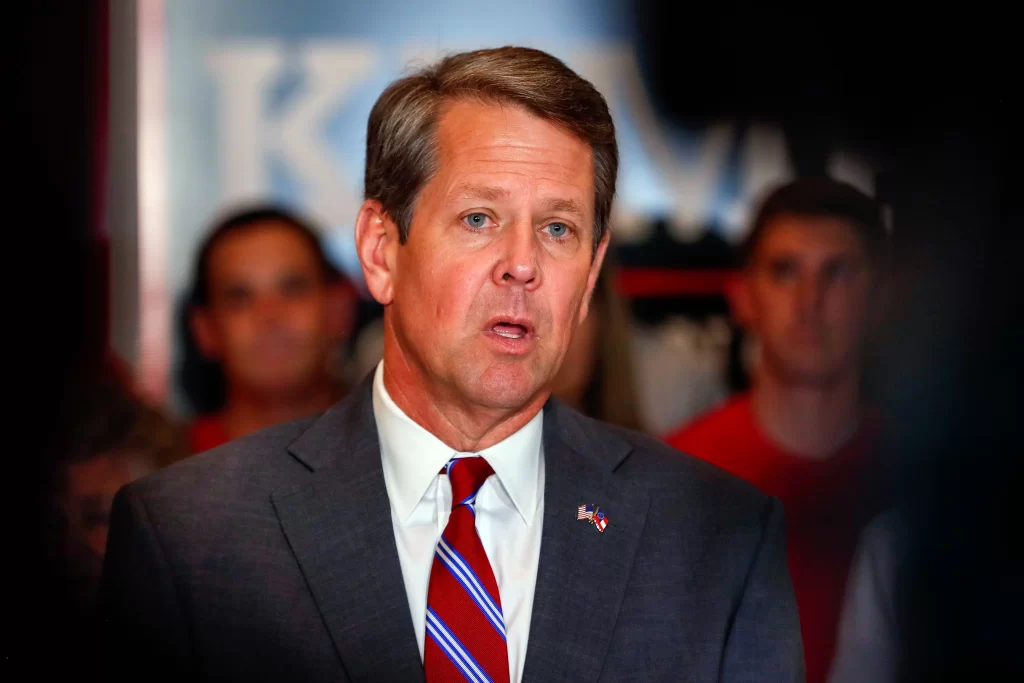
GA Gov. Brian Kemp

Martha is going back to the head-shaker talking point that illegal immigration has increased so much since 2018 that Kemp was somehow forced to abandon his oath of office to enforce state laws and his campaign pledge to create a public data base of “criminal illegals”, end sanctuary cities in Georgia and to pass the “Brian Kemp Track and Deport Plan”  yada-yada in Georgia.

“He had to change his tactics…send troops to the border”, said Martha.

I left quote marks off much of the above as it was taken from memory just after it aired.  I sometimes tune in to Martha’s show after Scott Ryfun’s show ends. It would be great if Martha would record her entire show in a podcast as opposed to “show clips.” I also note that “obsessed” is apparently the latest Establishment Republican term to describe a pro-enforcement conservative who refuses to accept or forget Kemp’s defiance.

  • More related: Martha Zoller, “DACA,” amnesty and “the likes of D.A. King” – transcript and audio link

Filed Under: Recent Posts Achrives

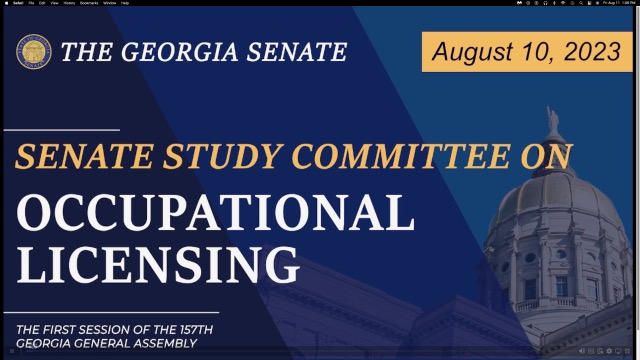
GA Senate Study Committee on Occupational Licensing August 10, 2023 meeting transcript and video

August 14, 2023 By D.A. King


Transcript by Rev.com. My cost: $150.00 and about 3.5 hours.

This committee is a result of SR 85 that passed despite our educated warnings on its goals. SR 85 is the product of the lobbying by the Georgia Chamber of Commerce.

Video here.

Begin meeting ( Chairman’s mic was off for a few seconds)…

Chairman Sen Walker:

… uh, visiting with each other. Um, but we’ve got a, a good agenda today, and we want to not take too much of your time, more than we have to. Um, I wanna call on the, uh, Ms. Wanda Jaffe. She’s the deputy director of the Professional Licensing Boards, and she has been gracious enough to allow us to meet here in her facility. So I’m gonna invite her to come forward and, uh, give us a few words of welcome and maybe some logistics.

Ms. Wanda, you… If you don’t mind, because we’re livestreaming. All the presenters will need to present from here. And we- we’ve got, uh, Senate press here that’s gonna help us with that, make sure we’re on board. Am I on?

Wanda Jaffe:

Yes, sir.

: Chairman Sen Walker:

Okay. Is that mic on?

Wanda Jaffe:

Yes, sir.

 Chairman Sen Walker:

Okay. Okay. All right. The floor is yours.

Wanda Jaffe:

Good morning.

 Chairman Sen Walker:

Morning.

Wanda Jaffe:

Um, I’m Wanda Jaffe, as he stated. I’m the deputy director here at the Professional Licensing Boards. Um, as many of you know, we have, um, 43 boards, 197 license types, and we are in the process of trying to get Georgians’ licenses as quickly as possible. We’re the only division that’s located down in Macon, so welcome to Macon everybody (laughs).

And, um, I just want to tell y’all, thank you for coming down here. And I’m, uh, gracious to open up our building to you guys. We are transparent. We are doing the best we can to get Georgians’ licenses as quickly as possible. We are fully involved with trying to remove blockers and get Georgians to work, so whatever we can do to be of help, just let us know.

 Chairman Sen Walker:

Thank you, Wanda. And how many employees are here?

Wanda Jaffe:

So I have a total of 110 employees here in Macon. Um, that does include some of our investigators and inspectors that are here in Macon.

 Chairman Sen Walker:

And you all are back open and, and not, not… You… The pandemic’s been over quite a while. You’re open for business, people are working here in their offices, is that correct?

Wanda Jaffe:

Well, yes and no. So we never closed during the pandemic. Um, during the COVID pandemic, I was here every day, five days a week. Um, I… But I did… We did send our staff home, um, to do some remote working. So we are now doing kind of a partial remote, partial in-person. So every board that works here operates has somebody here every day. So if a customer comes in and walks in off the street, if they have an occupational therapy license, there’s someone here to help them. So what we did was kind of rotated our staff out. Some of them can work from home as long as somebody is here every day that can assist a client. I’m here Monday through Friday every day to make sure that if something comes up that they’ve got somebody that they can talk to.

: Chairman Sen Walker:

Okay. Thank you.

Wanda Jaffe:

You’re welcome.

Chairman Sen Walker:

Any questions for Wanda? Thank you, ma’am.

Wanda Jaffe:

Okay.

1/3 start: Chairman Sen Walker:

(laughs).

Wanda Jaffe:

(laughs).

Audience:

[inaudible].

 Chairman Sen Walker:

Uh, I also want to recognize Maggie Hasty, with the Secretary of State’s Office. She’s been instrumental in helping us put this together. Thank you, Maggie, uh, very much for that. Again, Senate Press, thank you for the- their work. Um, as far as the committee members, we have, uh, S- Senator Brian Strickland here. Senator Mike Dugan here, Senator Anavitarte is, um, with us virtually, uh, watching the meeting as it’s livestreamed. Uh, and if he has questions, he’s gonna text them to Ky and I. Um, and then Senator Halpern had a prior commitment, uh, on the West Coast, so, uh, but we do have a quorum. And with that, I will, uh, call the meeting to order.

Um, also I do want to recognize my legislative assistant, Kylynn Gallagher. Thank you, Ky for all your help with, with this. Um, just… I’m gonna make a couple remarks to start off with. The… This topic, uh, as I have dug into it, has been kicked around for literally decades. I suspect that my father, uh, worked on this issue. Uh, it’s a tough nut to crack. Um, there are, as, as Wanda said, under, under this office, 43 licensing boards (laughs). And, uh, and, and they’re, they’re not any of them one the s- same as the other, really. And they all have different nuances to them. And everybody kind of has a, a, ve- uh, you know, the turf issues and the- their agenda and their vested interests. So it’s a difficult politically to… Uh, uh, uh, it’s a challenge. But we are in, uh, 2023, and as you’ll hear from Daniela in a minute, we have a serious workforce, uh, needs in Georgia, thankfully, under Governor Kemp and prior good leadership. We’ve got a growing economy, uh, and we’ve, we’ve got to get into the modern world with this licensing, professional licensing issue if we’re gonna continue to grow our economy.

Um, I do wanna recognize my very good friend, uh, uh, Representative Patty Bentley, uh, for joining us. And, uh, we’re always glad to see you, Patty. And Patty has recently gotten engaged, and, um, I’m real, uh, proud for her. But, um, uh, I, I hope she doesn’t decide to run for the Senate. I’d be in in trouble.

Audience:

(laughs).

 Chairman Sen Walker:

Uh, so our first speaker, uh, just to give us some information on what we’re… Where we’re at in Georgia with workforce is, uh, Daniela Perry. So, Daniela, the floor is yours. And if you’d like to sit and adjust that mic down, or if you want to move that chair and stand and just talking in the mic, um, you, you may can work your PowerPoint.

Daniela Perry:

Thank you.

Wanda Jaffe:

Adjusted.

Daniela Perry:

Can y’all hear me okay?

Audience:

Yeah.

Daniela Perry:

Well, um, Chairman Walker, again, thank you for the invitation to be here today and to share a little bit of information, um, that we’re looking at from a Georgia Chamber perspective. Um, my name is Daniela Perry. I serve as the vice president of the Georgia Chamber Foundation. Um, and our… The foundation is really the research, um, and data arm of the Georgia Chamber. So a lot of our work, um, you know, focuses on these big trends and what we’re looking at, um, moving forward.

So, as Chairman Walker mentioned, um, we’ve experienced tremendous economic growth. Um, the last four years, again, has been record economic growth year over year. And, of course, Governor Kemp announced another year of record economic growth for FY23. Um, so while many states are trying to still recover from the pandemic and find their footing, we, um, have continued to seen prosperity, um, year over year. I think a key point to mention is the fact that 77% of this economic activity has occurred outside of metro Atlanta, which is the state chamber, is really important to us, um, because we wanna make sure that in every corner of the peach state, whatever your zip code is, that you are experiencing opportunity and able to find good employment and grow your economy.

So while we’ve experienced this tremendous economic growth, um, it hasn’t come without its challenges, although these are really, really good problems to have. So we’ve been tracking unique job postings, um, since 2020, um, with, with COVID. You’ll see on the graph here, it looks at 2021. Um, and y’all can see, there’s been some variation over the years. You’ll see that dip in Q3 of 2021, which was the Delta variant of COVID. Um, and you’ll see it rebounded very quickly to mo- over 450,000 job postings. And now we are kind of in a little bit of a plateau around 350,000.

The top occupations we’ve seen this quarter, um, our registered nurf- nurses, software developers, and retail salesperson. The other one that often ends up in this category is tractor trailer truck drivers, which obviously with our freight logistics infrastructure, it’s a huge demand. Of course, too, I wanna note that all of these are very different skill levels, require different education, but again, we’re just seeing tremendous need across the state.

Uh, another key point to mention is the number of unemployed Georgians is about half of what these job postings are. So as we’re thinking about how do we combat with our workforce shortages, simply getting people off of unemployment and into jobs is not going to, to fix our problem. We really need to think strategically about how we can, you know, bring folks in. And then also think about folks that are not engaged in the workforce, um, make sure that we’re able to get them back into the workforce, whatever barrier they might face, which is where I’d like to point you to our labor force participation rate, which is around 61.3%.

So we have nearly 40% of Georgians that are not engaged in the workforce presently. Um, they’re of working age. So again, as we’re thinking about how do we get these folks in, we wanna make sure we’re looking at any barriers that would prevent them to getting to employment or maybe, um, individuals that are also underemployed or looking at that.

So I mentioned labor force, um, participation rate because we like it, um, a little bit better than unemployment because it looks at kind of that full working age population. This, um, goes back to 2000, um, and you’ll kind of see that there’ve been some spikes and jumps, um, and you can see where the great recession’s been, as well as COVID. Um, but overall, we’ve seen a, a decline in individuals that are participating in the workforce. Um, I’ve got numbers for the last, um, couple of years. We actually had our peak, um, in November of 1998, around 69, a little over 69%.

So again, as we’re thinking about the fact that we’ve seen this decline overall, we wanna make sure that we’re thinking about what are those barriers, um, understanding that the nature of work has changed. Um, the, the skills that are needed in the workforce are changing too, especially as we’re seeing technology, um, become a bigger part of everyone’s job.

So I’ve pulled some, um, occupations from our labor market software. Um, these are all required licenses in the state, um, included the job posting over the last year. Um, I also included retiring soon. Um, so as we’re thinking about not only our current workforce shortages, but what’s the need over the near term. Um, wanna be cognizant of that shortage that’s coming, and then also the number of employers competing. So when we say war for talent, you’ll know that we’re not over-exaggerating. Um, this is a, a tremendous need. Of course, I’d love to point you to registered nurses. We’ve got almost 3,000 employers that are trying to hire registered nurses in the state, and there’ve been, um, more than 82,000 postings.

Again, you’ll also see that there are other, um, health occupations for, um, you know, nursing home, certified nursing assistants, home health aides, and, um, tractor trailer truck drivers, the top ones, but of course, childcare workers, pharmacist, accountants. And again, this ranges over different skill levels, different education levels, but tremendous growth, um, in all of them.

So we like to look at the long term an- and know where we’re going. Um, by… In the next 10 years, we are gonna need… Where our… The number of jobs will increase, um, by a little more than 2 million, and our population’s going to increase, um, by 1.2 million individuals. So again, as we’re thinking about the fact that we are experiencing this tremendous growth, um, a- and this is kind of just that projection that we, we certainly could get larger announcements that’ll bring more need. Um, also thinking about the fact that in the back rearview mirror, we’ve got all those retirements of people that are, um, moving towards that, people are working longer. Um, so there’s a little bit of variability, but over the long term, we’re really gonna need to think strategically and systematically about how we do things differently, um, how we are able to innovate, um, whether it’s reducing regulations, um, but making sure that we’re able to meet our workforce needs long term.

So, uh, we’ve, um, you know, at the Georgia Chamber have looked at a number of opportunities, um, to improve occupational licensing, to get more folks, um, into these, um, occupations because generally, occupations that are licensed have higher salaries, so better, um, opportunities for folks. There’s around 40% of Georgians that have a criminal history. Um, and we’ve seen that, um, salaries actually are 10 to 20 percent lower for individuals that have been incarcerated. And too, the unemployment rate is significantly higher for those that are formerly incarcerated. Um, as well, I know there was some legislation from Chairman Strickland last session that addressed this. Um, and the Georgia Chamber was, um, supportive of it because it really looks at how do we get folks that have skills and talents for facing some logistical barriers within our, um, occupational licensing system.

Georgia also has a huge military population. Um, we actually have the ninth biggest veteran population and then the fifth biggest active duty, um, population in the state. But portability, um, of licensing for military spouses has become more and more important for the Department of Defense. In order for them to designate Georgia as a military friendly state, you need to have that 30-day near term licensing. Um, of course, as we’re looking statewide and seeing the big need, all of our military installations are huge economic drivers across the state. Um, an- and so we know what they mean to the communities, but as well what they mean to the state as a whole.

We wanna certainly protect our military installations because we know the tremendous growth that they add, especially with Robins Air Force Base being, um, just down the road here. The healthcare industry, um, as I’ve kind of shared some data, you’ll see again, there’s tremendous need in growth. Um, but the Georgia Healthcare Workforce Commission had a few statistics again that, that look about what this looks like long-term. Um, and estimate around 20% of nurses, behavioral health and specialty care, um, workers are over 55 years old and so might be looking to retire, um, over the next 10 years.

Also found that around 3.7% of the healthcare workforce is leaving annually and is not being replaced by new graduates. And then, of course, as we’re thinking about all those opportunities, um, with legal i- immigrants that have come here, um, opportunities to make sure that we are using their skill sets well. Um, of course, there’s also op- opportunity at the federal level with visa reform, but not within the scope of that, so we’ll leave that to Washington. And that’s, um, all I have for y’all this morning. So certainly, happy to answer questions, but again, I appreciate the opportunity to be here, and appreciate y’all service on, um, this committee to address this issue.

: Chairman Sen Walker:

Thank you, Daniela. It’s good information. Uh, so you, you hear the challenge we face with these, uh, the growth we’re having, and the statistics she gave us, um, and licensure. It certainly is a barrier to entry into the workforce for a lot of people. Um, and I, I know I didn’t ask you this to prepare this, but it’s… And it may be somebody in the room knows, but what percentage of the, uh, job postings that we have require a occupational license?

Daniela Perry:

I can look that up for you.

: Chairman Sen Walker:

I think I’ve seen that in a recent meeting-

Daniela Perry:

Yeah.

1/3 start: Chairman Sen Walker:

… but I… It’s, it’s a pretty, uh, high percentage. It’s pretty un- uh, uh, surprising how high that is. So certainly, that’s a challenge. Um, I’ve got… And I’m sure my colleagues will have some questions too, but on the workforce participation percentage, is this kind of a national trend?

Daniela Perry:

Yes.

1/3 start: Chairman Sen Walker:

I mean, are we an anomaly or is this?

Daniela Perry:

No, Georgia… We- we’ve certainly kind of seen this nationally. Um, other states are going through, through similar things. Um, certainly, you know, Georgia, you know, I think is… I think is in the middle in terms of where we stack with our labor force participation rate. Um, but we certainly have other states that we’re competing with that are doing better in this arena. Um, obviously, it’s something that’s an opportunity. And when we look to different communities around the state, um, we see lower numbers in the state average. Um, I think Bibb County was around 55%. Um, so again, as we’re thinking about the statewide need, we’ve got different pockets depending on community need, um, where you are even seeing lower, um, numbers than that, 61.3%.

1/3 start: Chairman Sen Walker:

Is part of that just lifestyle choices and, and maybe wanting to have, uh, uh, one parent, you know, dedicated to parenting the children and staying home, raising the family?

Daniela Perry:

Absolutely.

1/3 start: Chairman Sen Walker:

Uh, versus, I mean, you know, both parents working in the children in daycare.

Daniela Perry:

Yes. So certainly, this is gonna encompass individuals that are choosing to stay home, um, because it is better for their family to have one parent working or one parent, um, at home. Um, it also could include individuals that may have disabilities that have trouble accessing the workforce. Um, so there’s a wide range of, of why you have this 40% that is opted to not participate in the workforce. And certainly, ag- again, you know, um, the high point of this i- in recent history was around 68 or a little over 69%. Um, and so, you know, a seven point drop is still very significant. And if we had those folks in the workforce, we would certainly be meeting a lot more of our current workforce shortages.

Um, but, you know, I, I think it’s fair to say that you would always have a portion of the workforce that would not opt in for, for various reasons.

 Chairman Sen Walker:

So we have 350,000 unique job postings currently, a little over 350,000. And your projection is that the, uh, number of jobs is gon- over the next decade is gonna increase by, uh, over two, um, two and a half million, looks like to me, from 5,285,000 to 7,000,845.

Daniela Perry:

Yes, sir.

 Sen Walker:

And yet, our population is only gonna increase 1.2 million so that, uh, that makes the delta… So we’re gonna go… That’s, that’s one point. So we’re gonna be like 1.6 or 7 million in open positions if these, uh, projections hold true.

Daniela Perry:

Absolutely. And so, I think that’s-

1/3 start: Chairman Sen Walker:

Even if 100% of the population growth went to work-

Daniela Perry:

Right.

: Chairman Sen Walker:

… which they’re not. So it’s actually gonna be a big, big deficit in workers. So it, uh, seems clear to me that we’re gonna have to recruit workers from other states to grow, you know, to fi- fill the need in our economy. And as we do that, I think the licensure issue becomes even more of a, a problem for that. Um, the other thing that I think is happening and, and COVID accelerated this is, we’ve got Georgians that are, you know, live here, but they’re working for, they’re working for companies virtually outta state because their licensing requirements are maybe they don’t even have to have a license to do that job, or maybe it’s easier to get a license.

Uh, and I think we are seeing that in, uh, all the fields, but I think in like psychology, and psychologists, and some of the medical fields, uh, they’re, you know, able to make more money maybe doing it that way and have less barriers to entry. So we’re at a competitive disadvantage. Um, we’re not gonna be able to recruit these people from other states if we have a burdensome licensure system, which we do have, which we’ll hear about that later.

Um, and we’re competing, you know, with the ability to really work anywhere in the world, uh, in certain jobs virtually. So I think we are… Uh, uh, it’s imperative and, and incumbent upon us to try to fix this problem. Um, Senate Bill 157 sponsored by Senator Strickland, uh, is of high, high priority for the Senate. It passed unanimously in the Senate, and we are… I guess it’ll come back being committee in the Senate or does it-

Senator Strickland:

It’s in the house.

1/3 start: Chairman Sen Walker:

In the house.

Daniela Perry:

Okay.

 Chairman Sen Walker:

Um, but that’s gonna be a high priority, uh, for us that deals with the, uh, some criminal history and, uh, Senator Dugan and I are on the Georgia Works Commission, and we got a lot of good information about that at our meeting Tuesday. Um, and people that are, apparently people that are arrested and not convicted, it still creates a problem for them with employment. And um, so I applaud Senator Strickland for his work on that. And, um, uh, um, uh, you know, the lieutenant governor is, uh, this is a high priority for him. I’ll just, for the public that’s watching that we get this passed.

Um, and then for me and a, a lot of us in, in the legislature, um, I represent Robins Air Force Base and the spousal licensure, which we’re gonna talk hear about more today too, is something that I’m real, uh, passionate about. And we have, uh, you know, had legislation that got out of Senator Dugan’s committee that was really… He helped me improve it and perfect it. It was really good legislation and again, got hung up in the house with some, uh, just, you know, things going on there. So we’re gonna continue to work on that. Um, all right, I’ve talked enough, uh, Senator Strickland.

Senator Strickland:

Thank you. Um, Daniela, as Senator Walker was saying, thank y’all for your support as Senate Bill 157. Um, I think that bill is gonna go a long ways in really making more of a uniform process as to how criminal records are handled by all these different boards. You mentioned 40% of our state having a criminal record. And what we learned in working on that issue, wanna applaud Representative Bentley who’s here as well. We, um, spent a, a last year in a separate study group that was kind of unofficial looking at that issue. And we saw and heard from people that were not trying to work because they thought they couldn’t.

Daniela Perry:

Yeah.

Senator Strickland:

They didn’t know how their record would affect them, even getting in industries, and then word from an attorney that was handling appeals for people that were denied licensing, who does this for a living and has trouble navigating that. We realized how difficult it is for individuals to ever navigate that process. So it now sits in the house, and we have, um, broad support in the house, I believe as well. Just got caught up in the back and forth last year. So that’ll be… I believe it’ll back in the judiciary committee, I think, in the house this year coming up next year.

Um, question for you, in the labor force participation rates, some of the same things that Chairman Walker was asking, um, you mentioned how this compares nationally. Do you know if, if the aging population does this, does this include people of working age, or is this everyone, is this… Is the aging population that we have impacted by this, or they’re not counted in that rate, do you know?

Daniela Perry:

Sure. So it’s usually defined by, um, USBLS by 25 to 64.

Senator Strickland:

Okay.

Daniela Perry:

So there is the potential to that is individuals are maybe older and, you know, choosing to still participate in the workforce that some of those are captured as well. Um, and, and we are certainly encouraging, you know, businesses across the state to think creatively how to use, um, you know, individuals that have lots of expertise to offer and still wanna contribute a lot to make sure they’re utilizing things well.

Senator Strickland:

But also goes to show it’s not just because people are getting older then, so they’re not counted in that. Um, the other question I have, you may not know the answer to this, and I’m not sure if anybody does, but has there been any study that goes the next step and ask people why they’re not working? There’s many reasons people may choose not to work, um, but it’d be great to know…… knows, just even from a just, survey standpoint, what the reason is. I, I look at the childcare shortage-

Speaker 2:

Okay.

1/3 start: Chairman Sen Walker:

Um, I mean, I, I know people, maybe it’s just people I know, that are young parents that, uh, aren’t able to work because they can’t find childcare. I know someone right now, that’s considering taking a leave of absence from a professional job, because she can’t find anybody to take care of her child. She lost her childcare purse. She’s on a waitlist at places.

And so, that’s just one little factor that could be in there, that we saw related to, uh, the overall issue of workforce. I’d be curious if we have seen any studies that would show why people are choosing more and more s-, around the country, more so, not to work.

Speaker 2:

Absolutely. Um, we can pull some information, but I have not seen a great survey. I think it is one of those things that people do consistently ask, you know, where are these individuals. I think we’d love to show them some of our TCSD programs, and things that are options.

But absolutely, childcare’s a huge issue and we do have a shortage of childcare workers. Um, speaking from personal experience with it, a dire… in childcare, uh, we were on a waitlist for a long time, too, uh, to get her into the, the right place where she’s safe. Um, so absolutely, it’s a huge challenge.

Um, and certainly one of the reasons, too, when we saw a tremendous levels of women leaving the workforce during the pandemic. Um, and so, still trying to make sure we’ve got folks into the workforce that, um, want to contribute, but all those other factors need to be right for them a- able to make that choice.

Speaker 3:

Senator Dugan.

Senator Dugan:

Thank you Mr. Chairman. Uh, Senator Strickland, I’m sorry, I looked to you and said I wasn’t gonna ask anything.

Senator Strickland:

Uh-

Senator Dugan:

Uh-

Senator Strickland:

That’s why I talked so long.

Senator Dugan:

Yeah.

Speaker 2:

(laughing).

Senator Dugan:

Thank you, and always good to see you.

Speaker 2:

Thank you.

Senator Dugan:

And, I’m gonna, I’m gonna tag on that one too, the 177,000 one. Uh, we need more context with that. How many of the 177,000 are actually looking for jobs that require certification, which would be pertinent to this particular committee? Um, and it’s not only childcare availability, uh, some of these are childcare cost.

Speaker 2:

Okay.

Senator Dugan:

Uh, so you got one that’s availability. You have three, you start looking at, is it more economically feasible for one of these to stay at home with children while the other one works, because it, of the, the cost portion of it. Sec-, the second one i- is a question. If you could look back at 1998-

Speaker 2:

Yeah.

Senator Dugan:

What were we doing differently then, than we’re doing now?

Speaker 2:

Probably, a couple different things. Um, but certainly, um, you know, eh, it… there’s been a lot of conversation again, why we’ve seen this decline, because it is something that we’ve seen nationally.

Um, and, you know, there’s a number of different reasons, but there’s not one silver bullet. You know, um, people are choosing to, want more flexibility, um, a- and so they’re, you know, thinking about these options differently. Um, there are a lot of costs that have arisen over the years and maybe, always haven’t tracked, um, with salary growth.

Um, a- and so, we’ve seen a lot of different trends, kind of, impact this number. Um, but I would say, there’s not one clear factor. Um, I would say Georgia has experienced this in a little different way, because, um, you know, we were able to bring a lot of folks into the state, to meet our workforce needs for a lot of years. Um, having the fact that we’ve got lots of people from other southern states that were moving in and filling our workforce shortages. Um, but we’ve kind of, seen that slow in recent years. And then with the tremendous growth, um, it’s created more of a challenge.

Um, there was actually some recent research that showed that Georgia has 159% more unfilled positions, than unemployed individuals, in the state. And the national average is 67%.

So again, as we’re thinking about what’s unique about Georgia, it’s that our needs are a lot more acute than other places. Um, of course, other people are very envious of what we’ve seen from an economic growth prospective. They want the economy that we have. Um, but that certainly requires, you know, innovative and strategic thinking about how to use the people that we have here, and then how to strategically recruit folks into the state, that meet those workforce, um, needs that we’re seeing from an industry perspective, just grow and expand.

Senator Dugan:

When you go back and look at 1998, uh-

Speaker 2:

Yes, sir.

Senator Dugan:

And I understand the types of jobs have changed significantly-

Speaker 2:

Yes.

Senator Dugan:

… since then. Um, a matter fact, they didn’t have smartphones, back then. Uh, but when you go back and look at that-

Speaker 2:

Yes, sir.

Senator Dugan:

Did you get the percented population that was involved in agriculture, in ’98 that was considered employed, versus now?

Speaker 2:

Yes.

Senator Dugan:

And that the only… The last question I have, is on the, Georgia’s war for talent. And, you know, I, obviously they… the situation with yellow, is not good. How is that gonna impact the availability of CDL drivers, on your slide there, what are you forecasting?

Speaker 2:

The need for CDL drivers is tremendous. Um, I would say we consistently hear from folks, um, that this is one of the biggest limitations. Which is why we’re really seeing industry think about, how do we, y- is this an in-, is this something that we try to automate faster? Um, because we are just seeing tremendous shortages.

Um, and I would say, too, that’s why, you know, we’ve seen more and more challenges with getting products to people faster. Of course, a lot of was accelerated with COVID, as we’re seeing so much more e-commerce growth. Um, it was something that happened very, very quickly.

But, um, too, is we think about a competitiveness prospective. If we don’t have the truck drivers here, to move goods in and out of the state, it’s gonna impact the activity at the ports, um, a- and everything that we’ve really been able to grow, strategically.

So, I would say we signi-… We really look at that. And, uh, for the truck drivers, um, retiring soon, is almost the same number of the new postings. So, eh, we are, uh, specifically, for a lot of companies engaged in this effort, that it is a significant challenge for them to recruit folks. Um-

Speaker 3:

[inaudible]. That’s fine.

Senator Dugan:

Y- you kept talking, so it chipped away-

Speaker 2:

Sorry.

Senator Dugan:

… another question. No, no, no, no. That’s why you’re here.

Speaker 2:

Okay.

Senator Dugan:

Um, so, how much flexibility do we have within defining what is required for a CDL, within the State?

Speaker 2:

So, the one other thing I hear a lot of, wh- where we experience this big, um, issue on the tractor trailer truck drivers, is that in order to cross state lines, you have to be 21 years old, which obviously is where a lot of the need is. That’s at the federal level, unfortunately.

Um, a- and so they’re obviously is, flexibility within the licensing here, but consistently, that’s something that we, hear. Um, so, I know there’s lots of movement within Congress to, to try to continue to push this. Um, especially, as we’re thinking about getting folks on a talent pipeline. If we want to make sure that we’re catching kids in middle school and high school, and really showing the opportunity. If you would, then, have to wait three years and do something else, and then come back to CDL, it’s a big hurdle, um, for that recruitment prospective.

Senator Dugan:

That’s what I was asking.

Speaker 2:

Yeah.

Senator Dugan:

Um, do we have the flexibility to set up a different category of CDL, that is a short haul, CDL, where you could be lower than 21?

Speaker 2:

That’s a great question. We can… I’ll, I’ll do some research to see what we… if that would be something that would, um, an option. But I know that crossing state lines, is usually something that is very important, obviously, to get folks from industry perspective.

Speaker 5:

Um, so, I, I think that you can get a CDL, prior to 21, it’s just-

Senator Dugan:

You can’t-

Speaker 5:

You can’t-

Speaker 2:

Cross state lines.

Speaker 5:

Cross, (laughs), state lines. And the other issue is, your ins-, the company’s insurance, um, carrier’s gonna have guidelines for their drivers, too. Uh, and it, it, that becomes an issue, you know, it’s a lot, a lot of ’em want the drivers to have three years experience, and so on and so forth. So it’s a, yeah, (laughs)-

Speaker 2:

Yeah. (laughs).

Speaker 5:

Um, Mr. Sterling, I don’t think is here. Um, so, Sarah, do you mind to go out of order and go ahead and present your portion?

Thank you very much, Daniella, awesome. [inaudible]. (laughs). Sarah Critanin is, uh, with our office of legislative counsel, and she’s got some, uh, good information she’s gonna share with us today on some recent corp cases, and just the legal landscape of, uh, licensing and where it is in our code section, et cetera, so.

And she put all this together for me, on short notice.

Sarah Critanin:

(laughs).

Speaker 5:

I appreciate that.

Sarah Critanin:

Anything for you, Senator.

Speaker 5:

(laughs).

Sarah Critanin:

So, um, I’m Sarah Critanin, I’m attorn-, an attorney with the Office of Legislative Council, and we draft your Bills. (laughs). And I’ve been doing it for two years. Before that, I was with the Department of Insurance. So I hae some experience with, um, dealing with licensure and, um, criminal investigations and how to handle, um, m- background checks and that sort of thing.

So, um, I was really excited to help out with this committee. Um, I’m gonna talk to you… So I gotta come down here. Oh… So we’re gonna ta-… I’m gonna talk to you today, about sort of, opening up licensure, and what’s going on federally. Um, and, um, in the service members Civil Relief Act, which is a federal law.

And then, uh, Senator Walker, asked me specifically, to talk about a recent Texas District Court case. Um, I’d like to take a moment to talk about interstate license for compact, which comes up a lot, were all this goes in Georgia law.

And then finally, Senator Walker asked that we talk about a recent Georgia Supreme Court case. So that’s a lot to cover. I set the timer, it’s going. (laughs). And so, we’ll see what can do.

So, the Service Members Civil Relief Act, or the SCRA, um, is found in federal law, under 50 USC, Section 3901 to 4043. This act is designed to help service members, um, when they have to transition to active duty, and it, it provides some civil protections, which is yet there, uh, protections by foreclosure, repossession, leasing agreement evictions, interest rates and default judgments.

The concept of pro- protecting our service members, goes a way back. I did a little, you know, one day’s research. But it goes back, (laughs). There, there was, um, there were laws, um, in the Civil War and World War I and in World War II, to protect service men when they get called to duty. And in fact, it used be called the Soldiers and Sailors Civil Relief Act, SSCRA.

In, uh, 2003, it was overhauled and became the Service Members Civil Relief Act, and, um, for our purposes, um, there was an addition in 2023, this year, um, on the portability of professional licenses.

So, uh, this was signed in January of this year and went into effect in January of this year, to, um, allow service members and their spouses to use their professional license and certificates, when they rele- relocate, due to military orders.

Um, so I, this is sort of, a hybrid. I tried to cut and paste the actual law, ’cause you never want to blur it. Because it is, we have to look at the exact words, um, to understand what’s going on here, who it applies to and what it covers.

So, it applies to service members or their spouse, as who has a covered license. And that’s a defined term in the law. And it’s when they relocate, because of a military order for military service, outside the jurisdiction, where the license was issued. And the co-, and the consan-… the huge benefit of this, is a covered license shall be considered valid. Which is a, a, you know, a phenomenal statement in the law, for them just to, blanket, say that.

The interesting thing, um, legislatively, for me, was, you know, it’s not forever, it’s for the duration of the military order, and then, um, under certain conditions or circumstances.

So, what the service member or spouse must do, is a… And this is in the law. This is cut and paste, in the law. They have to provide a copy of the Order to the licensing authority. They have to remain in good-standing with the original licensing authority, um, in the good-standing of every other licensing authority that they’ve been issued. And they have to… And this is very important, as a receiving state, is they have to submit to the authority of the licensing authority in the new jurisdiction. So, that’s a, a great save. That gives the receiving states some, um, leverage.

Um, interestingly, the federal law, specifically yields to states that are participating in interstate licensure compact. So, some of you, um, may not be familiar with, uh, what a interstate licensure compact is, and I’ll talk about this later. But, uh, this is from the, uh, service, Service Members Civil Relief Act, um, and it provides an exception.

So, um, the federal law is yielding to the state’s agreement, which is, which is also e- exciting, you know, yay, law. But it’s, uh, (laughs), it’s exciting to see that federal law is saying, okay, a few states have worked it out in the licensure compact, then y’all, you get to, um, control.

Um, so, um… this is also, um, from the cil- the Service Civil, Service Members Civil, um, Relief Act, is, what is a covered license. This is the definition, is a professional license that is good, in good-standing with the licensing authority, and that the service member or spouse, has actively used during the tri- two years, and that is not a license to practice law. So they carved out law. Yay. So, (laughs). So, I, um, I underline this phrase, has actively used, ’cause that’s gonna come up in a case.

This is a recent case, Porte and, I, I think there’s supposed to be an accent, but I’m just gonna say, Porte versus Morath. It’s a recent case, out of Texas. So, it does not have any governing on us, but it’s a very interesting case, because we’re gonna see the little dance between Federal and State law.

It’s out of, uh, Texas. It’s a District court case. So, there’s a chance this may all be appealed. More like, more likely they will be appealed, but for now, this where it stands. It was on the application and scope of the licensure and por- portability provision in the SCRA.

There’s a conflict with the Texas requirement. So the Plaintiff was Hanna Porte, a service member spouse. She had, um, a school counseling license from Ohio and Missouri and she got married, and her husband was transferred for, to Texas, for military purposes. So, all that falls under, um, SCRA.

And she applied for a job in Texas, and Texas refused, saying, um, she… they were, they had an extra requirement, as most states do. So they had an extra requirement, that she had to have two years of experience.

Um, she appealed… Uh, well, sh- they refused. She mo-… She filed a lawsuit. They moved for preliminary injunction and the, the District Court granted it. Um, there was some argument about, about whether she had to, be employed for two years, or it’s just if she used her license in that two-years period. And the District Court sided with the Plaintiff.

So, what does this mean for us, is that we have to be mindful of what the Federal government’s doing. Um, when I found out, after the fact, is that the Department of Justice was very ha-, was very clear all along, about where they stood on this.

So the, in July of this year, the Department of Justice issued a letter to all State licensing authorities, regarding the professional licensing portability provisions. And you can find it at their website, and I don’t think I printed out a copy. But it’s very clear, the law is very clear, and it’s very clear to them, that they’re gonna enforce this law, and they’re going to support the military members and their spouses, in their pursuit of justice, if they want to get licensed.

They also filed, which is kind of interesting, too, is they filed a Statement of Interest, in the Porte versus Morath case, um, saying that she was likely to succeed on her merits, and why that they, why, um, they are going to vigorously enforce this section, and why she had standing to bring the case. So the message is very clear to the states, that this is something important to the Department of Justice and to, um, federal government.

So, as mentioned earl-… Yeah. Eh-

Senator Dugan:

So can we… before we move on to another subject-

Sarah Critanin:

Yes, sir.

Senator Dugan:

That’s pretty significant, I think. Um, and very recent. Can we talk about that, Sarah, is that all right with you?

Sarah Critanin:

Yes.

Senator Dugan:

And maybe, ask some questions, and, um, maybe-

Sarah Critanin:

I’ll do my best.

Senator Dugan:

Uh, Wanda, I may call you back up, um, too. So, what does that mean for us, in the Georgia legislature? Do we need to align our, our statute to align with that federal statute? Does it mean we need to, not do anything and, and face potential lawsuits and see how the courts, so, let the court sort it out? I mean, what is the prudent path forward?

Sarah Critanin:

So, uh, in, in my opinion, I think the prudent path is for a state licensi- Licensing agencies, to really take a look at their requirements and open it up to, to be compliant with the federal law.

Uh, the, the interesting is, and we’ll talk about this, is so the SCRA is for active military, and some of our laws are more… the, the laws that we drafted are more about transitioning service members. And so, it’s a little bit different. So I don’t think we need to repeal anything or changing our law. I think agent, state agencies need to be aware of this law, and need to work, work, uh, y-, review their applicants, with this in mind. Just saying, oh yeah, this might be an issue.

I don’t think we need to change our laws yet.

Senator Dugan:

Uh, Sarah, we’ve argued in the legislature, over, you know, is 90 days long enough to recognize a military spouse license, from another state? Is 60 days? Should it be 30 days? I come down on 30 days. This is immediately.

Sarah Critanin:

Uh, I don’t think they put a timeline. But I think, right, sooner is b-

Senator Dugan:

Well, it can go back-

Sarah Critanin:

Do we go-

Senator Dugan:

… to one of your first slides. It said, I have something about, absolute.

Sarah Critanin:

It said, shall be valid. You’re right. That’s, uh-

Senator Dugan:

It doesn’t say, you… in 30 days or 90 days.

Sarah Critanin:

Whoops. Right. Shall be considered valid. Um, I mean, I think State agencies have a right. They, they need time to review and make sure all the documents are in place. But you’re right. I mean, it says it shall be considered valid.

Speaker 8:

There was a copy out on the next one, the-

Sarah Critanin:

Is it-

Speaker 8:

[inaudible] to everyone. But, it’s, uh-

Sarah Critanin:

Mm, next one?

Speaker 8:

Yeah.

Sarah Critanin:

Oh. Oh.

Speaker 8:

It… it’s all right.

Sarah Critanin:

This one?

Speaker 8:

Um…

Sarah Critanin:

One more?

Speaker 8:

No, I think that’s it.

Senator Dugan:

[inaudible].

Sarah Critanin:

All right. I mean, (laughs), I put these animations in. I thought I was being clever, and it’s just a pain. (laughs).

Speaker 2:

(laughing).

Speaker 3:

I think 2B and through, kind of address the, uh, fed and state. It’s up there.

Senator Dugan:

2B is licenses in other states, and they failed. So I don’t think that-

Speaker 3:

That has to be similar. We have to see it as similar to their…

Senator Dugan:

That does seem very subjective, to me, that part. And so-

Speaker 2:

Yeah, but how-

Sarah Critanin:

I don’t know, I think-

Senator Dugan:

Three is gone?

Sarah Critanin:

Yeah, I think-

Senator Dugan:

It’s pretty forward.

Sarah Critanin:

I mean, I do feel to… and it takes a lot to re-… I know with the insurance department, it takes a lot to review. It takes, uh… you have to have, you know, a lot of documents and you need someone to review those documents and confirm. It, it does take time to, to process-

Senator Dugan:

So-

Sarah Critanin:

… an application.

Senator Dugan:

Wanda, do you mind addressing us on this?

Wanda Jaffey:

Sure.

Senator Dugan:

I wondered if, um, have you… So again, this is Wanda Jaffey, the Deputy Director of Professional License and Boards.

Speaker 2:

Mm-hmm.

Senator Dugan:

Have you run into this? Or you… Uh, how are you all handling this?

Speaker 2:

So we’ve been handling military expedites since 2018. So, we have tracked those. Um, most applications are touched within three business days, of receiving that military application.

Now, I can go back and pull the numbers. I didn’t really prepare for it today. I wasn’t expecting to present. But I have numbers that can show you how quickly the application is touched and how quickly a person gets licensed, if they are marked, military, on their applications.

Um, I have a spreadsheet that I, that I track those daily since 2018. I will tell you the problem with some of these things, is that, the federal government… And I, I hate to say this, but sometimes they’re creating walls, without taking in the state’s considerations.

We, in Georgia, we are here to license people. But we are also here to protect the public. So there are two facets for the licensing boards. We issue licenses, but we also follow up on complaint an compliance, to make sure our Georgians are safe within the practices.

So, having the time to be able to receive these verifications from these other states, that is very important. Because if they’ve got a pending case in another state, do we want to put potential Georgians at risk, when there’s a pending case of some sort of malpractice in another state?

So some of those things, you have to take into consideration. These are what we all the exceptions to the rule. But they are things you have to consider when you are talking about timeframes.

Sara:

Um, another thing you want to think about is that, the response of those other states. I’m dealing with a client that is trying to get a massage therapy license. They cannot get Texas to send us the verification. I personally went on behalf of this customer and called Texas. I waited on hold for three and a half hours, and still never received any assistance or an answer. I sent emails to three different divisions for the state of Texas, still with no response. I called back the next day and waited for two hours.

This is what these people that are moving to Georgia, this is what they’re having to deal with. He came in here and he was like, “I came in here and met somebody within five minutes. I can’t get a response out of Texas.” Unfortunately, what if there is a malpractice in Texas? I feel for those people. I- I’m prior military. I moved around a lot. And I feel sincerely for- for them. And I- I feel like they need to be working. But what if I took the chance and issued them a license, and then come to find out that even though Texas was slow to respond, they’ve got 10 cases of sexual assault? You know?

So there are things that you have to take into consideration. Um, but as far as being a promilitary, Georgia is one of the few states that are so very promilitary. We add veterans preference points for exams. That gives them some credit. They have disability credit that we take for that, to help them get their exams. We are very promilitary. And I have seen, and I can pull up the spreadsheets, I just don’t have them handy, but most of our applications are issued within five to 10 days. Um, then again, with the ex- exceptions, it can make it look like it’s 50 days to get a license. But you got to look over the long period and what those exceptions are.

 Chairman Sen Walker:

So has this federal law changed your process and procedures? Or are you all still operating this … I mean, has this had any impact?

Sara:

Not in a significant manner, because we were already promilitary, (laughs) if that makes any sense. We were already a step ahead of the game, so we already were taking in this information, um, and preparing it and getting people licensed here. Um, so it made us look at a couple of things, because there was some law that was saying that it had to be substantially, you know, somewhat similar. And so some of the states, for example, I hate to say Texas again, (laughs) but one state for a profession only requires 300 hours worth of training, where we require 1500 hours. Um, so there’s … That’s not substantially equal, even though it’s the same license type.

So when we’re looking at these things, those are some of the things that we had to take into consideration, which is why we kind of pushed back and said, “Let it be substantially equal, not just, you know, similar.” So it has changed a little bit in how we process, but not a lot, because we were already proactive there.

1/3 start: Chairman Sen Walker:

One more question. What kind of volume, uh, I’m sure it’s a small percentage of your total volume, but is- is the- the military licensure a pretty robust volume of- of activity? Or-

Sara:

No. No, we- we issue … I’m trying to think about my spreadsheets, ’cause I tried to track all the numbers. A couple hundred a year is military for licenses that, where they’re actually marking that they are transitional military, that they are, you know, moving here. Um, it’s just a couple of hundred a year. I think one year we had like 700 and something. But don’t quote me on the numbers, ’cause I don’t have my spreadsheet right in front of me. Um, but it’s … That’s very little comp- when you compare it to all the licenses that we do here.

1/3 start: Chairman Sen Walker:

You have a question, Senator David?

Speaker 3:

Not that she can answer right now. I was just kind of curious what we’re getting for that additional 1200 hours worth of training, without knowing what the thing was. Um, it … There are some … That’s gonna come to something else we talk about, is the number of hours we’re requiring for some of this stuff.

Sara:

Right.

Speaker X:

[inaudible] good lawyer question.

Yeah.

(laughs) Uh …

Sara:

(laughs)

Speaker X:

[inaudible]

Sara:

I’m not a lawyer. (laughs)

Speaker 4:

[inaudible] last night. Um, my question was what year this law was- was passed. For Sara I guess, what year was this federal law passed?

Speaker X:

This new, the new one-

Speaker 4:

Right.

Speaker X:

… is this year-

Speaker 4:

So-

Speaker X:

… 2023. And it went into effect, it was signed and went into effect.

Speaker 4:

So then Texas sued. Um, or is anybody challenging the constitutionality of the law overall, the idea that the federal government is going to require this? The reason I ask that question is, if- if so, uh, are we prudent to really not focus too much on this federal law until we see where this thing goes in the federal courts?

Speaker X:

Yeah.

Sara:

I- I don’t know if th- that was raised in the, in the case. The … Her case actually started before this case, I mean, before the law changed. And then it was brought in and the federal government s- sent in a letter or a statement of interest, which I think is unusual.

Speaker X:

Right.

Sara:

So right, there is an argument for let’s see. W- this appeal process, you know, appeal up the, up their side. And there’s, and another case we’ve got coming that, there’s appeals. But I think the, you know, the- the- the federal government is sending us signals to help its service members, to make their lives easier. And all of this, remember, all of this is based on trying to help our active military who have been called, you know, called up and are- are moving. They’re moving, whatever it is. So it’s not … So it’s, it is, um, a small subset of- of-

Speaker X:

[inaudible]

Sara:

Yeah. So … All righty, we’re good?

: Chairman Sen Walker:

[inaudible]

Sara:

Okay. All right, let’s-

1/3 start: Chairman Sen Walker:

Thank you.

Sara:

All right, let’s see where we are. Sorry.

 Chairman Sen Walker:

Interstate compacts, I think.

Speaker X:

[inaudible]

Sara:

Okay. So interstate licensure compacts, um, which is an exception to the, um, [inaudible] portability rule, law. So, let’s see if this works. [inaudible] Ah, here we go. (laughs) [inaudible] My head is gonna explode. Okay I’m not sure where to look or read but … (laughs) So, um … So if you go to this website, uh, we have a, um, occupational licensure compact. Actually, there are a lot of compacts in our OSGA. It has to do with agreements, like on water, borders, or, uh … There’s just a lot of compacts. But, uh, we’re focusing just on occupational licensure compacts. There are about 15 available.

Um, and actually if you scroll down, so it’ll say … This is a great website you can go to. Just keep going down, down, down, down. Here’s our list of the 15. Um, Georgia has signed onto, uh, about eight of those. Seven are in Title 43. And then one is in another title. And just a head’s up, there’s, um, a dietician compact coming and a school psychologist compact coming. Um … Let me see, so is there a way to … [inaudible]

So actually, I’ve got a l- uh, a list of which ones we’ve gone to. Can we c- can we click on this one? Um, and this was … Oh good, that came up. This was m- just, I’d like to point out that the, uh, Department of Defense is very much aware of these, uh, licensure compacts. And this is posted on- on their website. And there’s a whole bunch of links so that service members and their spouses are aware of which compacts are working and- and where their licensure can be eased along. Um … Okay. This …

So, most of the licensure compacts are in Title 43. Um, the- the point of, um interstate com- licensure compacts, is to, um, make it easier for people to get licensed, to use their license, but also to provide some safeguards. So there’s some better exchange of data and information between states. Um … Okay, so [inaudible] did I skip one? Oh, I think I might’ve. So this, um … Sorry, there’s all … You- you never want to let a lawyer talk. There’s all these things I wanted to talk about. I was gonna tell you about each bill that went through and what year it went through, but you’ll just have to read it in the news.

So in, (laughs) in addition to licensure compacts, we’ve got some great law that, um, and this is one section in Title 43 s- it’s 43-134, and then the next ones we’ll do also. Um, and this is for transitioning service members. Um, and- and it gives them, um … As you’ll see in, on line B, it sort of, it, and this I think is where she’s saying, like, since 2018, this has been con- this can been a- has been a priority. So they get sort of front of the line, temporary licenses, license inducement, exp- expedited licenses or accommodation.

So Georgia has been really, um, positive about helping its military. It’s, and this is specific to transitioning service members, as you know like with any bill, there’s a lot of give and take and chaos at the new session. So things get added, things get taken out. So we do the best we can to get a good law for you. Um, but this one has been on the books probably since two thousand- since 2017, with some adjustments.

And then, um, this past year, this section of the law was amended heartily. Um, 43-135, which is, uh, more about, um, um spouses and individuals. And this one, we really worked hard to try to get this, uh, to protect, uh, the licensing part of the world, but also to keep- keep businesses op- keep the licensing going. Um …

If you’ll see under Section B. See I, uh, you know, I don’t want to read this, ’cause I’m … But I love this. It’s great language. Um, again, it’s for an expedited license by endorsement. So this part of the law is for spouses of a service member or a transitioning service member stationed in Georgia.

And then we added, um, a little bit more. And I- I did think about this with Senator Walker’s concerns. Do we need to adjust this? And I think in my opinion, and I am gonna go talk to some of my senior attorneys about, you know, “Do we need to change B3?” And I don’t think we do. But that is something I am, um, I’m wondering if that’s in conflict or if it’s okay, because this is really just for a- a- a different group. The SCRA is for active military under order, transferring under orders. And this is a little bit different.

The second part of this law, well, third part of this law, is about, is, we really opened it up to any individuals crossing borders. Um, so this was kind of an exciting, uh, change to the law. Um, this of course is not affected by SCRA at all. But this was an exciting, very exciting to put in- into place.

Whoops. Oh, and in the end, of course we’ve got the little [inaudible]. We also say, if you look under, um, G, you know, the licensing compacts, these are agreements made, we made with our brethren states. We honor those agreements. And those- those agreements, um, control. So I know I’ve been talking a lot. And I just, I do want to show you, if this works [inaudible]

Well, it may not work, but I did … Do you think you can get it? If you can get it to work, it’d be great. Um, you know, you never want to leave an attorney with time on their hands. So in May, after the session, after I recovered from the session I was like, “Hey, what is going on in Title 43?” So I painstakingly went through every chapter and said, “Okay, what, this becomes an issue, is what constitutes a professional licensing board? What is an other board? Um, what is under the Secretary of State’s office?” And I probably, I’m gonna get your business card. Um, what do they consider, um, under their wings or under their whatever, shield? Um … No working?

Speaker X:

We’re getting there.

Sara:

Ah, it’s a beautiful spreadsheet with multiple colors-

Speaker X:

(laughs)

Sara:

… blue and green and yellow. And I worked really hard on it. And it’s got, uh, you know, 10 columns about what, what, how many boards we have, which, 43. Uh, we just lost one, (laughs) maybe. We’ll talk about that in a minute. And which ones are under the Secretary of State’s office. Well, not really [inaudible] well, there’s a case. Um, it’s not lost. It’s, there was just, um … No … Well, I’ll send you an email with a beautiful spreadsheet. [inaudible]

That’s okay, that’s okay. Maybe the n- … I’ll try the next …

Speaker X:

[inaudible]

Sara:

No? Okay. Well, you’ll just have to imagine. It’s a spreadsheet-

Speaker X:

(laughs)

Sara:

… with lots of, um, (laughs) colors and, um, I think I figured out, there’s like nine, I think, eight or nine that are specifically not under the Secretary of State. And then some that are specifically under the Secretary of State’s office. And then some that are squishy that I assume are probably under the Secretary of State’s office. So …

And lest you forget, not everything is in Title 43. We have plenty of licensing outside of Title 43. And this is just a list of random things I just kind of gathered. Um, so there’s lots of licensing that even when we cover it in Title 43, it may not, it doesn’t reach out, unless we say it’s gonna cover it. Um, and just to give you an example, of course this becomes a big deal, um … We, we have not signed onto, to my knowledge, I didn’t see it, we didn’t sign onto a teacher compact.

And teaching is kind of a hard one I think for people to agree, for states to agree to, because you’re … There’s of state requirements. And, um, so we do have two statutes on the book for transferring out of state and, um, military spouses. And that’s, that’s about all I could find as far as, um, the, um, getting, letting out of state people get licensed.

Okay, so the big winner Jackson v. Raffensperger [inaudible] … So, as, uh … This is an exciting, exciting case that, um, the complaint was filed in 2018, just after the, um, Georgia Lactation Consultant Practice Act was, um, um, enacted. And the challenge was based on two, uh, they challenged the constitutionality of the act on due process, Georgia due process clause violations and equal protection clause violations. So of course, I put those two up there.

The plaintiffs were Mary Jackson and, uh, Reaching Our Sisters Everywhere, a nonprofit organization. Uh, the acronym was ROSE. And the defendant, I think it started out under Kemp and then Raffensperger was substituted. Um, so this was, um … This case has gone up and down. Um, Jacks- what we call Jackson one, um, the- the- the lawsuit was filed and the trial court dismissed the claim saying that there was no, there was, they failed to state a claim, upon which re- relief could be granted. And that was appealed.

And the Georgia Supreme Court reversed and remanded, with directions to the trial court to reconsider. And they said that they had a long history of interpreting the Georgia Constitution as protecting the right to work in one’s chosen profession, from unreasonable government interference. And that’s the key phrase there. And then [inaudible] and they said that the trial court erred in concluding the plaintiffs are not similarly situated. So that was Jackson one. And this is just a quick overview. So that was in 2020.

And then it went back to the trial court. There was some discovery and negotiations and talk and what not. And on remand, um, the trial court, uh, granted one motion for summary judgment for one side, and, uh, motion for summary judgment for the other side. And both sides appealed. So then we got to Jackson two. And, uh, that, this is the case that just came out this, uh, May, 2023. And the Georgia Supreme Court concluded that the act was unconstitutional on due process grounds, but did not reach the equal protection claim.

So due process, here’s your five second law school, uh, intro to due process. So there is a due process clause in the, I already put it up there, but in the Georgia Constitution, it’s always been there. And the- the supreme court is very proud that they’ve long recognized it. And I bolded the phrase, “lawful occupation of their choosing, free from unreasonable government interference.”

And then, uh, this is also from that, the case, where they say, um, provide some guidelines on, um, when can the government interfere. uh, when there’s public health, safety, morality, and other [inaudible] of general we- welfare. Um, generally the burden, step one, the burden is on the plaintiff to show the occupation is lawful and the regulation burdens them. Then the step two is the government must offer a legitimate interest. And then step three is the plaintiff has to prove that it’s unre- it unreasonably interferes. So in five seconds or less, now you can all go to law school. (laughs)

Speaker X:

(laughs)

Sara:

And, um … I’m happy to answer questions. I know I went a little long. It’s … I’ve got lots of hand- you know, I printed things and I know the website links didn’t work, but I’m happy to send you information if you want. My contact information is there. It’s a fascinating, uh, subject, always interesting and always a pleasure to work with my colleagues. Thank you.

1/3 start: Chairman Sen Walker:

Any questions for Sara? Thank you so much Sara, that was a very informative and we’ll make any of this material available to anybody that wants it. Um, and I … Are these PowerPoints gonna be available-

Sara:

It’s online.

1/3 start: Chairman Sen Walker:

… uh, online? All right. Thank you. All right, last thing on our agenda, we’ve got Mr. Gabe Sterling, Chief Operating Officer of the Office of Secretary of State.

Speaker X:

[inaudible]

1/3 start: Chairman Sen Walker:

Is it … We ought to … We’ll have it memorized then by the end.

Speaker X:

[inaudible]

(laughs)

Just making sure this [inaudible]

1/3 start: Chairman Sen Walker:

[inaudible] (laughs)

Speaker X:

I think he’s coming.

[inaudible]


Filed Under: Recent Posts Achrives

Huzzah! Savannah Rep Jesse Petrea: ‘Amend the state constitution – “NO!” to foreign cops in GA!’

August 11, 2023 By D.A. King

Rep Jesse Petrea (R- Savannah)

Despite media hype, work permits do not confer legal immigration status – DACA itself  is illegal


Kudos, many thanks, and huzzah to Republican state Rep Jesse Petrea! The Savannah House member announced last week that he intends to create the opportunity for Georgia voters to decide on a ballot question next year aimed at putting into the state constitution the current state law that says all Georgia law enforcement officers must be Americans.

 Petrea’s (Jesse’s name is ‘Pea-tree’) announcement that he will introduce a House Resolution to propose a ballot question for the 2024 election asking if the Georgia Constitution will be amended is a response to a law recently put in place in Illinois by the Democrats. He wrote an August 10 column for the prestigious “James Magazine Online” (formerly ‘Insider Advantage’) outlining his intention.

Joining the states of California and Colorado and other locales, recent news reports from Illinois explain that Democrats there passed a law that allows foreigners to be certified as law enforcement officers. Yes, you heard that right. As of last week, it is not necessary to be an American to be a cop in Illinois”

wrote Petrea.

He correctly noted that “it gets much worse. This new law also allows foreigners who are in the U.S. illegally to enforce American laws.”

Rep Petrea also explains that as usual, the agenda-driven liberal media is working overtime to hide the facts on this lunacy:

“In an apparent attempt to confuse the issue, media reports are quick to inform us that the Illinois law conditions eligibility on work authorization by the federal government. The hoped-for effect is that trusting Americans will assume that illegal aliens would not be eligible to be cops in Illinois. You are supposed to believe that a federally issued Employment Authorization Document known as an “EAD” (a work permit) somehow grants legal immigration status.

It doesn’t. It is imperative that all Georgians understand this.

For example, virtually all recipients of former President Barack Obama’s DACA program have been awarded a work permit. But, according to the United States Citizenship and Immigration Services (USCIS) DACA recipients do not have legal status. And in March of 2019 the United States Court of Appeals for the 11th Circuit found that illegal aliens with DACA status are nevertheless illegal aliens. From the opinion: “As DACA recipients, they simply were given a reprieve from potential removal; that does not mean they are in any way ‘lawfully present’ under the (Immigration and Nationality) Act.”

There is much more information in Rep Petrea’s well-written and informative James Magazine Online column, and I don’t want to give it all away here. The CEO and publisher at ‘JMO’, my friend Phil Kent, has graciously waived the usual paywall access on that subscription only site so you can read the entire piece at no cost at the James Magazine Online.

I’ll have more to say soon on the media’s participation in hiding the facts around the Democrat effort to put foreigners, including illegal aliens, in a position of power over Americans in America. For now, let me respectfully urge readers to extract firm responses from your own state Reps on their position on signing on to Rep Petrea’s Resolution as cosponsors.

  • Related: Contact Rep Petrea’s Capitol office and leave a hearty “Thank you” here.

Resolutions to allow a citizen vote on amending the constitution must pass both chambers (House and Senate) by a two-thirds majority which means this needs Democrat votes to pass.

I predict massive, bipartisan support by a majority of Georgia voters for this commonsense idea. Any Georgia lawmaker who won’t allow us to vote on Petrea’s ballot question is effectively saying foreigners – including some illegal aliens – should someday have the power to enforce American laws in Georgia.

A version of this column was published in the August 14, 2023 edition of  The Islander in Glynn County, GA.

Filed Under: Recent Posts Achrives

Letter in the Brunswick (GA) News from retired immigration officer Bob Trent: ‘Florida reminds us enforcement works’

July 14, 2023 By D.A. King


Letters

July 14, 2023

Florida reminds us enforcement works


The uber-liberal NPR put out a news story recently with a quote from Florida state Rep. Rick Roth lamenting the fact that illegal aliens are migrating out of his state because of the new illegal immigration law. A primary destination? Brian Kemp’s GOP-ruled Georgia, according to the Republican lawmaker. The now-panicked Roth is a farmer who apparently has a business model that includes use of black-market labor instead of using the more costly legal foreign workers the little-publicized H2A visa provides.

Rep. Rick Roth

To nobody’s surprise, Florida’s “undocumented” are informed enough to know that it is safer to move to where enforcement of state laws aimed at illegal immigration is clearly not a concern than to remain in one where it could happen.

While it is obviously unintentional, as a group, Roth, the illegal aliens and Kemp are providing a clear lesson on solving the critical issue of our time: Enforcement works, and when defiant leaders like “I-got-a-big -truck” Kemp betray us on their pro-enforcement campaign promises, more illegal immigration ensues.

GA Gov. Brian Kemp

Conservative voters should remember all this when Kemp runs for U.S. Senate. I will.

Robert Trent

St. Marys

Here.

______

Note from D.A.: I added a few links and photos to the above letter to educate the reader. Bob Trent’s professional bio below.

Robert Trent: Immigration enforcement career as follows:
* Graduated from the U.S. Border Patrol Academy 10/1978
* Patrol Agent, El Centro, CA 10/78 – 11/1984
* Patrol Agent, Beecher Falls, VT 11/1984-6/1988
* Special Agent, Washington District Office, 6/1988 (Assignments: Anti-Smuggling Unit; and Asian Organized Crime Task Force.
* Senior Special Agent, Washington District Office, 1993 (Assigned to the Organized Crime Drug Enforcement Task Force “OCDETF”)
* Assistant Director, US Immigration Officer Academy, 2001, Federal Law Enforcement Training Center, Glynco, GA (in charge of all enforcement training programs)
* Detailed to the Office of Inspector General, U.S. Department of State to co-direct the investigative operations regarding corruption in U.S. Consulates.


Filed Under: Recent Posts Achrives

Incoming illegal aliens may have a Florida accent – Keep choppin’! #BrianKemp

July 10, 2023 By D.A. King

Gov. Brian Kemp

“Along with ending “sanctuary city” policies, readers may remember that Kemp pledged to crack down on “criminal illegals” when he ran for governor in 2018. He didn’t.”

For someone who has been fighting illegal immigration in Georgia for twenty years, the endless news stories coming out of Florida regarding Gov DeSantis’ “toughest state illegal immigration law in the nation” crackdown on that organized crime is both familiar and sadly entertaining. It seems that the vast corporate-funded, anti-enforcement media lobby is crazed over the promise of future enforcement.

Headline after headline screams that “the undocumented” are leaving Florida out of fear.

“Migrant Workers Flee Florida as New Immigration Law Takes Effect” from the July 3 edition of the Wall St. Journal is but one example.

In a statement, Mexico’s Foreign Ministry said the new Florida provisions could prompt “discrimination and racial profiling, and give rise to hostile environments, intimidation” and (wait for it)…”hate crimes.”

“Criminalization is not the way to resolve the phenomenon of undocumented migration,” the Mexican government said, describing the new measures as driven by xenophobia and white nationalism.”  Mexican President Andres Manuel Lopez Obrador urged U.S. Latino voters to reject DeSantis, accusing the politician of trying to win votes at the expense of illegal aliens (he may have said “migrants,”…but “tomato” –  “tomahto”).

This entire scenario is well-known to this writer because I recall when Georgia was passing “the toughest state illegal immigration law in the nation…” – multiple times. In 2006 GOP legislators passed the thirteen-page SB 529, “Georgia Security & Immigration Compliance Act.” Then-Gov Sonny Perdue signed it into law and was reelected the same year.

To get started the bill had to pass out of the Senate Public Safety Committee where a state Senator named Brian Kemp was the tough-talking Republican chairman.

Kemp told the liberal Atlanta Journal Constitution newspaper then that “many Georgians are “fed up” with illegal immigration.” He was a candidate for Agriculture Commissioner at the time.

In 2011 Gold Dome Republicans put in place the “Illegal Immigration Reform and Enforcement Act of 2011” – HB 87. Twenty-three sections of enforcement promises in twenty-seven pages. Today, Georgia is home to more illegals that Arizona.

In both above years a different Mexican president offered up the same race-baiting goop attacking our Georgia legislation we are now hearing about Florida’s.

Each time we saw the same panicked news stories we now see from Florida courtesy of the outraged liberal media.

The head of metro-Atlanta’s rabidly anti-enforcement “Georgia Latino Alliance for Human Rights” (GLAHR), Mexican immigrant Adelina Nicholls, recently told the AJC that she fears another move towards enforcement promises here. “It wouldn’t surprise me if some provisions of the law or even the whole thing was introduced at the next legislative session here in the state of Georgia,” she said.

Good one. Nichols must be having a little fun with the AJC reporter. She has nothing to fear here. The Republicans who run the state legislature are going in the other direction. Examples? HB 136, a simple, short bill that would merely require a quarterly, public count of the number of illegal aliens in the state prison system and reveal their crimes is stuck in the Republican-led House committee process.

In February all but one of the Republicans in the state senate voted to provide taxpayer-funded Adult Education to illegal aliens. Pushed by the Georgia Chamber of Commerce, there is an endless effort to provide a greatly reduced taxpayer-financed instate tuition opportunity to illegal aliens that is not available to Americans who live in other states.

Much if not most of the laws already put in place here are treated as optional by the people elected to enforcement them. Kemp is allowed to be silent on illegal immigration in Georgia by dutiful and obedient dollar-first GOP voters who would rather silently watch their countrymen be harmed by criminal illegal aliens than risk accusations of being “anti-Kemp.” It’s not just the Rule of Law that is on sale.

Along with ending “sanctuary city” policies, readers may remember that Kemp pledged to crack down on “criminal illegals” when he ran for governor in 2018. He didn’t.

  • Related: Sanctuary Georgia: Another law that is ignored on “criminal illegals”

The illegal aliens flowing out of Florida are reminders that even the threat of enforcement results in their outward migration. Where will they go? Georgians should expect an influx of newly arrived illegals with a Florida accent.

A version of this column is published in the July 10, 2023 edition of The Islander newspaper in Glynn County, GA.

Filed Under: Recent Posts Achrives

GA senate: “Yes” to Adult Education for illegal aliens #SB112

June 27, 2023 By D.A. King

Sen Jason Anavitarte (R- Dallas) sponsor, SB 112.


“More than three months after the bill passed the senate you can evidently still read it before senate leadership does.”

  • It is a violation of state law (OCGA 50-36-1) to reward illegals with Adult Education


By Inger Eberhart

My colleague D.A. King’s recent Insider Advantage column (‘GOP senators and another ‘Americans last’ tuition bill’) shined some much needed light on troubling Gold Dome legislation. But there is more.

Inger Eberhart

D.A. quoted from an article I wrote for IA last year on the same topic (‘Vote on HB 932 putting refugees ahead of Americans’) in which I sarcastically urged House leaders to put a near duplicate bill on the floor so voters could see “who’s who” in a recorded vote. Happily for “America First” Georgians and thanks to House Higher Education Committee Chairman Chuck Martin, the bill expired without a committee vote.

I will not be offering the state Senate the same challenge because there is no reason to think such a special interest – propelled measure would not quickly receive a “yes” vote from the Republican senators.

Less informed voters should know that when it comes to immigration-related bills blindly passed in the senate as a result of the endless “we need more workers” howls from corporate lobbyists, the current senate is an amazingly obedient body that approaches ‘rubber stamp’ territory.

As an illustration, I offer the substance of another senate bill now pending in the House, SB 112 sponsored by Republican Sen Jason Anavitarte and a lengthy list of GOP cosponsors.

Apparently a “two-fer,” this one was presented as the “WorkforceEXCELerationAct” while Anavitarte explained that it would result in “more jobs and more workers!”

Flier promoting Sen Anavitarte’s SB 112 after it passed the GOP-led state senate.

Aimed at creating “Pilot Program” to create a new and apparently additional system of taxpayer-financed Adult Education, SB 112 would send adults without one to the Technical College System of Georgia to obtain a high school diploma. The wording on eligibility (line 46): “…individuals residing in this state who are 21 years of age or older and who have not attained a high school diploma…”

  • The bill says existing state law that prohibit this goal may be waived – federal laws too.

There was no language that would exclude the tens of thousands of illegal aliens matching that description who call Georgia home from the new state benefit. And yes, it is still a violation of federal law to hire illegal aliens.

But in a move we don’t see every day, Anavitarte’s bill does include a memorable mention of federal law – an intention to “waive” it. Lines 55-57: … “the state board and the State Board of Education shall be authorized to seek waivers or variances of federal laws, rules, regulations, policies, and procedures that may be reasonably necessary to meet the goals of the pilot program.”

The bill also put in place language to waive state laws (lines 51-55).

It is a violation of state law (OCGA 50-36-1) to reward illegals with Adult Education.

Nevertheless, Sen Anavitarte’s “more jobs and workers” bill passed the senate (Senate Vote 54) on February 16, 2023 with only one Republican voting against it (Freshman Colton Moore of Trenton). To be fair, only three Democrats voted “nay.”

The language as passed by the senate is here. More than three months after the bill passed the senate you can evidently still read it before senate leadership does.

Voters concerned about the fact that Georgia is home to more illegal aliens than Arizona while the GOP-led legislature offers encouragement for more to come and the looming budget crunch may want to mention all of this to their own state legislators.

Anavitarte’s bizarrely written SB 112 is alive in the House Higher Education Committee but has been cleaned up by attentive leadership there. Illegal aliens are no longer included in the proposed new benefit. We think the problem now is that nobody can offer a lucid explanation of why we need an additional Adult Education program.

An independent voter, Inger Eberhart is the communications director at the Dustin Inman Society and a founding member of its board of advisors.


Filed Under: Recent Posts Achrives

  • « Go to Previous Page
  • Page 1
  • Interim pages omitted …
  • Page 20
  • Page 21
  • Page 22
  • Page 23
  • Page 24
  • Interim pages omitted …
  • Page 41
  • Go to Next Page »

Primary Sidebar

 “Journalism is printing what someone else does not want printed: everything else is public relations.” Attributed to George Orwell.

miss something? see Post Archives and fast facts archives here

Categories

Brian Kemp
Photo: mdjonline.com

#BigTruckTrick

Days since GA Gov. Brian Kemp promised action on 'criminal illegals,' sanctuary cities, a criminal alien registry and related legislation:

2732

The Southern Poverty Law Center: Part Karl, Part Groucho

An Illegal Alien in Georgia Explains How To Drive Illegal Aliens Out of Georgia – SB529, 2007

https://youtu.be/oxe1WO27B_I

Gwinnett County, GA Sheriff Kebo Taylor and state law


About the author (click photo)

DA King

Foreign cops & lower college tuition for illegals than Americans, anyone? *Complete coverage of GA. House Study Committee “Innovative Ways to Maximize Global Talent”

ANSWERING THE SMEARS AJC/SPLC

Answering the smear: “blow up your buildings…” How a lie passed on by the AJC in 2007 is still being used against D.A. King (me)

FOREVER 16: REMEMBER DUSTIN INMAN

The Southern Poverty Law Center – a hate mongering scam

https://youtu.be/qNFNH0lmYdM

IMMIGRATION & WORLD POVERTY – GUMBALLS

https://youtu.be/LPjzfGChGlE?t=1

       CATO INSTITUTE: OPEN BORDERS

Georgia is home to more illegal aliens than green card holders

More illegal aliens than lawful permanent residents (green card holders) Image: GBPI.org

On illegal immigration and Georgia’s higher-ed system

Illegal aliens protest to demand "equity." Image: Twitter

Footer

Follow these immigration experts on Twitter

Follow these immigration experts on Facebook

contact georgia state legislators

State House Reps and state senators – contact georgia state legislators here.

If you don’t know who represents your and your family in Atlanta, you can find out here.

Contact the Georgia Delegation in Washington

Contact info for the Georgia delegation in Washington DC here. Just click on their name.

Copyright © 2026