• Skip to primary navigation
  • Skip to main content
  • Skip to primary sidebar
  • Skip to footer
  • Home
  • DIS blog
  • Definition of terms – DHS
  • Birthright Citizenship
  • Contact us

Immigration Politics Georgia

looking for a better life • news and pro-enforcement opinion

  • Illegal Alien Lobby
  • georgiafornia
  • SPLC
  • report illegal aliens/illegal employers
  • Fast Facts from the original DIS blog

Search Results for: john king

Data: New Foreign-Born Voters in Swing States Exceed 2016 Margins of Victory

September 8, 2020 By D.A. King

Image: Getty, via Breitbart News

“In Michigan, for instance, Trump won the state in 2016 by 10,704 votes against Democrat Hillary Clinton. Between 2014 to 2018, nearly 64,700 new foreign-born voters have entered the electorate in Michigan — including more than 13,500 Iraqi immigrants.”

Breitbart News

September 2, 2020

John Binder

The number of new foreign-born voters, naturalized since 2014, exceeds the 2016 margins of victory in a number of swing states, new data reveals.

Analysis from the National Partnership for New Americans finds that in swing states such as Florida, Michigan, New Hampshire, Pennsylvania, and Nevada, the total number of foreign-born voters who have entered the electorate since 2014 exceeds the margins of victory from the 2016 presidential election.

In Michigan, for instance, Trump won the state in 2016 by 10,704 votes against Democrat Hillary Clinton. Between 2014 to 2018, nearly 64,700 new foreign-born voters have entered the electorate in Michigan — including more than 13,500 Iraqi immigrants.

The margins are large in Florida, a key swing state, as well. In 2016, Trump beat Clinton by less than 113,000 votes. Between 2014 to 2018, nearly 415,500 new foreign-born voters have entered the electorate in Florida, almost triple Trump’s margin of victory.

In other swing states like Arizona, Minnesota, and Wisconsin, the margins are increasingly close and could be surpassed come election day.

For instance, in Wisconsin, Trump won the state by less than 23,000 votes in 2016. Between 2014 to 2018, more than 19,000 new foreign-born voters have entered the state’s electorate. By 2020, researchers estimate that number could be closer to almost 30,000.

Similarly, in Minnesota, more than 41,200 new foreign-born voters have entered the electorate — primarily from Somalia, Ethiopia, and Mexico. Clinton won the state by almost 44,600 votes. By 2020, the total could be more than 76,000.

The margins would likely be even larger on November 3 if not for a slowdown in naturalizations. Foreign nationals waiting to become naturalized American citizens is growing as the United States Citizenship and Immigration Services (USCIS) agency grapples with a backlog spurred by the Chinese coronavirus crisis.

The Washington Post interviewed a number of foreign nationals hoping to vote in the 2020 election — nearly all suggesting they will cast their ballot for Democrat presidential candidate Joe Biden:

“I decided to become a citizen for my voice to count and for the Latinos and all the minorities to be counted, and to be one more in this country,” said Rutilia Ornelas, 65, who applied for naturalization 20 years after becoming a permanent resident in hopes of voting for the Democratic nominee this November. [Emphasis added]

…

But with his application stalled, Muhammad said he is finding other ways to make his voice heard. Inspired by the recent Black Lives Matter protests and the push to fight systemic racism, he has marched alongside protesters with a homemade sign carrying quotes by Martin Luther King, Jr. and donated to racial justice groups. He said he has begun to see grass-roots activism as a powerful way to speak out — perhaps even more powerful than electing any one politician into office. [Emphasis added].. More here from Breitbart.

Filed Under: Immigration Research Archives

Reminder: Georgia AG Chris Carr in 2017: “We have continuously and clearly taken the position in ongoing legal cases that DACA does not confer legal status…”

July 20, 2020 By D.A. King

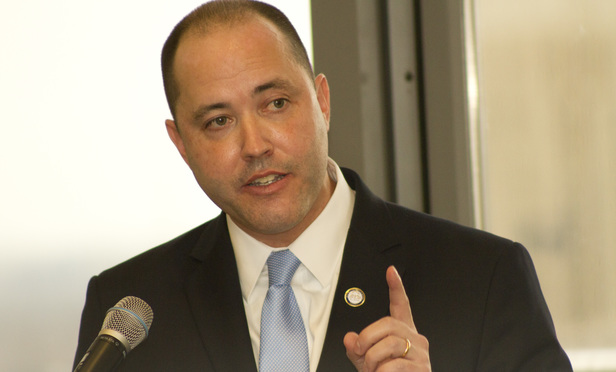
Chris Carr, Attorney General for Georgia. January 18 2016. Photo: Law.com


The below story is from WABE News. Link at he bottom.

“As Attorney General, I take seriously my duty to defend the Constitution of the United States and the Constitution and laws of the state of Georgia. We have continuously and clearly taken the position in ongoing legal cases that DACA does not confer legal status,” Carr said. “It is important to remember that it is properly the role of Congress to address immigration issues from a legislative perspective. I am aware that this is a complex and emotional issue, and I would prefer to give the new Administration — which has been vocal about this issue — appropriate time to consider any additional actions that should be taken.”


Georgians React To Uncertain Future Of DACA Program
ELLY YU • JUL 17, 2017

Photo:Elly Yu/WABE DACA recipients are shown at a rally to demand in-state tuition in Georgia.


The future of the Deferred Action for Childhood Arrivals program is uncertain.
CREDIT ELLY YU / WABE

The future of a program that protects young immigrants from deportation is uncertain. Last week, Homeland Security Secretary John Kelly told a group of lawmakers that the Deferred Action for Childhood Arrivals program, or DACA, will likely not stand up in the courts.

That has Jessica Colotl concerned about what’s next.

Earlier this year, Coltol, 29, briefly lost her deportation protection status. She later won in court and got her DACA reinstated, but the program itself is up in the air.

The program was created by President Barack Obama through executive action in 2012. If DACA ends, she worries she and others could face deportation.

“It’s scary,” she said. “It would basically paralyze the lives of Americans at heart. We’re talking about people who came to the United States as young as 2 or 3 months old.”

Jaime Rangel, 26, was brought to the U.S. when he was an infant. He agreed the uncertain future of DACA scared him, but he said he’s also hopeful of a more permanent solution for the nearly 800,000 immigrants in the United States protected by DACA. About 23,000 DACA recipients are in Georgia.

“We’ve got to see this as somewhat of an opportunity to try to pass bipartisan immigration reform because, at the end of the day, I think every DACA recipient in this country knew that sooner or later DACA would cease to exist,” he said.

The Trump administration has so far left the DACA program intact, and President Donald Trump has said he’d treat DACA “with heart.”

Meanwhile, attorneys general in 10 states, led by Texas’s attorney general, have sent a letter to the Trump administration saying they would sue the administration if it doesn’t end DACA. Georgia isn’t part of that letter.

In a statement, Georgia Attorney General Chris Carr said he’d prefer to give the administration time.

“As Attorney General, I take seriously my duty to defend the Constitution of the United States and the Constitution and laws of the state of Georgia. We have continuously and clearly taken the position in ongoing legal cases that DACA does not confer legal status,” Carr said. “It is important to remember that it is properly the role of Congress to address immigration issues from a legislative perspective. I am aware that this is a complex and emotional issue, and I would prefer to give the new Administration — which has been vocal about this issue — appropriate time to consider any additional actions that should be taken.”

Georgia was one of 26 states that sued the Obama administration over the expansion of DACA and DAPA – Deferred Action for Parents of Americans. The Supreme Court deadlocked on the issue, leaving a lower court decision to block the program from being implemented.

Polly Price, a professor of law at Emory University, said while the Supreme Court now has nine justices, it’s hard to predict how they would rule.

“It’s not clear yet how they would have ruled if they’d been presented with DACA itself,” Price said.

Republican State Sen. Josh McKoon said he’d like to see Georgia join the letter led by Texas asking the administration to end DACA.

“I think state governments need to act,” he said. “Texas and other states have said, ‘We’ve been living with the program now for years, and now is an appropriate time to seek judicial relief, and I think that could trigger action by the administration.’”    *There is more. Read the rest here.


Filed Under: Recent Posts Achrives

Reminder: A whole New DACA Generation Is Waiting in the Wings

May 27, 2020 By D.A. King

DACA illegal aliens in a rally for permanent amnesty. Photo: Breitbart.

Center for Immigration Studies

Probably a million children soon enough will be seen and heard

By Todd Bensman on May 22, 2020

Soon, the nation will know the fate of the so-called “Dreamers”, the 800,000 or so recipients of President Barack Obama’s 2012 DACA (Deferred Action for Childhood Arrivals) work-permit program. As my colleague John Miano discussed earlier this month, the U.S. Supreme Court is expected to rule on a legal challenge to President Donald Trump’s revocation of the DACA protections for these hundreds of thousands of illegally present adults who came to the U.S. before age 16.

The DACA generation at issue is all grown now, acculturated to life in America with their DACA work permits and finding fairly broad sympathy, some of it quite bipartisan. About to become front and center again on the national stage are great political, moral, and policy questions as to whether the Dreamers will be cut a special path-to-citizenship break or sent packing to countries some may not remember.

But lost in the discussion of the old DACA generation is the brand new DACA generation, just imported, that almost no one has acknowledged as the spinning political football it is heading fast and hard into Washington. Today’s policy-makers, political candidates, and advocacy groups that don’t appreciate DACA ought to be thinking ahead about what to do about them, while they are still children, if Democrats win power in November. To even start to do that, acknowledgement is the prerequisite.

The mass-migration crisis of 2018-2019, when more than a million mostly Central Americans crashed the southern border, was largely fueled by media-powered mass discovery of the previously obscure “Flores Settlement” loophole, by which adults knew that crossing with at least one child entitled them to be quickly released into the United States, where they could permanently join the nation’s illegal immigrant population.

Children poured in, hundreds of thousands of them. No one seems to have measured the parameters of this next DACA generation. But U.S. Customs and Border Protection apprehension data shows that, at the very least, 722,700 children crossed into the United States in fiscal years 2018, 2019, and through April 2020.

I say “at the very least” because that 722,700 number is the sum of unaccompanied minor aliens sent over the border and family units. CBP defines family units as “the number of individuals (either a child under 18 years old, parent or legal guardian) apprehended with a family member by the U.S. Border Patrol”. I’m only counting one minor per family. So the 722,700 figure would balloon considerably if, say, half of the 622,692 families came in with a second child. Many more came through at ports of entry as “inadmissibles”, for example 53,430 family units in just 2019.

It’s safe to say that the next DACA generation is well over one million.

Read the rest here.

Filed Under: Recent Posts Achrives

Governor Kemp breaks silence on illegal immigration

December 4, 2019 By D.A. King

Image: Dustin inman Society


Despite campaign promises, Kemp is mostly mum


 In a twenty-minute press conference in his office Wednesday morning, Georgia Governor Brian Kemp formally announced his pick to replace retiring Senator Johnny Isakson. It is notable that in his introduction speech for businesswoman and political trainee Kelly Loeffler, Kemp broached the topic of border security and illegal immigration.

As far as we can tell, this is Kemp’s first public remark related to illegal immigration since the 2018 election. We offer a no-cost, hand car wash to anyone who can accurately cite a quote or remark from Kemp on the issue since then.

“Senator Loeffler will fight to strengthen our immigration laws and finish the Border Wall so we can stop Mexican drug cartels from flooding our streets – here in Georgia – with drugs, weapons, violence, and fear” said Kemp.

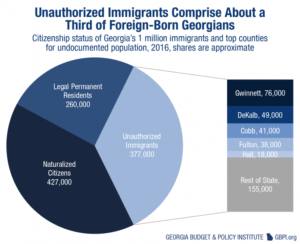
According to the Georgia Budget and Policy Institute, Georgia is home to more illegal aliens than green card holders. The U.S. Department of Homeland Security ranks the Peach State ahead of Arizona in its population of “undocumented workers.”

Kemp’s silence and blatant disregard for the issue is in defiance of his detailed campaign outline for a state “track and deport plan” in which he pledged to “create a comprehensive database to track criminal aliens in Georgia.” “He will also update Georgia law to streamline deportations from our jails and prisons” and to create a criminal alien database” went the promise.

Still shocked by his inaction on illegal immigration in his first year, pro-enforcement political insiders paying attention to legislation in the Georgia Capitol are carefully watching to see if Kemp will put the power of his office – and begin to honor his campaign promises – by pushing for a simple bill that was held up in the Republican-ruled House in the 2019 session. HB 202 from Rep Jesse Petrea would require the state Department of Corrections to post a quarterly, public report citing the number of foreigners in the prison system, their immigration status, home nation and crimes for which they are serving time.

The measure was stopped in the House Rules Committee and must now begin the hearing process from the beginning, according to the House Clerk’s office.

While it does not begin to approach the tough-talk promises of action on criminal aliens from candidate Kemp, the end result of the Petrea’s HB 202 becoming law would be that Georgia taxpayers would have access to hard, official, indisputable data on at least one part of the cost of illegal immigration – which is one reason the bill was smothered last year by business-first Republican leadership.

A simple one-pager, HB 202 is still alive and has the votes to pass. As this writer noted elsewhere, Kemp could have ordered the DOC to begin the data sharing last year. But he didn’t.

Image: Brian Kemp -National Review/Reuters

 Illegal immigration is still an issue for Georgians

  • A likely illegal alien was arrested in Marietta last month and charged with molesting at least two boys.
  • Pro-enforcement Americans are fighting against the marxist radicals in Gwinnett and Cobb Counties who are waging a very carefully staged war on ICE, immigration enforcement and the lifesaving 287 (g) operations in those jurisdictions.
  • Despite a state law requiring participation, the Georgia Department of Public Safety is not in the 287(g) program.
  • Jerry Gonzalez, leader of the corporate-funded and anti-enforcement GALEO told a metro-Atlanta newspaper that verifying ID and hiring records with use of the no-cost IMAGE certification is a “white nationalist agenda.”
  • Readers not familiar with the folks at GALEO or Gov. Kemp’s relationship with them may want to see the angry letter from a retired immigration agent to the governor here.
  • It could be worse. Election runner-up Stacey Abrams’ “New Georgia Project” is in open opposition to ICE even operating in Georgia.

We make the same no-cost car wash offer to anyone who can cite any comment from Governor Kemp on any of the above examples.

“I got a big truck”

Perhaps most obvious to voters who can remember back to last year is candidate Kemp’s “yep, I just said that…” campaign ad shtick that involved his “I got a big truck” (video) and the possibility of his personally rounding up “criminal illegals.”

Asking about the current whereabouts of the truck seems a fair question for Governor Kemp from the faithful GOP voters.

From here, we will begin to produce regular updates on Governor Kemp’s campaign promises, his silence – or any actions – on the illegal immigration crisis in Georgia

Stay tuned.

*Note: Here is a link to Gov. Brian Kemp’s contact page, but unless my vision is worse than usual, it seems he has removed the phone number from the page. If so, here it is: 404-656-1776


Filed Under: Recent Posts Achrives

What Is DACA? Is it a rule or is it prosecutorial discretion?

November 16, 2019 By D.A. King

DACA illegal aliens protesting for permanent t amnesty. Photo: The Independent.

Center for Immigration Studies

Janet Napolitano’s DACA memorandum states that DACA is an “exercise of our prosecutorial discretion”..Prosecutorial discretion is not judicially reviewable.”

What Is DACA?

Is it a rule or is it prosecutorial discretion?

By John Miano on November 15, 2019I previously wrote about how the elite media has totally ignored the legal issues in its coverage of the DACA case before the Supreme Court. I thought I would fill in some of the gaps left by the press’s gross malpractice here. My only real interest in DACA is over the alien employment issue. However, more mundane issues of administrative law are likely to dominate the Supreme Court’s opinions.

A key question for the Supreme Court is “What is DACA?” The New York Times answers that question this way:

The program was introduced in 2012 by President Barack Obama as a stopgap measure that would shield from deportation people who were brought into the United States as children. The status is renewable, lasting two years at a time. The program does not provide a pathway to citizenship.

Participation in the program comes with a range of benefits. Along with permission to remain in the country, recipients can also get work permits, through which many have obtained health insurance from their employers.

To make this description complete, one needs to add that the alien has to file an application and pay a $495 fee.

In any event, this describes what DACA does, not what DACA is. So what is DACA? The answer to that question should drive the case, but the parties have tried to avoid the issue.

Janet Napolitano’s DACA memorandum states that DACA is an “exercise of our prosecutorial discretion”.

Prosecutorial discretion is integral to our system of law. Assume you are riding a crowded bus in Florida and you need to get past someone in order to get off. So you tap that person lightly on the shoulder to attract their attention. In doing so you have committed the crime of battery and could go to jail absent prosecutorial discretion not to prosecute such cases. At the same time discretion can be abusive, as in the Jeffrey Epstein matter.

If DACA is an exercise of prosecutorial discretion, the case before the Supreme Court is simple. Prosecutorial discretion is not judicially reviewable. Faced with that established law, the University of California argued before the Supreme Court that when the prosecutorial discretion involves a large number of people it becomes reviewable. Justices Alito and Gorsuch (twice) asked the obvious question: What rule should the Supreme Court adopt to distinguish between prosecutorial discretion that is not reviewable and that which is. The answers were:

It’s a composite — in this case, it’s a composite of principles, a determination that — a categorical determination involving a substantial number of people …

and

Well [] — there — as I said, it’s a combination of factors which include the government inviting people to rely upon and make decisions based upon that policy, the provision of benefits connected with it, individuals making choices, and — and then — and the Heckler case — [] specifically.

These are non-answers. It is surprising the University of California did not prepare a proposed rule for the court to adopt.

Going back to Napolitano’s original memo, it states:

This memorandum confers no substantive right, immigration status or pathway to citizenship. Only the Congress, acting through its legislative authority, can confer these rights. It remains for the executive branch, however, to set forth policy for the exercise of discretion within the framework of the existing law.

The memo from John Morton, director of ICE, ordering the implementation of DACA in his agency said:

As there is no right to the favorable exercise of discretion by the agency, nothing in this memorandum should be construed to prohibit the apprehension, detention, or removal of any alien unlawfully in the United States or to limit the legal authority of DHS or any of its personnel to enforce federal immigration law. Similarly, this memorandum, which may be modified, superseded, or rescinded at any time without notice, is not intended to, does not, and may not be relied upon to create any right or benefit, substantive or procedural, enforceable at law by any party in any administrative, civil, or criminal matter.

Napolitano as plaintiff argues that DACA created reliance on the program while her memo directing the creation of the program disclaims that is creates anything to be relied on and ICE made it clear that DACA could be rescinded at any time. (I refer to the respondents as the plaintiffs because that usage is likely clearest to most readers.)

At this point, it is time to stop calling a “spade” a “gardening tool”. DACA is not an exercise in prosecutorial discretion and Napolitano’s DACA memo was just a subterfuge. To participate one has to file an application. One has to file a $495 fee. DACA has a two-year duration. One gets a work authorization. DACA does not reflect the agency looking at individual cases and deciding whether they should be prosecuted.

The chief justice picked up on exactly that:

the whole thing was about work authorization and these other benefits. Both administrations have said they’re not going to deport people. So the deferred prosecution or deferred deportation, that’s not what the focus of the policy was. Yes, the other statutes provided that, but it was triggered by — by the memo.

The University of California correctly notes that the employment under DACA came from “under other unchallenged laws [i.e., regulations]”.

Indeed, that is because neither party had any incentive to question whether the regulations granting work authorizations were lawful. DACA recipients were never going to argue that the regulations that allowed them to work were unlawful. The immigration bureaucracy within DHS was not going to question whether its own regulations were lawful. When several states challenged the related DAPA program, the ability to confer work authorizations was addressed in an adversarial context.

This issue is one where amicus briefs stepped in. Four of the seven supporting the government raised the employment authorization issue that the government had neglected to raise. (See here, here, here, and my own, here.)

Unless the Supreme Court changes the rule that agency enforcement discretion is not judicially reviewable, the DACA rescission cannot be reviewed.

In any event, to be reviewed for being arbitrary and capricious, it has to be a reviewable agency action. That means a rule, order, license, sanction, relief, or the equivalent or denial thereof, or failure to act.

Logically, the rescission of DACA has to be the same type of agency action that created it. If it is not, that opens another string of legal argument beyond what I can address here. To that end, the courts below rejected the argument that the DACA program, created without notice and comment, had to be rescinded with notice and comment.

Which of these is the DACA? We know it is not a failure to act. License and sanction are easy ones to take off the table. An order means “a final disposition” so that one can go as well. Relief is a:

(A) grant of money, assistance, license, authority, exemption, exception, privilege, or remedy;

(B) recognition of a claim, right, immunity, privilege, exemption, or exception; or

(C) taking of other action on the application or petition of, and beneficial to, a person.

The granting of a DACA application could be relief but does not describe the DACA program.

That leaves a rule, which is:

The whole or a part of an agency statement of general or particular applicability and future effect designed to implement, interpret, or prescribe law or policy or describing the organization, procedure, or practice requirements of an agency and includes the approval or prescription for the future of rates, wages, corporate or financial structures or reorganizations thereof, prices, facilities, appliances, services or allowances therefor or of valuations, costs, or accounting, or practices bearing on any of the foregoing.

If we call DACA a “rule”, which is certainly its most accurate description, that creates a whole new set of issues. The courts differentiatebetween substantive rules and interpretive rules.

Read the rest here.


Filed Under: Immigration Research Archives

Exclusive: Despite legal mandate, Georgia Department of Public Safety not 287(g) authorized

July 23, 2019 By D.A. King

State law requires DPS agreement with ICE and ten officers to be trained annually

Dear reader,

Please try to imagine the screaming, bold-font, front page headlines, top of the news broadcast frenzy and the endless, angry wailing from the corporate-funded anti-enforcement lobby if Georgia had a law in place banning 287(g) agreements (as does Democrat Illinois) while any Georgia law enforcement agency ignored that law and obtained such an agreement with ICE.

There is a lot of information in the embedded links.

______________________________________________________________________________________________

Image: GA DPS

Updated in 2011, Georgia law requires the Department of Public Safety (DPS) to negotiate an agreement with ICE to be 287(g) authorized and to designate no fewer than ten peace officers to be trained for the program – every year.

For the unaware, 287(g) is a federal program that allows certain local or state law enforcement officers to act as immigration agents on a limited basis.

Despite the law (HB87) passed by the General Assembly and signed by then Governor Nathan Deal, DPS is not on the list of law enforcement agencies that are 287(g) “Participating Entities” with ICE. “As of July 2019, ICE has 287(g)… agreements with 79 law enforcement agencies in 21 states,” we are told – but not with DPS.

DPS did have an ICE agreement (MOA) but it was canceled when the re-elected Obama administration scaled back the program at the end of 2012. But, DPS could easily have reapplied after Obama left office. See the letter response from DPS the commissioner to a curious then state senator here.

ICE is open for business on 287(g) now and has been since January 2017

As one of his first acts after being sworn in to office, President Trump issued an Executive Order titled ‘Enhancing Public Safety in the Interior of the United States’ in which he made it clear that the 287(g) program was high on his priority list to attack the nation’s illegal immigration crisis.

By the authority vested in me as President by the Constitution and the laws of the United States of America, including the Immigration and Nationality Act (INA) (8 U.S.C. 1101 et seq.), and in order to ensure the public safety of the American people in communities across the United States as well as to ensure that our Nation’s immigration laws are faithfully executed, I hereby declare the policy of the executive branch to be, and order, as follows:… “The purpose of this order is to direct executive departments and agencies (agencies) to employ all lawful means to enforce the immigration laws of the United States.

The president’s Executive Order had 17 sections. Because the Nathan Deal administration ignored it, people in the current executive branch of Georgia state government may want to pay extra attention to Section 8, which reads in part:

Federal-State Agreements. It is the policy of the executive branch to empower State and local law enforcement agencies across the country to perform the functions of an immigration officer in the interior of the United States to the maximum extent permitted by law.

In furtherance of this policy, the Secretary shall immediately take appropriate action to engage with the Governors of the States, as well as local officials, for the purpose of preparing to enter into agreements under section 287(g) of the INA (8 U.S.C. 1357(g))….”

The Executive Order can be read in its entirety here and the accompanying memorandum signed by then DHS Secretary John Kelly that implements the Trump EO can be read here.

The 287(g) program has different ‘models’ – one for use inside jails, (the Jail Enforcement Model) another more narrow arrangement called “Warrant Service Officer Model”- and one for use by law enforcement who are carrying out their normal duties outside jails – think of it as a “street model – formally known as the “Task Force Model.” Readers who want more information on the details can see here.

Georgia’s DPS had the Task Force model. I am informed by ICE that currently there are no Task Force model agreements in place. DPS can change that fact.

There appears to be no reason for DPS not making a valid attempt to regain the 287(g) authority it is mandated to have in place by re-applying to ICE.

We sent an open records request to DPS asking for copies of any such application and received a negative reply.

I also sent a detailed formal media request for comment for this write-up to DPS and got back only “we are in receipt of your request” but as of this writing (July 23, noon-ish) have not received any comment, explanation or denial of our assumption that DPS is in violation of state law. If this is not the case, we are anxious to hear why.

Image: The Hill

In a state with more illegal aliens than green card holders, we are even more anxious to hear from Governor Brian Kemp (404-656-1776) about why – law or no law – DPS is apparently not taking advantage of the clear 287(g) expansion push from President Trump to enhance public safety.

And how this fits in with Kemp’s “Big Truck” campaign pledge on the crime of illegal immigration.

We expect that once educated, pro-enforcement voters will be equally curious.

MSM seems to have missed this story

Our self-funded effort here at Immigration Politics Georgia is gaining readers weekly, but we obviously don’t have the reach that say, the “watchdogs” at the Associated Press, the Atlanta Journal Constitution or any of the Atlanta TV/radio news desks have. So, we will be sure to share this with all of them to see if it is regarded as allowable “news” that state law seems to be ignored by state law enforcement – and Georgia’s Chief Executive.


Filed Under: Recent Posts Achrives

GALEO’s Dax Lopez passed over again despite support from Establishment Republican “influencer” Heath Garrett

June 4, 2019 By D.A. King

DeKalb State Court Judge Dax Lopez. Image: Daily Signal

A partial list of reminders of when Dax Lopez did not resign from GALEO  *Updated with short audio


Conservative, pro-enforcement voters in Georgia should have an interest in understanding that Governor Kemp rejected DeKalb state court judge Dax Lopez for an appointment to higher court last week – May 31st – and who supported the appointment.

Lopez was on a short list with two other judges for a gubernatorial appointment for a promotion to a Stone Mountain Circuit Superior Court seat. On Friday, Kemp announced that Shondeana Morris, a former deputy district attorney in Fulton County and former assistant solicitor for the City of Atlanta was chosen for the position. Morris has been a State Court judge since 2017. Lopez was appointed to state court on 2010 by Republican Governor Sonny Perdue.

This was not the first time Dax Lopez has run into trouble. After intense public pressure, in 2016 Lopez was rejected by Georgia Senator David Perdue after then President Barack Obama nominated him for a lifetime seat on the federal bench in Georgia. Lopez also withdrew his name from consideration for Georgia Supreme Court when letters of objection poured into then Governor Deals’ office asking that Lopez be dropped from consideration.

Republican strategist and former Chief of Staff to Senator Johnny Isakson, Heath Garrett, reminded us that he and Senator Isakson backed Lopez for federal judge and expressed support for appointing Lopez to Superior Court on the May 13 edition of the liberal GPB radio show ‘Political Rewind. ’ Garrett explained that Dax Lopez was not only a friend but someone who Garrett has worked with. An excerpt from the radio dialogue on Lopez and the possibility of his advancement:

Heath Garrett. Image: Twitter

Heath Garrett: “And, look, full disclosure, Dax is a good friend. He’s worked with me on a number of campaigns. Uh, Senator Isakson and our organization has promoted him for that federal judgeship and backed him, uh, to the, uh, ’til the moment that he withdrew. Uh, we support him in this, as well. This is exactly the type of individual that Republicans ought to be supporting into these types of positions. And then to have others within the party come and attack him, I think is bad policy.”


Update: Audio.

https://immigrationpoliticsga.com/wp-content/uploads/2019/06/Recording-4.m4a

 Garrett was joined in support of Lopez by the pro-amnesty corporation fund by open borders billionaires, FWD.us after GALEO leader Jerry Gonzalez sent out an action alert for supporters to contact Governor Kemp and directing them to the FWD.us page to sign on to a letter to Kemp.

Garrett is described as an “influencer” by Ballotpedia. *A favorite Heath Garrett story here.

 Why has Dax Lopez had so much trouble with advancement?

For eleven years Dax Lopez served as board member, treasurer, tactician and fundraiser for the corporate-funded, anti-enforcement immigration activist group the Georgia Association of Latino Elected Officials (GALEO). He resigned from GALEO only after the Obama nomination for federal bench and the massive objections from the public, elected officials and law enforcement officers poured into the senate offices.

We think it is important to understand that Dax Lopez did not resign from GALEO when Executive Director, Jerry Gonzalez, was race-baiting and smearing legislators for passing legislation aimed at protecting Georgians from illegal immigration. And smearing rule of law activists for taking a pro-enforcement position on immigration  – and attacking law enforcement officials for daring to use the federal  287(g) tool to safeguard public safety by locating and reporting to ICE criminal illegal aliens who were arrested for additional crimes and landed in the county jails.

According to the left-leaning Georgia Budget and Policy Institute, Georgia is home to more illegal aliens than green card holders.

Image: GBPI.org


Dax Lopez has made it clear that he supports the GALEO agenda.

An abbreviated list of the GALEO agenda items pursued with corporate funding during the time Dax Lopez served on the GALEO board include:

  • Leading and participating in protest marches against any immigration enforcement
  • Lobbying city and county officials against honoring ICE detainer requests in local jails
  • Transporting and escorting admitted illegal aliens into the senate chambers in the state Capitol
  • Lobbying against voter ID
  • Lobbying against increased penalties for driving without ever having been licensed
  • Lobbying state legislators against use of federal tools to insure public benefits only go to eligible applicants
  • Lobbying against implementation of the no-cost E-Verify system to protect jobs for legal residents
  • Lobbying against legislation to make English the constitutional official language of government in Georgia
  • Lobbying against state penalties for ID fraud for the purpose of illegally obtaining employment on the pretense that all of this would somehow be “anti-immigrant” and/or “anti-Hispanic.”

Not only did Dax Lopez not resign from the board of GALEO when all this was happening, but as a sitting state court Judge Dax Lopez assisted with GALEO fundraising by serving as keynote speaker at a 2011 GALEO breakfast fundraiser.

Also according to the Charlotte Observer Lopez was personally and directly active against state immigration enforcement-related legislation in a very direct manner (2008). Lopez wrote then-Gov. Sonny Perdue, requesting a gubernatorial veto of two pieces of legislation, House Bill 978 and Senate Bill 350. Both measures were judged by GALEO to adversely affect Georgia’s growing illegal alien community.

“Gov. Perdue did veto HB 978, which authorized the impounding of vehicles from operators who had no valid driver’s licenses. But he signed Senate Bill 350 into law, making a fourth conviction for driving without a license a felony.

The measure also requires police to determine the nationality of anyone jailed after being convicted for driving without a license. The Latino officials association opposed the measure, saying it would create tension between immigrants and law enforcement while making crime victims and witnesses less likely to contact police” the newspaper reported.

We think Governor Kemp did the right thing to listen to pro-enforcement Georgians and to ignore the voices of Establishment Republicans like Heath Garrett when he passed over GALEO’s Dax Lopez.

Full disclosure: The Dustin Inman Society, of which this writer is president, proudly organized opposition to state court judge Dax Lopez for federal court, for state supreme court and the most recent attempt to advance to superior court.


Filed Under: Recent Posts Achrives

Speaker Ralston’s handpicked former Democrat candidate defeated in special election run-off

February 6, 2019 By D.A. King

Candidate Jesse Vaughn – Image: Chattanooga Times Free Press

North Georgia voters reject former Democrat Party local chairman in Georgia’s House District 5 run-off 


Despite a reported $4000.00 campaign donation from Georgia’s Republican Speaker of the House, former Democratic party local chairman Jesse Vaughn has lost the race to fill an empty seat in the Georgia House to opponent Matt Barton.

Barton will replace State Rep. John Meadows, R-Calhoun, who died Nov. 13.

Defeated candidate Vaughn said he switched parties around 2008. His voting record shows he first cast a ballot in a Republican primary in 2010, according to the Chattanooga Times.

He is a former member of the board of directors for the Gordon County Chamber of Commerce.


Filed Under: Recent Posts Achrives

Georgia’s Immigration Enforcement Review Board – timeline of term overstays of board members IERB

January 7, 2019 By D.A. King

Image: Bilstabong


Immigration Enforcement Review Board (IERB) established in OCGA 50-36-3 (2011, HB87)

The seven original IERB members were appointed between July and Sept. 2, 2011.

State law is clear that members are limited to two terms of two years per term.

OCGA 50-36-3 (b) The Immigration Enforcement Review Board is established and shall consist of seven members. Three members shall be appointed by the Governor, two members shall be appointed by the Lieutenant Governor, and two members shall be appointed by the Speaker of the House of Representatives. A chairperson shall be selected by a majority vote of the members. All matters before the board shall be determined by a majority vote of qualified board members. Members shall be appointed for terms of two years and shall continue to hold such position until their successors are duly appointed and qualified. A member may be reappointed to an additional term. If a vacancy occurs in the membership of the board, the appropriate appointing party shall appoint a successor for the remainder of the unexpired term and until a successor is appointed and qualified.

Appointed by Gov. Deal: Phil Kent, Shawn Hanley and Ben Vinson
Appointed by Lt. Gov Cagle: Boyd Austin, Mike Yeager
Appointed by Speaker Ralston: Robert Mumford, Terry Clark.

With the end of the first term, original members still on the IERB should have been reappointed in July and Sept. 2013 – with the end of that term being July/Sept. 2015. With the exception of the Speaker’s office on the reappointment of Terry Clark, it appears that none of the three offices that made the original appointments can produce any paperwork reflecting any reappointments. After a request for public records, Cagle’s office claimed exclusion from open records laws due to being part of the legislature.

Lt. Governor is an executive branch office under the state constitution.

Without being legally reappointed and without authority, members Kent, Hanley, Vinson, Yeager and Clark served well beyond the end of the four year limitation. As of December 29, 2018 Clark is still serving.

Ben Vinson resigned IERB sometime in June of July, 2017 after being appointed to the State Board of worker’s Compensation by Gov. Deal. In violation of state law, Vinson was active as IERB Chair from Sept. 2015 to the date of his resignation.

Shawn Hanley and Phil Kent both resigned in August 2018 when the term limit violation was made public.

In the same report linked above, it looks like the AG is staying far away from the entire matter.

IERB member John Kennedy was appointed in January 2013 after Robert Mumford resigned to become a judge. Kennedy won election to the state senate and James Balli was appointed to replace him by Speaker Ralston in Feb. 2014. The appointment letter specifically states Balli’s appointment would end in July 2015 or “until a successor is duly appointed.”

That would mean Balli’s two term limit would end in July 2017 – if he was duly reappointed. Public records of any such reappointment have not been produced.

* It could be that Balli will claim he was appointed to finish Kennedy’s term and could lawfully serve two terms of his own. I assert that argument is contrary to the language and intent of OCGA 50-36-3.

With this line of thinking: Mumford’s first term ended in Sept. 2013, Kennedy would have finished that term in 2015, but was replaced by Balli who was appointed in Feb 2014. Again, the Balli appointment letter states his term ends in 2015 or until a lawful reappointment or a successor appointment.

Reappointment of Balli would expire in 2017 – if he was duly reappointed.

Regardless of the question on Balli’s reappointment or his merely finishing another member’s term, because of the fact that that members Kent, Vinson, Hanley and Clark served and voted without authority after Sept. 2015, it is my position that any actions taken after Sept. 2015, including sanctions, complaint dismissals and board votes were done in violation of state law and are thereby null and void.

Filed Under: Recent Posts Achrives

Terrorist Infiltration Threat at the Southwest Border – CIS.org

December 26, 2018 By D.A. King

Image: Nick Miroff Twitter

Center for Immigration Studies

Terrorist Infiltration Threat at the Southwest Border

The national security gap in America’s immigration enforcement debate

By Todd Bensman on August 13, 2018

Todd Bensman is a senior national security fellow at the Center for Immigration Studies.

Introduction

“On June 24, 2016 — during the waning days of President Barack Obama’s administration — Department of Homeland Security Secretary Jeh Johnson sent a three-page memorandum To 10 top law enforcement chiefs responsible for border security.1 The subject line referenced a terrorism threat at the nation’s land borders that had been scarcely acknowledged by the Obama administration during its previous seven years. So far, it also has evaded much mention in national debate over Trump administration immigration policy.

The subject line read: “Cross-Border Movement of Special Interest Aliens”.

What followed were orders, unusual in the sense that they demanded the “immediate attention” of the nation’s most senior immigration and border security leaders to counter such an obscure terrorism threat.

Secretary Johnson ordered that they form a “multi-DHS Component SIA Joint Action Group” and produce a “consolidated action plan” to take on this newly important threat. He was referring to the smuggling of migrants from Muslim-majority countries, often across the southern land border — a category of smuggled persons likely already known to memo recipients as special interest aliens, or SIAs. Secretary Johnson provided few clues for the apparent urgency, except to state: “As we all appreciate, SIAs may consist of those who are potential national security threats to our homeland. Thus, the need for continued vigilance in this particular area.” Elsewhere, the secretary cited “the increased global movement of SIAs.”

The unpublicized copy of the memo, obtained by CIS, outlined plan objectives. Intelligence collection and analysis, Secretary Johnson wrote, would drive efforts to “counter the threats posed by the smuggling of SIAs.” Coordinated investigations would “bring down organizations involved in the smuggling of SIAs into and within the United States.” Border and port of entry operations capacities would “help us identify and interdict SIAs of national security concern who attempt to enter the United States” and “evaluate our border and port of entry security posture to ensure our resources are appropriately aligned to address trends in the migration of SIAs.”

Secretary Johnson saw a need to educate the general public about what was about to happen. Public affairs staffs would craft messaging that the new program would “protect the United States and our partners against this potential threat.”

However, no known Public Affairs Office education about SIA immigration materialized as Secretary Johnson and most of his agency heads were swept out of office some months later by the election of Republican President Donald Trump. Whatever reputed threat about which the Obama administration wanted to inform the public near its end remains narrowly known. So, too, are whatever operations developed from the secretary’s 2016 directive.

Perhaps notably, the cross-border migration of people from Muslim-majority nations, as a trending terror threat, has gone missing during contentious national debates over President Trump’s border security policies and wall. Most discourse has been confined to Spanish-speaking border entrants rather than on those who speak Arabic, Pashtun, and Urdu.

So what is an SIA and why, in 2016, did this “potential national security threat” require the urgent coordinated attention of agencies, with not much word about it since? This Backgrounder provides a factual basis necessary for anyone inclined to add the prospect of terrorism border infiltration, via SIA smuggling, to the nation’s ongoing discourse about securing borders.

It provides a definition of SIAs and a history of how homeland security authorities have addressed the issue since 9/11. Since SIA immigration traffic is the only kind with a distinct and recognized terrorism threat nexus, its apparent sidelining from the national debate presents a particular puzzlement.

No illegal border crosser has committed a terrorist attack on U.S. soil, to date. A Somali asylum-seeker who crossed the Mexican border to California in 2011 did allegedly commit an ISIS-inspired attack in Canada, wounding five people in 2017, and numerous SIAs with terrorism connections reportedly have been apprehended at the southern border, to include individuals said to be linked to designated terrorist organizations in Somalia, Sri Lanka, Lebanon, and Bangladesh.2 But while most SIAs likely have no terrorism connectivity, the purpose of this Backgrounder is not to assess the perceived degree of any actual terrorist infiltration threat. The purpose, rather, is to establish a less disputable basis for discourse and action by either Republicans or Democrats through a homeland security lens: That SIA smuggling networks provide the capability for terrorist travelers to reach the border, and also that legislation-driven strategy requires U.S. agencies to tend to the issue regardless.3

The rest of the report can be read here.


Filed Under: Immigration Research Archives

  • « Go to Previous Page
  • Page 1
  • Interim pages omitted …
  • Page 3
  • Page 4
  • Page 5
  • Page 6
  • Go to Next Page »

Primary Sidebar

 “Journalism is printing what someone else does not want printed: everything else is public relations.” Attributed to George Orwell.

miss something? see Post Archives and fast facts archives here

Categories

Brian Kemp
Photo: mdjonline.com

#BigTruckTrick

Days since GA Gov. Brian Kemp promised action on 'criminal illegals,' sanctuary cities, a criminal alien registry and related legislation:

2733

The Southern Poverty Law Center: Part Karl, Part Groucho

An Illegal Alien in Georgia Explains How To Drive Illegal Aliens Out of Georgia – SB529, 2007

https://youtu.be/oxe1WO27B_I

Gwinnett County, GA Sheriff Kebo Taylor and state law


About the author (click photo)

DA King

Foreign cops & lower college tuition for illegals than Americans, anyone? *Complete coverage of GA. House Study Committee “Innovative Ways to Maximize Global Talent”

ANSWERING THE SMEARS AJC/SPLC

Answering the smear: “blow up your buildings…” How a lie passed on by the AJC in 2007 is still being used against D.A. King (me)

FOREVER 16: REMEMBER DUSTIN INMAN

The Southern Poverty Law Center – a hate mongering scam

https://youtu.be/qNFNH0lmYdM

IMMIGRATION & WORLD POVERTY – GUMBALLS

https://youtu.be/LPjzfGChGlE?t=1

       CATO INSTITUTE: OPEN BORDERS

Georgia is home to more illegal aliens than green card holders

More illegal aliens than lawful permanent residents (green card holders) Image: GBPI.org

On illegal immigration and Georgia’s higher-ed system

Illegal aliens protest to demand "equity." Image: Twitter

Footer

Follow these immigration experts on Twitter

Follow these immigration experts on Facebook

contact georgia state legislators

State House Reps and state senators – contact georgia state legislators here.

If you don’t know who represents your and your family in Atlanta, you can find out here.

Contact the Georgia Delegation in Washington

Contact info for the Georgia delegation in Washington DC here. Just click on their name.

Copyright © 2026