• Skip to primary navigation
  • Skip to main content
  • Skip to primary sidebar
  • Skip to footer
  • Home
  • DIS blog
  • Definition of terms – DHS
  • Birthright Citizenship
  • Contact us

Immigration Politics Georgia

looking for a better life • news and pro-enforcement opinion

  • Illegal Alien Lobby
  • georgiafornia
  • SPLC
  • report illegal aliens/illegal employers
  • Fast Facts from the original DIS blog

Search Results for: politics georgia

Illegal aliens on an oversight committee? Georgia’s pending ‘school choice’ bill needs more work SB 233

January 6, 2024 By D.A. King

Georgia House Chamber – photo, AJC.


“The bill defines “parents” as “a biological parent, legal guardian, custodian, or other person with legal authority to act on behalf of a student.”

It took several years of work from pro-enforcement advocates, but Georgia’s pending “school choice” bill, SB 233 (LC 49 1473S) excludes illegal alien students. See lines 82 & 83. Because it is intentionally cryptic, we posted an easy to understand explanation elsewhere for curious readers.

School choice is a solid conservative idea if done responsibly – but the current version still doesn’t fit that description. Not for the first time, we note that SB 233 contains no exclusion for illegal alien “parents.” This writer predicts this easily remedied fact will be a significant problem for bill sponsors and Gov. Kemp when trusting GOP voters are educated on the details of the legislation.

Ga. Gov. Brain Kemp.

The bill defines “parents” (on lines 37 & 38) as “a biological parent, legal guardian, custodian, or other person with legal authority to act on behalf of a student.” It makes the parent the applicant for the student to access the taxpayer funded “Promise Scholarship” benefit (see line 105).

Federal statistics reveal that over 300,000 illegal “migrants” entered the U.S last month (Dec. 2023) – more than the population of Savannah, Marietta and Warner Robins combined. Legislators ignore this reality at their political peril.

Hardworking Georgians will likely not take kindly to a GOP-pushed law that allows any illegals to apply for a discretionary taxpayer-funded benefit – including private school tuition.

  • Related: Estimates are that 400,000 illegal aliens called Georgia home in 2018

The same taxpayers may have a strong objection to a law that names any illegally present “parent” as the “recognized recipient” of state funds for private school tuition as laid out in lines 126-129: “Any account funds directed to a participating school or service provider are so directed on behalf of the participating student’s parent, the recognized recipient of such participating student’s account funds, and wholly as a result of the genuine and independent private choice of the parent.”

More, from lines 208-211: “The commission shall develop a system for parents to direct account funds to participating schools and service providers by electronic funds transfer, automated clearing-house transfer, or another system that the commission finds to be commercially viable, cost-effective, and easy for parents of participating students to use.”

S. Greg Dolezal (R- Alpharetta), lead sponsor, SB 233.

Lines 211- 214 create a scenario in which the state of Georgia could easily be in the position of sending tax dollars directly to illegal alien “parents” to reimburse them for out-of-pocket expenses and/or “certain qualified education expenses.”

It doesn’t take much imagination to realize that most conservative voters aren’t going to sit quietly while a law is put in place that would allow illegal aliens to serve on a school choice oversight committee either. But SB 233 does exactly that. “Parents” would serve on a parental review committee that would oversee eligible expenses for school choice benefits – see lines 238-240: “To assist in the determination of whether certain expenses meet the requirements to be considered a qualified education expense under this chapter, a parent review committee shall be established.”

And this from lines & 253-254: “The commission may request the (parent review) committee to determine whether an expenditure of account funds from an account qualifies as a qualified education expense under this chapter.”

Rep. Todd Jones (R- Cumming) House sponsor, SB 233.

More on parents’ participation: “(line 48) Qualified education expenses’ means any one or more of the following: … “Other expenses authorized by the State Board of Education or the commission; or Individual education expenses authorized by a majority of the parent review committee provided for in Code Section 20-2B-6 (lines 64-66).”

There are several commonsense solutions to all this. It seems that the simplest is to insert language into the bill that designates the “Promise Scholarship” school choice benefit as a “state grant.” That should require the applicant – the “parent” – to complete the “verification of lawful presence” process that is already in OCGA 50-36-1. Shorter: It would exclude illegal alien parents – if the law was enforced.

It is noteworthy that several inquiries have reportedly already been made to the Attorney General’s office asking if the school choice scholarship would be a state grant in the bill as is. I understand that the AG has informed more than one state legislator that the question would not be answered on a pending bill.

  • A version of the above oped was originally posted on the subscription outlet James Magazine Online on January 5, 2024.

D.A. King is president of the Dustin Inman Society and proprietor of ImmigrationPoliticsGA.com

Filed Under: Recent Posts Achrives

U.S. Citizen and Eligible Non-Citizen Information for Georgia’s Hope Scholarship

January 2, 2024 By D.A. King


U.S. Citizen and Eligible Non-Citizen Information from Chattahoochee Tech 

U.S. Citizen and Eligible Non-Citizens:

A student must be a U.S. citizen or eligible non-citizen to be eligible for federal Title IV or State of Georgia student aid. State of Georgia aid programs (including the HOPE and Zell Miller Scholarships) also require the eligible non-citizen status to have been granted from 12 to 24 months prior to the first day of classes of the term for which the student wishes to receive the state aid.

The general requirement for eligible non-citizens is they are in the U.S. for other than a temporary purpose with the intention of becoming a citizen or lawful permanent resident as evidenced by the U.S. Citizenship and Immigration Services (USCIS) in the Department of Homeland Security (DHS). To be considered for financial assistance, you must have one of the following citizenship or eligible resident classifications:

• U.S. Citizen. If the Social Security Administration is unable to confirm a student’s U.S. Citizenship during FAFSA processing, the student must provide documents to the Financial Aid Office proving citizenship. Examples of acceptable documentation of U.S. Citizenship are:

1. A copy of the student’s birth certificate reflecting he or she was born in the United States, which includes Puerto Rico (on or after January 13, 1941), Guam, the U.S. Virgin Islands, American Samoa, Swain’s Island, or the Northern Mariana Islands, unless the person was born to foreign diplomats residing in the U.S.

2. A U.S Passport, current or expired, (except limited passports which are typically issued for short periods such as a year). In the case of nationals who are not citizens, the passport will be stamped “Noncitizen National”. In 2008 the State Department began issuing wallet-sized passport cards that can be used for land and sea travel between the United States and Canada, Mexico, the Caribbean, and Bermuda. This document also confirms U.S. citizenship.

3. A copy of Form FS-240 (Consular Report of Birth Abroad), FS-545 (Certificate of birth issued by a foreign service post), or DS-1350 (Certification of Report of Birth). These are State Department documents.

4. A Certificate of Citizenship (N-560 or N-561), issued by the USCIS to individuals who derive U.S. Citizenship through a parent.

5. A Certificate of Naturalization (N-550 or N-570), issued by USCIS through a federal or state court, or through administrative naturalization after December 1990 to those who are individually naturalized.

  • U.S. National (includes natives of American Samoa and Swain’s Island)
  • U.S. Permanent Resident who has:
    1. A Permanent Resident Card (Form I-551 since 1997), or
    2. A Resident Alien Card (Form I-551 before 1997), or
    3. An Alien Registration Receipt Card (Form I-151, issued prior to June

    1978), or

4. An Arrival/Departure Record (CBP Form I-94) or the new Departure Record (Form I-94A with the endorsement “Processed for I-551. Temporary Evidence of Lawful Admission for Permanent Residence. Valid until (Date Cannot Have Passed). Employment Authorized.”, or

5. A machine readable immigrant visa (MRIV) in the holder’s passport. The MRIV will have an admission stamp, and the statement “UPON ENDORSEMENT SERVES AS TEMPORARY I-551 EVIDENCING PERMANENT RESIDENCE FOR 1 YEAR” which appears directly above the machine readable section. An MRIV with this statement, contained in an unexpired foreign passport and endorsed with the admission stamp, constitutes a temporary I-551, valid for one year from the date of endorsement on the stamp.

6. A United States Travel Document (mint green cover), which replaces the Reentry Permit (Form I-327) and the Refugee Travel Document (Form I-571). It is used by lawful permanent residents (as well as refugees and asylees) and is annotated with “Permit to Reenter Form I-327 (Rev. 9-2-03).”

• Citizens of the Federated States of Micronesia and the republics of Palau and Marshall Islands.
Note: Citizens of Palau are eligible only for the Federal Pell Grant, Federal Supplemental Opportunity Grant or Federal Work-Study (FWS). Citizens of Micronesia and the Marshall Islands are only eligible for the Federal Pell Grant. None of these students are eligible for Federal Direct Student Loans.

• For eligible noncitizens other than permanent residents:

1. Refugees with a Form I-94 or I-94A annotated with a stamp showing admission under Section 207 of the Immigration Nationality Act (INA). Also acceptable is the old Refugee Travel Document (Form I-571) or the new U.S. Travel Document cited in paragraph 3.f. above annotated with “Refugee Travel Document Form I-571 (Rev. 9-2-03).”

2. Asylees with a Form I-94 or I-94A and a stamp reflecting admission under Section 208 of the INA, or the same travel documents cited in 5.a. above.
Note: A refugee or an asylee may apply for permanent resident status and may have an I-94 that includes the endorsement “209a (or 209b) pending. Employment Authorized.” These students are eligible for federal student aid funds if the I-94 has not expired.

3. Parolees with a Form I-94 or I-94A with a stamp indicating they have been paroled into the United States for at least one year, with a date that has not expired.

4. Cuban-Haitian entrants with a Form I-94 indicating they have been classified as a “Cuban-Haitian Entrant (Status Pending). Reviewable January 15, 1981. Employment authorized until January 15, 1981.” This document is valid even if the expiration date has passed. However, if the I-94 is stamped “applicant for permanent residence”, the Cuban-Haitian entrant is not eligible for federal student aid and must request documentation of permanent residency status from the USCIS.

page2image2988153280 page2image2988153584

5. Victims of Human Trafficking are entitled to the same benefits as refugees under the Victims of Trafficking and Violence Protection Act (VTVPA). Because this status is certified by the U. S. Department of Health and Human Services (HHS) and not the DHS, these students must submit their certification or eligibility letter from the HHS to us for review and subsequent contact with the Office of Refugee Resettlement. The spouse , child or parent of a trafficking victim might be eligible for aid, but will have a T-visa (e.g., T-2 or T-3) which must be submitted to us along with the certification letter.

6. “Battered Immigrants-Qualified Aliens”. The student must submit a copy of DHS-USCIS I-797, Notice of Action form to OSFA for review. OSFA will then inform the applicant of any additional steps or additional documents needed to confirm his or her federal student aid eligibility. Students applying for federal Title IV aid as eligible non-citizens whose citizenship status is not electronically confirmed by the FAFSA process must provide OSFA with documentation. OSFA will then initiate a secondary confirmation process with the United States Citizenship and Immigration Service (USCIS) in the Department of Homeland Security (DHS). The confirmation of an eligible citizenship status must be received before students can be awarded any aid.

Ineligible Non-Citizens:

Persons with non-immigrant visas (includes those with work visas, students, visitors and foreign government officials) are not eligible for federal or state of Georgia aid. Following are examples of these Visas, but the list is not all inclusive: F-1, F-2, or M-1 Student Visas, B-1 or B-2 Visitor Visa; J-1 or J-2 Exchange Visitor Visa; H or L series Visas (which allow temporary employment in the U.S.), or a G series Visa (pertaining to international organizations), or a Notice of Approval to Apply for Permanent Residence (I-171 or I- 464), an I-94 stamped “Temporary Protected Status” or an approved Form I-817 “Application for Family Unity Benefits” ARE NOT ELIGIBLE for any financial assistance administered by this office.

Here.


Filed Under: Immigration Research

What’s better than instate tuition for illegal aliens? Georgia’s Dual Enrollment program (repost)

December 30, 2023 By D.A. King


–> UPDATE, July 29, 2024: At least one public university apparently excludes illegal aliens from Dual Enrollment – HOORAY! Info here.

_____________________________________________________

High school students attend Georgia’s public colleges while paying no tuition – residency, citizenship verification not required.

  • Pro-enforcement Georgians of all descriptions should be asking Gov. Kemp and lawmakers why we are paying for college classes for illegal aliens in an effort to “expand the workforce” when “the undocumented” are not generally eligible to be employed.

“While conservative Republicans wage an annual battle under the Gold Dome to stop other Republicans from changing state law so as to award in-state college tuition to Georgia’s “undocumented” foreign high school grads, it looks like we are paying for zero-cost college tuition as well as fees and books for the illegal aliens who haven’t yet graduated our tax-funded high schools.” So went part of a letter to the editor published in the Brunswick News last week from retired Border Patrol agent and INS agent, Robert Trent.

Trent, a St. Mary’s resident and active member of the Camden County Republican Party, was writing about Georgia’s Dual Enrollment program which, for taxpayers who are funding the program but who may not be aware, is best described by the Georgia Student Finance Commission: “Georgia’s Dual Enrollment Program provides students enrolled at an eligible public or private high school or home study program in Georgia the opportunity to earn high school and college credit at a participating eligible postsecondary institution in Georgia.”

Now capped at thirty semester hours, prior to changes pushed by Kemp in 2020 designed to lower costs, some students were reportedly taking 60 to 70 hours — which was making the program financially unsustainable.

About 45,000 Georgia students participated in dual enrollment last year according to reliable news reports.

  • Related reading: Dual Enrollment as explained by the Georgia Dept. of Education 

This writer has been asking a variety of politicos since 2020 to point to a provision in the law or Georgia Student Finance Commission eligibility policy governing the DE program that excludes illegal aliens. A result was that the then-pending DE House bill saw a surprise, unscheduled vote.

Earlier this month I sent an open records request to the Georgia Student Finance Commission asking for a copy of any record or document that illustrated an exclusion for illegal aliens in the DE program or a verification system to check immigration status. I received a reply essentially telling me to see the laws and eligibility guidelines for myself.

Lynn Riley, President, Georgia Student Finance Commission

I also sent a request for comment for this column to the media department at GSFC. There was no response.

We direct readers to the GSFC Dual Enrollment FAQ page, #7: “Is there a residency requirement to participate in Dual Enrollment? A: “There is no residence or citizenship requirement to participate in the Dual Enrollment program.” An online GSFC tutorial is careful to explain that a Social Security Number is not required for DE participation.

The DE program was the object of legislation in 2020 (HB 444) when it was renamed and in 2023 with SB 86 and a sixteen-member Joint Study Committee created in SR 175 – which was sponsored by twenty-two of the thirty-three Senate Republicans. At the outset of the latter endeavor, Co-Chair Rep. Matt Dubnik (R-Gainesville) explained that “We’re not trying to fix something that’s broken, We’re simply trying to take a good program and make it even better.” Georgia taxpayers may disagree when educated on the DE program. Sen. Matt Brass (R-Newnan) was lead sponsor of the above Dual Enrollment Senate legislation in 2023.

Sen. Matt Brass
Rep.Matt Dubnik

None of this legislation dealt with the fact that according to federal estimates only six states host more illegal aliens than Georgia. Or that the far-left Georgia Budget and Policy Institute says about 3000 illegals graduate from Georgia high schools each year (Update, June 1, 2024 – The Guardian says it’s 4000) . Using that number, it is logical to assume that the combined number of the now DE eligible 11th and 12 grade students in the U.S. illegally is around 6000 – 8000 in any one school year. Ensuring that they are not draining the state education budget by benefitting from the tax-funded, discretionary DE free-college program seems like a no-brainer.

For more information on the current state of the Dual Enrollment program see the Oct. 13, 2023 James Magazine Online report.

Pro-enforcement Georgians of all descriptions should be asking Gov. Kemp and lawmakers why we are apparently paying for college classes for illegal aliens in an effort to “expand the workforce” when the “undocumented” are not generally eligible to be employed.

Ga Gov. Brian Kemp

Democrat mayors and governors around the nation are openly wailing against the cost of caring for the literal millions of illegals being waived into the remains of the republic and dispersed into the nation’s interior by the Biden administration. Georgia is rewarding them. Including Kemp, Republican leaders in the Peach State need to explain the apparent absence of tools to insure only work-eligible high school students can access the Dual Enrollment benefits. It’s liable to be “an issue” in the 2024 elections.

A version of this essay ran on the subscription website James Magazine Online on Dec. 29, 2023, in the Glynn County (GA) The Islander newspaper on January 8, 2024 and in the (Carroll Co. GA) Star News in the Sept 14, 2024 edition.

D.A. King is president of the Dustin Inman Society and proprietor of ImmigrationPolitcsGA.com

X: @DAKDIS

Filed Under: Recent Posts

Employers can reap up to $50k for sending illegal aliens and temporary visa holders through Georgia’s ‘Registered Apprenticeship Program’ #SB379

November 20, 2023 By D.A. King


  • The ‘RAP” is part of the “High Demand Career Initiative” (HDCI) program.
  • We find nothing that would stop illegal alien employers like this from sending illegal alien employees through the taxpayer-funded state apprenticeship program and then collecting up to $50k.

Note: The below is a partial and in progress story about legislation (SB 379) passed in 2022 under the GOP-ruled Gold Dome and signed into law by Gov. Brian Kemp. There is much more to say, but not today. Still investigating.

Update, Dec. 2, 2023: “During the 2022 legislative session, Governor Kemp and lawmakers partnered to pass SB 379, representing a historic investment in apprenticeships in Georgia through the HDCI Program. The HDCI Program awards up to $50,000 in funding to Georgia businesses to upskill workers through registered apprenticeships and increase skilled talent within Georgia’s high-demand industries.”  Here.

“Undocumented immigrants can participate in the Registered Apprenticeship Program”  –  that was part of the reply received today that originated from Kimberly Burgess, M.S. Apprenticeship Coordinator at  Coastal Pines Technical College, Golden Isles Campus.

A very nice man at TCSG, Danny Mitchell, informed me today that H1B workers can and do participate in the ‘RAP” which is part of the “High Demand Career Initiative” (HDCI) program.

It’s illegal to hire “undocumented immigrants.” Federal and state law requires presenting documents in the hiring process. Use of fake or stolen SSN ID is a federal and a state felony. H1B workers, (here lawfully) are in the U.S. on temporary visas that can be renewed but eventually, most temp workers leave. It is not at all clear how sending illegal aliens or foreign, temporary workers through this taxpayer-funded apprenticeship program helps “Georgia’s future workforce” or “hardworking Georgians.”

Related: What Is the H-1B visa?

“The H-1B visa is a nonimmigrant work visa that allows U.S. employers to hire foreign workers with specialized skills to work in the United States for a specific period of time. Typically, the roles require a bachelor’s degree or equivalent. Occupations that qualify for the H-1B visa are typically in fields such as technology, finance, engineering, architecture, or more.” (boundless.com)

Curious? Me too (see here for an idea of the origins of the legislation that created this program).

From the TCSG website: About Registered Apprenticeship Programs in Georgia:

“A  Registered Apprenticeship Program (RAP) is an employer-led workforce development model and strategy designed to provide employers with additional support to train skilled workers and meet growing workforce needs. RAPs serve as valuable investments into local workforce as they combine real work experience with classroom learning all while providing a paid job to apprentices. Furthermore, registered apprentices not only benefit from acquiring and mastering high-demand skills, but also tend to achieve higher wages, and more upward mobility within their employer and industry. Currently, Georgia has more than 10,000 active apprentices in Registered Apprenticeship Programs” (here).

  • Note: Sadly, illegal aliens are also business owners and operators in Georgia. I asked this question of a House committee chairman in 2022: “What is there in the law to stop an illegal alien employer from sending an illegal alien employee through the apprenticeship program and collecting the taxpayer funded payment, up to $50K?” I may post that exchange soon.

More from Georgia.gov:

Ga Gov. Brian Kemp

“Georgia Governor Brian Kemp and the Technical College System of Georgia (TCSG) recently announced a round of $1 million in funding to create 120 new apprenticeships across the state. These apprenticeships will train students for careers in-demand industries such as healthcare, manufacturing, and construction, and provide employers with opportunities to fill their workforce needs.

This step builds upon new workforce-focused initiatives Governor Kemp signed into law earlier this year to take Georgia’s education and career training initiatives to the next level. Investment numbers show that companies choose Georgia time and again for new businesses and expanded operations, and they do that because they know Georgia has a talented workforce ready to meet their needs.

To push Georgia’s workforce training into high gear, state legislators created the High Demand Career Initiatives (HDCI) Program, which awards up to $50,000 in funding to Georgia businesses to train students and upskill workers through registered apprenticeships.”

All this was created by the passage of SB 379 in 2022. At the time, we pushed for pro-enforcement language that would have excluded blackmarket labor. We were not successful. But, we never considered that the legislature would pass a bill to pay an employer to send a temporary visa holder to an apprenticeship program in the name of expanding Georgia’s future workforce. Live and learn.

SB 379 passed in the Senate with only four “NO” votes. All Democrats. It passed in the House with only one “NO” vote, from then-Rep Phillip Singleton – a Republican.

Sen Brian Strickland, 2022’s SB 379 sponsor

I don’t have time to write all this up today or this week. I am hopeful that local newspapers will regard this as “news.” In most places, that is a long shot hope.

  • Update, Nov. 27, 2023: I sent this to the ‘news tips” at Atlanta TV stations (11 Alive, WSB, Fox 5, CBS 46) several days ago. If any of them did a story, I have not seen it on Twitter/X (I don’t watch TV news of any description). I also sent to the liberal AJC.

I am pasting the notes I collected this morning below.  I say again: I have 2022 emails on this from a House Committee chairman that I may share at a later date.

____

—>  UPDATE: Nov. 26 –

About the High Demand Career Initiatives (HDCI) Program

See guidelines, employer awards  and application. Here.

2023 Annual Report

___

Notes:

I spoke to Danny Mitchell (TCS) HDCI Program Manager) Nov 20, 11:20 AM

 H1B employees and refugee employees can  participate (and are). Apprentices need not be TCSG students. TCSG is merely admin on funding. When asked about illegals, told me I “would need to talk to the lawyers…”

Rep Chuck Martin, Chairman, House Higher Education Committee & the Workforce Development subcommittee. Martin sponsored (2022) SB 379 in the House and passed it out of his Higher Ed. committee.

___

 APPRENTICESHIP    SB 379 (2022)

Want to become a registered apprenticeship partner?

Apprenticeships Open Doors for Georgia’s Future Workforce

Coastal Pines Technical College

“Becoming a registered apprenticeship partner with Coastal Pines Technical College is an easy 3-step process. The registered apprenticeship program is designed to help businesses fill workforce needs by establishing apprenticeship employment pathways. The companies listed below have established a partnership with Coastal Pines Technical College to meet the demands of the local workforce within their business environment.” Here.

______

SB 379 (2022)

“…Upon successful completion of the requirements of a contract under this article, the

61  board shall provide a contract completion award to the employer sponsor. The contract

62  completion award amount shall be determined based on the number of hours of education

63  and training required for the successful completion of the apprenticeship under such

64  apprenticeship program but shall not exceed $10,000.00 per apprentice.

65  (e) Each employer sponsor shall only be eligible to enter into contracts under this article

66  for up to five apprentices per year.

67  (f) An apprenticeship sponsor may assist with the application for and completion of an

68  apprenticeship contract authorized by this article.

‘Apprentice’ means a person who is at least 15 years of age, except where a higher minimum age is required by law, who is employed in an eligible apprenticeable occupation, and is registered in Georgia with the United States Department of Labor Office of Apprenticeship.

(2) ‘Apprenticeable occupation’ means an occupation approved for apprenticeship by the United States Department of Labor Office of Apprenticeship.

Illegal alien business owner operator can get tax dollars to send an illegal alien employee through the GA apprentice program. (?)

__________

The constant refrain from the people who run the state government in Georgia is that employers need more workers to make more profit. If I understand this, the GOP-ruled legislature passed a bill which was signed into law by Gov. Brian Kemp to use tax dollars to pay employers to send existing staff to this apprenticeship program so they can increase the employers’s profits. 

TCSG

“In 2022, the High Demand Career Initiatives (HDCI) Program, authorized by Georgia Senate Bill 379, was signed into law by Governor Brian P. Kemp. As Georgia’s first-ever state-funded apprenticeship initiative, the HDCI Program represents a historic investment by the State of Georgia in registered apprenticeships. The HDCI Program provides funding to Georgia employers to incentivize the creation and expansion of registered apprenticeship programs throughout the state. This program aimed to both upskill Georgians and increase skilled talent within Georgia’s high-demand industries.”

 About Registered Apprenticeship Programs in Georgia

A Registered Apprenticeship Program (RAP) is an employer-led workforce development model and strategy designed to provide employers with additional support to train skilled workers and meet growing workforce needs. RAPs serve as valuable investments into local workforce as they combine real work experience with classroom learning all while providing a paid job to apprentices. Furthermore, registered apprentices not only benefit from acquiring and mastering high-demand skills, but also tend to achieve higher wages, and more upward mobility within their employer and industry. Currently, Georgia has more than 10,000 active apprentices in Registered Apprenticeship Programs.

PRESS RELEASE

 TCSG Announces Availability of $1 Million in Funding To Support Apprenticeships

ATLANTA, GA–

https://www.tcsg.edu/hdci/#:~:text=As%20Georgia’s%20first-ever%20state-funded%20apprenticeship%20initiative%2C%20the%20HDCI,expansion%20of%20registered%20apprenticeship%20programs%20throughout%20the%20state.

The Technical College System of Georgia (TCSG), announces the availability of $1 Million in High Demand Career Initiatives (HDCI) Program funds to support the development and expansion of registered apprenticeships in Georgia’s high-demand industries. The program is focused on supporting Registered Apprenticeship expansion in the areas of Advanced Manufacturing, Aerospace, Agribusiness, Automotive, Construction, E-Mobility, Healthcare and Life Sciences, Supply Chain, Film and Entertainment, Public Services, and Information Technology.

“Apprenticeships are not just an investment in a company’s workforce, they’re an investment in the future of Georgia’s workforce,” said TCSG Commissioner Greg Dozier. “They offer a mechanism for employers to develop their own talent pipeline and offer attractive career pathways to new and existing employees.”

Administered by TCSG, the HDCI Program provides up to $10,000 in funding awards to incentivize employers to upskill Georgians through registered apprenticeships and increase skilled talent within Georgia’s high-demand industries.

William ‘Danny’ Mitchell

(TCSG) HDCI Program Manager

Office of Workforce Development

O: 404.679.5474 | C: 470.487.2591 | wmitchell@ tcsg.edu

_______

“A Registered Apprenticeship Program (RAP) is a robust & comprehensive training model that helps employers transform and develop entry-level employees into high-skilled talent. RAPs serve as a strategy for building talent pipelines and retaining skilled employees.

A Registered Apprenticeship Program (RAP) is a work-based learning system that fulfills workforce needs by preparing individuals for skilled trades through paid On-the-Job Learning (OJL) with Related Technical Instruction (RTI).

Most RAPs are completed in 1-4 years, with actual timelines determined by United States Department of Labor (USDOL) guidelines. The Apprentice will participate in Related Technical Instruction (RTI) – which may include online coursework – as well as work alongside a skilled tradesperson for the Employer partner (OJL) on their way to earning a degree, certification, and/or license, in addition to receiving a nationally recognized USDOL credential in their desired skilled trade.” Here from TCSG.

______

“Good morning….,

Thank you so much for reaching out to me regarding the Registered Apprenticeship Program offered at Coastal Pines Technical College. The apprenticeship program is an on-the-job training program that is offered to current students at Coastal Pines. You must be enrolled in an academic program at the college to participate.”

There are two pathways to participation in the program:

Pathway 1 – Current Coastal Pines Student Placement

  • This pathway allows current students to be placed in an apprenticeship employment position with one of 31 apprenticeship partners.

If you are not enrolled at the college, you would need to apply for admissions and be accepted to the college.

  • Link to the Admissions Application:https://coastalpines.edu/admissions/apply-now
  • It is FREE Application Month for the month of November. You can apply for free using the codeMATCH23
  • You would work with the Office of Admissions to get admitted and then an academic advisor would work with you to select classes.

Pathway 2 – Apprenticeship Partner Employees Can Enroll in Classes

  • If you are an employee at a participatingApprenticeship Partner and you need to gain an additional skill or trade, the company can choose to send you to the college to enroll in an academic program that aligns with the job you have at the company.

Undocumented immigrants can participate in the Registered Apprenticeship Program. They will need to have the ability to pay out of pocket for tuition/fees/books associated with their academic program. The rate of tuition and fees are more for foreign students (non-us citizens).

 If you have any questions, please let me know.

Take Care,

Kimberly

Kimberly Burgess, M.S.

Coastal Pines Technical College

Golden Isles Campus

Apprenticeship Coordinator


_____

Here on a page liked to the U.S. DOL site

NPS PROGRAM REGISTRATION AND ADHERENCE TO FEDERAL, STATE,
AND LOCAL LAW REQUIREMENTS (page 6)
The Office of Apprenticeship’s registration of an apprenticeship program on a nationwide
basis under the National Program Standards of Apprenticeship (and the registration of
individual apprentices under the same program) does not exempt the program sponsor,
7
and/or any employer(s) participating in the program, and/or the individual apprentices
registered under the program from abiding by any applicable Federal, State, and local
laws or regulations relevant to the occupation covered by the program, including those
pertaining to occupational licensing requirements and minimum wage and hour.

Here.

_____

GA Gov. Brian Kemp

Governor Kemp and TCSG Announce Historic Apprenticeship Investment 

ATLANTA, GA–Governor Brian P. Kemp and the Technical College System of Georgia (TCSG) today announced $1 million in awards for the inaugural Registered Apprenticeships program as part of the High Demand Career Initiative (HDCI). These investments will create 120 new apprenticeships throughout the state across multiple industries in need of workers following generational investment and job creation in the Peach State, including healthcare, manufacturing, and construction.

“Providing opportunity for hardworking Georgians to thrive has always been and will remain a top priority for my administration,” said Governor Brian Kemp. “Apprenticeships open doors both for our students to gain quality, on-the-job experience and for employers to fill their workforce needs. This innovative approach will ensure the next generation has the skills they need to succeed in the best state to live, work, and raise a family.”

Here.

_____

TRIDENT Refit Facility, Kings Bay Apprenticeship Program

Overview

HERE.

____-


Filed Under: Recent Posts Achrives

Georgia Chamber of Commerce DEI summit & some anti-enforcement history #EVerify

October 20, 2023 By D.A. King

The Georgia Chamber of Commerce is scheduled to host their annual Diversity, Equity, and Inclusion “summit” in Atlanta on November 1.

Georgia Chamber of Commerce

Regardless of where I go, I still meet people who think “the Chamber of Commerce” is somehow a conservative operation. Those of us who work for immigration enforcement legislation under the Gold Dome in Atlanta know otherwise. Theirs is more like a “dollar first” world view.

Example? In 2011, when this writer worked on passing a bill (HB 87) that, among other things, required most private employers to swear they are using the no-cost federal E-Verify system to reduce use of black-market labor, it was the Georgia Chamber of Commerce that had the loudest and most effective lobbying voice against the overall goal.

Illegal employment is the main driver of illegal immigration.

This brings to mind the time David Raynor, then a lobbyist for the Georgia Chamber of Commerce, told the state House Judiciary (non-civil) Committee, where HB 87 was being heard, that the no-cost E-Verify system had an error rate of “50 percent all the way up to in excess of 80 percent.” We happen to have archived video of that testimony.

This writer had long before provided committee members with an assortment of government and private sources for facts on E-Verify and warned them of the likelihood of an anti-enforcement effort to spin a preposterous yarn about accuracy. Raynor didn’t let us down. It was difficult to keep a straight face when I followed Raynor as the next witness in the hearing on HB 87.

The liberal AJC newspaper had a “Georgia PolitiFact” column going at the time. They chose to use Raynor’s attempted hustle in a “fact check” – and in a soft-pedaled report put the overall error rate at “2.3 to 5.7 percent.” The AJC then rated Raynor’s whopper as “half-true.”

David Raynor

Raynor is now Chief Public Affairs Officer at the GA Chamber. He oversees all lobbying activity, public policy development, and political engagement efforts. We assume that includes providing concocted “facts” to lobbyists under him to use in committee against legislation they are told to kill or gut.

The bill passed despite the Georgia Chamber and is now state law. Enforcement and sanctions for violations is a far different story and a topic for another day.

Readers can go to the Chamber’s website and see for themselves, but the nutshell outline for the coming DEI event is that Victor Terry, Chief Diversity Officer at State Farm Insurance will be Keynote speaker. It helps to know that State Farm Ins. Co has supported the anti-enforcement work of GALEO Inc., a far-left ethnic hustler group that boasts Jane Fonda as a “Founding Friend” that I sometimes highlight here.

GALEO also fought passage of HB 87 and after it became law, went to federal court teamed up with the discredited and disgraced SPLC in a mostly failed attempt to negate parts of what they referred to as an “anti-business” and “anti-immigrant” statute.

Here are some of the discussion topics at the Georgia Chamber’s DEI summit:

  •  “Maximizing the Diversity in your business, so you can be included in Government Contracts”

Moderator: Sharna Barnes, CEO, Complete Contract Consulting Inc.

  • Driving Accountability in Diverse Spend w/Fortune 500 Companies

Moderator: Myra Reeves, Director, DEI Associate Engagement, The Home Depot, Inc.

  • Raising Awareness of Microaggressions and Unconscious Bias

Moderator: Sonia Toson, Interim Vice President and Chief Diversity Officer, Kennesaw State University.

Toson will lead a discussion on “microaggressions” that she says “affect everyone.” “We must explore our own biases to become aware of them.  In this segment, our speakers will provide solutions to actively combat microaggressions to positively impact our workplaces.”

I am guessing here but we should probably not expect mention of the thousands of American students brainwashed by our university system who are demonstrating in support of the murderous Hamas beheadings of Jewish babies in Israel. “Microaggerssions” indeed.

  • Supporting Gender Identity and Expression

Moderator: Chris Lugo, Executive Director, OUT Georgia Business Alliance

Space here does not allow me to list the many well-known corporate sponsors of the Chamber’s summit in Atlanta, but we hope you will take a few minutes to see that very long, educational list for yourself here.

___

A version of the above column is published in the October 23, 2023 The Islander newspaper, in Glynn Co. Georgia.

Filed Under: Recent Posts Achrives

‘Georgia Match’ and the need for factual reporting on Hope

October 6, 2023 By D.A. King


  • More than 3000 illegals graduate from Georgia high schools every year. Illegal aliens are not eligible for the Hope Scholarship – not “all students” or all graduates. 


Gov. Brain Kemp announced the new “Georgia Match” program yesterday and various news outlets are busy reporting on the details of the new system for assuring high school students they have a college seat in the state’s public post secondary schools.

We hope they get it right when they tell people about the Hope Scholarship. And we hope all concerned note that somewhere north of 3000 illegal aliens graduate from Georgia’s high schools each year according to a now six-year-old stats from the New Yorker. 

We assume that number is significantly higher now that Biden has invited 4-5 million illegals into the remains of the Republic.

Gov. Brian Kemp

Here is an example of our concern from reporter Jeff Amy at the Associated Press today in a story headlined “You’re admitted: Georgia to urge high school seniors to apply in streamlined process.”

At the end of Amy’s report is the following information on the Hope Scholarship:

“That’s where Georgia officials say the state’s HOPE Scholarship and HOPE Grant programs can help. The grant program pays for two years of technical college tuition for any high school graduate, as long as the student maintains a C average. There is also enhanced aid for students studying in career fields the state classifies as being in high demand.

The scholarship program pays for four years of college or university tuition for any student who graduates high school with a B average and maintains a B average in college (italics mine).

AP reporter Jeff Amy

Amy and the left wing AP are telling people that Hope pays for “any high school graduate” and “any student.” I’ve seen similar wording in other reports

The Georgia Student Finance Commission has different “facts” on eligibility for the Hope scholarship. It’s first on the list of “basic requirements” – students must “meet U.S. citizenship or eligible non-citizen requirements.”

What are those requirements?

“DACA recipients and undocumented students are ineligible for state and federal financial aid including the Pell Grant, loans and the Zell Miller & HOPE Scholarships” says the University of North Georgia resources page. We note the redundancy of their “DACA recipients and undocumented students.”

Shorter: Illegal aliens are not eligible for the Hope Scholarship. That includes the more than 3000 illegals graduate from Georgia high schools every year. Regardless of grades, not all high school graduates are eligible for Hope. Somebody his wrong here or we are missing something not at all obvious.


Filed Under: Recent Posts Achrives

Refugees in Georgia: August, 2023 stats

September 14, 2023 By D.A. King

Stacker referenced data from The Refugee Processing Center to compile statistics on the number of refugees and their countries of origin resettled in Georgia in August 2023.

August refugee statistics

Countries where refugees arrived from in August

To Georgia:

#1. Congo: 71

#2. Syria: 45

#3. Afghanistan: 26

#4. Sudan: 22

#5. Burma: 15

#6. Venezuela: 11

#7. Guatemala: 10

#8. Pakistan: 7

#8. Honduras: 7

#8. El Salvador: 7

#11. Colombia: 6

#12. Ethiopia: 5

#12. Eritrea: 5

#14. Iran: 4

#14. Nicaragua: 4

#16. Iraq: 3

#17. Haiti: 2

#17. Moldova: 2

#19. Somalia: 1

#19. Cuba: 1

#19. Yemen: 1

To the U.S. as a whole:

#1. Syria: 1,429

#2. Congo: 1,085

#3. Afghanistan: 710

#4. Burma: 479

#5. Guatemala: 292

Here.

Filed Under: Immigration Research Archives

Rep Jesse Petrea in Breitbart News: Georgia GOP Rep. Champions Transparency Bill for Biden’s Migration #HB136

March 4, 2023 By D.A. King

Asylum-seekers board a bus after being processed by US Customs and Border Patrol agents at a gap in the US-Mexico border fence near Somerton, Arizona, on December 26, 2022. – The United States is seeing a rising number of asylum-seekers turning themselves in at the US-Mexico border in anticipation of the lifting of Title 42, a pandemic-era policy used to bar migrants from entering the US. (Photo by Rebecca NOBLE / AFP) (Photo by REBECCA NOBLE/AFP via Getty Images)


“We’re talking about people who illegally came here, and then after illegally coming here, committed a violent or a sexual crime on our people,” he said. Opponents “want to deny that or they want to pretend it isn’t so — knowing it is — and I think that’s inappropriate,” (Petrea) said.”

“I’ve got to get on and off the House floor and I’ve got to do it by Monday, and I think I can,” Petrea said. “My chances [for passage] in the Senate would be very good,” he said.

________________________

Republican legislators in Georgia may get a chance to vote for some control over — and transparency into — the chaotic flood of President Joe Biden’s illegal migrants into their state.

“Clearly, there is no control of the issue,” said Republican Rep. Jesse Petrea (R-Savannnah), whose draft bill (HB 136) can be voted through the House if it first gets through the House’s rule committee by Monday.

House Bill 136 “is a very simple public safety bill,” he told Breitbart News. “It requires the Department of Corrections to post quarterly on their official website the number of criminal illegals in our Georgia correctional system.”
The critical hurdle is getting approval from the 32-member committee chaired by Rep. Richard Smith (R-Columbus). The committee decides which bills are allowed onto the floor for a vote.


People hold up signs as they protest the U.S. Immigration and Customs Enforcement agency (ICE) and the recent detentions of illegal immigrants in Washington, DC on July 16, 2018. (ANDREW CABALLERO-REYNOLDS/AFP via Getty Images)

“I’ve got to get on and off the House floor and I’ve got to do it by Monday, and I think I can,” Petrea said. “My chances [for passage] in the Senate would be very good,” he said.

However, a similar bill “was stopped in the Republican rules committee of the House in 2019,” said D.A. King, the founder of the New Dustin Inman Society, which seeks to track and reduce the smuggling of illegal migrants into Georgia.

He told Breitbart News:

The resistance from the [GOP] establishment comes from the fact that this bill will create hard, accurate, and official numbers on at least one monetary cost of illegal immigration in Georgia — that being the cost of prison and incarceration.

We have learned in committee that there are about 1,500 criminal aliens in the prison system with ICE detainers [confirmatiom of illegal status by the federal agency]. But we know there are more criminal aliens because, obviously, all criminal aliens in the system do not have ICE detainers. I personally think it could be as high as another third.

We also learned that the cost of prison confinement is $73 per day. If you do the math on the $73 per day times the 1,500 ICE detainers, you come up with about $40 million a year that taxpayers are paying for the incarceration of these undocumented [and undeported] workers. That number will obviously go up.”

Read the entire report here.


Filed Under: Recent Posts Achrives

“School choice” and illegal immigration in Georgia: A pro-enforcement look at SB 233

February 28, 2023 By D.A. King


Education for state legislators 

  • Update, 8:15PM: After posting this today and sending it to the Republican members of the Senate and House, I learned there was a (surprise!) 2:30 PM hearing on the below bill. I hurried to Downtown Atlanta and made it to the hearing room before the Senate Education and Youth committee meeting began. I was the first person to sign up to speak on the bill. The chairman of the committee is Senator Clint Dixon, Republican, Buford. Knowing that I would spill the beans on the bill, Dixon began calling names to speak from the bottom of the list.

    Sen Clint Dixon
  • When he got to number two on the list, Dixon told the room “I know the audience is not going to like this. We are under extreme time constraints and we are going to end the public comment now.”
  • I was prevented from speaking and offering an experienced and educated analysis of the phony immigration part of the legislation. I was cancelled by the Chamber of Commerce Republicans.  The Republicans passed out the bill. Senator Ed Setzler made the motion “do pass.” It should be noted that Dolezal was careful to avoid any mention of illegal immigration in his presentation.

____________________________

We judge the bill to be un-American in its current iteration.

Georgia Promise Scholarship Act (2023 version) Senator Greg Dolezal, lead sponsor. See cosponsors here.

SB 233         LC 49 1349

Note: All of the obvious problems outlined below can easily be resolved by using already offered language that clearly and openly limits benefits for, access to and authority over the use of state funds for K-12 scholarships to U.S. citizens or Lawful Permanent Residents (green card holders) who have submitted documents proving that status. I was asked for this draft language in 2022 and sent it to senior House members then. I received no reply. I have since traded emails with Sen. Greg Dolezal on that draft language and know that he has read it and finds “language like this “appropriate.” He has declined to respond to two requests for a meeting. Coming soon: Sen. Dolezal and his campaign promises on “sanctuary cities.” dak

  • Related: New “school choice” bill in GA Senate would provide state benefit to Biden’s illegally paroled, inadmissible “migrants” – formerly known as “illegal aliens” SB 233

State funds are deposited into a consumer directed account on behalf of a participating student to be used for qualified expenses and distribution is ordered by “parents.”

“Parents”

Parents of the participating K-12 student submit the application (line 84) for the state to send funds to an account set up for the student and ‘promise’ (line 77) to only use the state funds for qualified services – which are basic education of the student.

“Parents” include legal guardians, custodian or “other person” (line 30) with legal authority to act on behalf of the student of the student living in Georgia.

The above definition of “parent” does not exclude illegal aliens.

Georgia media does not usually report that the Biden administration has been shipping “UACs” into the interior of the United States and puts them into the custody of illegal aliens – including in Georgia.

  • Related: Fake Families: “Overrun, How Joe Biden Unleashed the Greatest Border Crisis in U.S. History

According to the U.S. Dept. of Homeland Security, only six states have a larger population of illegal aliens than Georgia (table 3, page 5). The anti-enforcement GBPI has passed on stats that show we have more illegal aliens than green card holders (pie chart).

The above fact should point out the very real likelihood that if this all becomes law, we will watch as authority to request $6000.00 per year in taxpayer dollars is turned over to illegal alien ‘parents’ who have been awarded the power to order up dispersal of those funds with the ‘promise’ it will be done within the guidelines of the Act.

This brings up another “Act.” The federal Immigration and Nationality Act (INA) that illegal aliens defy. Here we also mention a long list of state and federal laws that illegal aliens violate literally every day – including employment laws and use of false or stolen ID and Social Security numbers. There is no reason to believe the illegal aliens won’t happily take advantage of the lack of security in the current version of SB 233.

Oversight

“Parents” also make up a review committee (line 193) that would have authority to determine the validity of expenses paid for by the “parents” on behalf of the student.  Again, we see the likelihood that illegal aliens could easily be deciding what constitutes an eligible expense and how state funds are used.

“Students”

A “student” is eligible if his “parents” reside in Georgia (line 73).

Considering illegal immigration, when we drill down through the bill’s references to various code sections students  are ineligible (lines 74-76) for the new state benefit under the same guidelines created for Title IX circa 1972 when the world, the U.S. and Georgia were very different places. Title IV noncitizen eligibility here.

The fact that the Biden administration has compromised the integrity of the Title IX eligibility guidelines should not be a reason for Georgia legislators to do join in and do the same in the name of “school choice.”

  • Fact on parole: “While individuals who receive a grant of parole are allowed to enter the United States, they are not provided with an immigration status nor are they formally “admitted” into the country for purposes of immigration law.” 

These parameters make hundreds of thousands of inadmissible aliens from all over the planet who have been illegally granted blanket “parole” by the Biden administration and herded into the U.S. eligible for the proposed “Promise Scholarship” benefits provided by Georgia taxpayers in this version of “school choice” in SB 233. The Biden “parole” scam is ongoing.

As is, SB 233 creates the scenario in which illegal alien/paroled parents can be in charge of dispersing state funds and determination of the eligible use of those funds for payment of private school tuition for paroled (otherwise illegal alien students) eligible.

Statistics taken from official Border patrol reports show that in the period Oct 2021 – Sept 2022 (FY 2022) about 380,000 otherwise illegal aliens were released into the nation under Biden’s (illegal) parole program. Immigration watchdogs are asking “How Long Does Biden’s DHS Wait to Put Paroled Border Migrants into Removal Proceedings?” (see Parole `+ATD in table).

I am working on cobbling numbers together to reflect the number of “parolees” created by Biden from what were previously known as “illegal aliens” in the first five months of FY 2023, but we anticipate those numbers will be similar to FY 2022. Georgia is already a very popular state for illegal “migration.” Offering private school tuition to paroled parents and students will only increase that attractiveness.

Twenty GOP states are challenging Biden’s illegal border parole hustle in a Texas federal court – GA is not one of them.

Appropriations (?)

 Unless I have overlooked it, there is no mention of any caps, limits or “subject to appropriations” disclaimer in the bill. This was not the case in some previous measures aimed at “school choice.” It can be assumed that the intent and expectation is that the state budget will always include provisions to accommodate funding for all eligible students.

At least one previous bill included a lottery system to determine winners and losers in the event there was not sufficient funding to benefit all eligible applicants.  We hope this possibility is made clear to legislators and voters as that scenario creates a possibility of illegal alien ‘parents’ and or paroled students winning that lottery while American students and parents watch them access state benefits that are unavailable to the citizen families.

Please see also: “New “school choice” bill in GA Senate would provide state benefit to Biden’s illegally paroled, inadmissible “migrants” – formerly known as “illegal aliens” SB 233.

Updated, March 2, 2023, 5:45 PM. Removed my personal opinion of Senators Dixon and Dolezal. Added copy on top that SB 233 did not come out of Rules committee. 


Filed Under: Recent Posts Achrives

The Georgia Chamber for Commerce – a reminder from 2021

February 22, 2023 By D.A. King

Filed Under: Recent Posts Achrives

  • « Go to Previous Page
  • Page 1
  • Page 2
  • Page 3
  • Page 4
  • Page 5
  • Interim pages omitted …
  • Page 41
  • Go to Next Page »

Primary Sidebar

 “Journalism is printing what someone else does not want printed: everything else is public relations.” Attributed to George Orwell.

miss something? see Post Archives and fast facts archives here

Categories

Brian Kemp
Photo: mdjonline.com

#BigTruckTrick

Days since GA Gov. Brian Kemp promised action on 'criminal illegals,' sanctuary cities, a criminal alien registry and related legislation:

2732

The Southern Poverty Law Center: Part Karl, Part Groucho

An Illegal Alien in Georgia Explains How To Drive Illegal Aliens Out of Georgia – SB529, 2007

https://youtu.be/oxe1WO27B_I

Gwinnett County, GA Sheriff Kebo Taylor and state law


About the author (click photo)

DA King

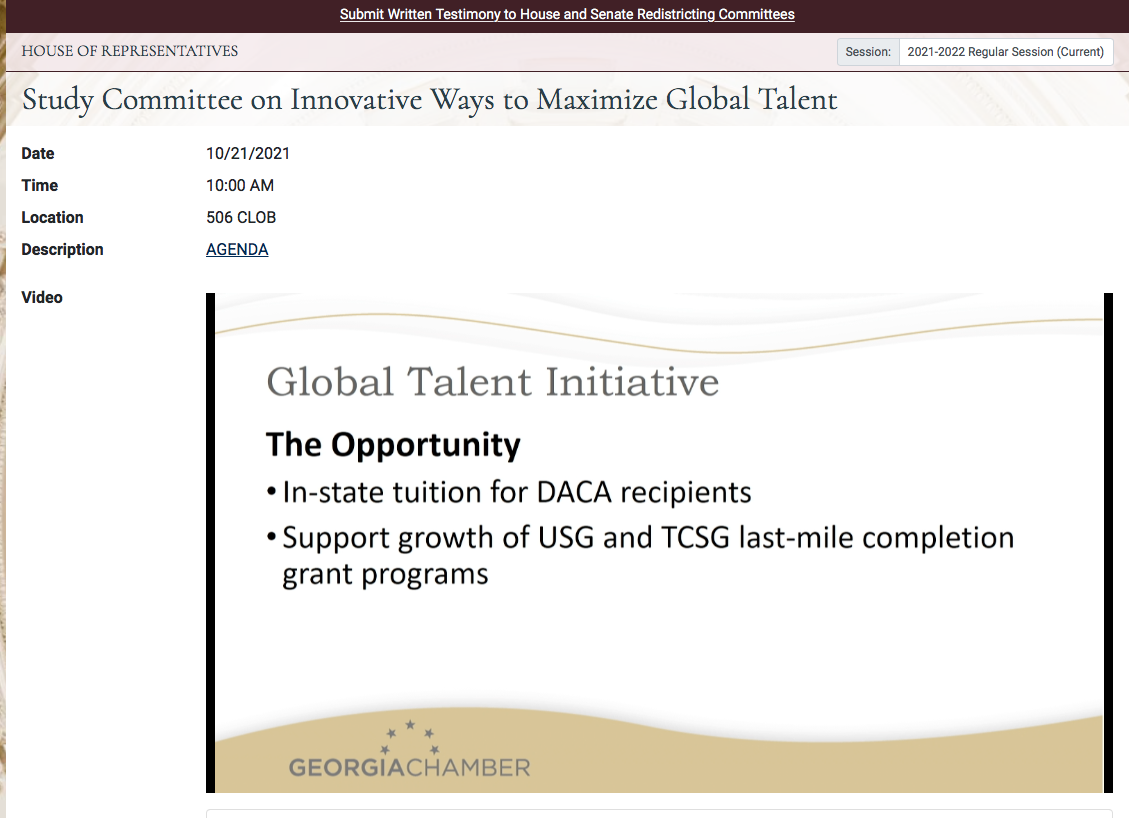
Foreign cops & lower college tuition for illegals than Americans, anyone? *Complete coverage of GA. House Study Committee “Innovative Ways to Maximize Global Talent”

ANSWERING THE SMEARS AJC/SPLC

Answering the smear: “blow up your buildings…” How a lie passed on by the AJC in 2007 is still being used against D.A. King (me)

FOREVER 16: REMEMBER DUSTIN INMAN

The Southern Poverty Law Center – a hate mongering scam

https://youtu.be/qNFNH0lmYdM

IMMIGRATION & WORLD POVERTY – GUMBALLS

https://youtu.be/LPjzfGChGlE?t=1

       CATO INSTITUTE: OPEN BORDERS

Georgia is home to more illegal aliens than green card holders

More illegal aliens than lawful permanent residents (green card holders) Image: GBPI.org

On illegal immigration and Georgia’s higher-ed system

Illegal aliens protest to demand "equity." Image: Twitter

Footer

Follow these immigration experts on Twitter

Follow these immigration experts on Facebook

contact georgia state legislators

State House Reps and state senators – contact georgia state legislators here.

If you don’t know who represents your and your family in Atlanta, you can find out here.

Contact the Georgia Delegation in Washington

Contact info for the Georgia delegation in Washington DC here. Just click on their name.

Copyright © 2026