looking for a better life • news and pro-enforcement opinion
HB 1105 sponsored by Rep Jesse Petrea (R- Savannah) passed under the Gold Dome last month and was signed into law by Gov. Kemp on May 1, 2024.
While you read the abbreviated analysis of Rep Petrea’s leigislation below, please try to find the “anti-immigrant” and “anti-Latino” “hate” the corporate-funded illegal alien lobby is howling about. On the bottom, we supply a list of some of the organizations – with contact information – that feverishly lobbied in the state Capitol against this commonsense public safety bill.
This is a general explanation of the bill’s contents.
HB 1105 ensures that Georgia law enforcement officers cooperate with federal immigration authorities when illegal aliens are in custody. Puts penalties into existing laws against “sanctuary” policies. Requires that jails honor ICE detainers.
“The provisions of this Act shall be implemented in a manner consistent with federal laws governing immigration and civil rights.”
The below is part of a March 6, 2024 press release from the anti-enforcement, non-profit groups listed. You can see the entire release at our pro-enforcement website, NewDustinInmanSociety.org.
From the far-left:
STATEMENT FOR IMMEDIATE RELEASE
“Atlanta, GA — Immigrant rights organizations and their allies condemn Georgia House Bill 1105, which recently passed the House and endangers Georgia’s immigrant communities, promotes racial profiling, and undermines local law enforcement discretion…”
CONTACT:
James Woo, Advancing Justice-Atlanta, jwoo@advancingjustice-atlanta.org
Daniela Rodriguez, Migrant Equity Southeast, Daniela@migrantequity.org 912-222-8229
Shelley Danzy, Project South, shelley@projectsouth.org 678-508-5293
Preye Cobham, Esq., Women Watch Afrika, womenwatchafrika@gmail.com 404-668-2241
Daniela Racines, Latino Community Fund, daniela@lcfgeorgia.org 470-519-0783
Ashley Coleman, Coalition of Refugee Service Agencies, ashley.coleman@weinspirit.org 678-451-8863
Lauren Frazier, Georgia Budget and Policy Institute, lfrazier@gbpi.org 404-434-5541
Sebastian Saavedra, Georgia Latino Alliance for Human Rights (GLAHR), sebastian@glahr.org 770-457-5232
Nekessa Opoti, Black Alliance for Just Immigration, comms@baji.org 612-405-3359
Aimee Zangandoum, Inspiritus, aimee.zangandou@weinspirit.org 678-852-8523
Nazia Khanzada, Council on American-Islamic Relations Georgia, nkhanzada@cair.com 404-239-2086
Darlene Lynch, The Center for Victims of Torture and Business & Immigration for Georgia (BIG) Partnerships,, Dlynch@cvt.org 404-402-1764
Alba Villarreal, GALEO Impact Fund, avillarreal@galeoimpactfund.org 678-791-2305
A: By issuing a detainer, ICE requests that a law enforcement agency notify ICE before releasing an alien and maintain custody of the subject for a period not to exceed 48 hours, excluding Saturdays, Sundays, and holidays, to allow ICE to assume custody. This request flows from federal regulations at 8 C.F.R. § 287.7, which arises from the Secretary’s power under the Immigration and Nationality Act § 103(a)(3), 8 U.S.C. 1103(a)(3), to issue “regulations … necessary to carry out [her] authority” under the INA, and from ICE’s general authority to detain individuals who are subject to removal or removal proceedings.
American Immigration Council
August 18, 2023
The H-1B is a temporary (nonimmigrant) visa category that allows employers to petition for highly educated foreign professionals to work in “specialty occupations” that require at least a bachelor’s degree or the equivalent. Jobs in fields such as mathematics, engineering, technology, and medical sciences often qualify. Typically, the initial duration of an H-1B visa classification is three years, which may be extended for a maximum of six years.
Before an employer can file a petition with USCIS, the employer must take steps to ensure that hiring the foreign worker will not harm U.S. workers.
Since the category was created in 1990, Congress has limited the number of H-1Bs made available each year. The current annual statutory cap is 65,000 visas, with 20,000 additional visas for foreign professionals who graduate with a master’s degree or doctorate from a U.S. institution of higher learning (Figure 1). For Fiscal Year FY 2023, the cap was reached on August 23, 2022.
March 28, 2022
___
May 9, 2019
“Tuberculosis isn’t the only disease that’s challenging.”
– The Washington Times –
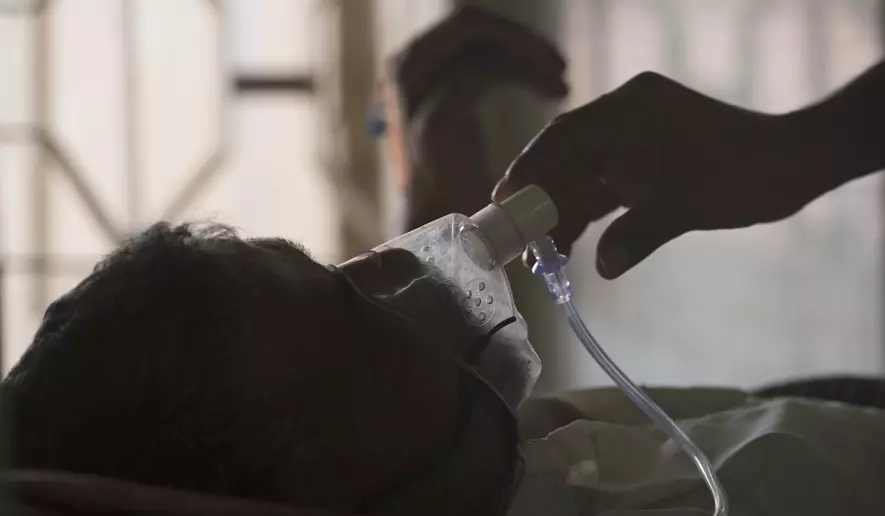
The government is releasing thousands of illegal immigrant children with latent tuberculosis infections into American communities without assurances of treatment.
Nearly 2,500 children with latent infections were released into 44 states over the past year, according to a court-ordered report on how the Health and Human Services Department is treating the children.
About 126,000 total were released, indicating an infection rate of 1 in 50 migrant children.
The government is releasing thousands of illegal immigrant children with latent tuberculosis infections into American communities without assurances of treatment.
Nearly 2,500 children with latent infections were released into 44 states over the past year, according to a court-ordered report on how the Health and Human Services Department is treating the children.
About 126,000 total were released, indicating an infection rate of 1 in 50 migrant children.
The Times reached out to HHS for this report.
The children in the department’s custody, known in government-speak as unaccompanied alien children, or UACs, are a particularly tricky population.
Under the law, Homeland Security must discharge most children quickly and send them to HHS. The department holds the children in government-contracted shelters while searching for sponsors to take in the children caught at the border without parents.
The system is fraught with problems, including crowded shelters and struggles to find capable and conscientious sponsors. In thousands of cases, the government quickly loses track of the children.
That makes the government’s release of children with latent infections all the more complicated. Treatment requires knowing where the children are and having sponsors willing to follow through on the lengthy course of care.
Tuberculosis isn’t the only disease that’s challenging.
The government had to create protocols to handle chlamydia and gonorrhea, according to the court report, written by Aurora Miranda-Maese, the monitor ordered by the court to keep tabs on how the government is treating children in its custody.
Ms. Miranda-Maese identified tuberculosis as one challenge. Because the government wants to rush the children out of custody, authorities usually don’t feel they have the time to begin treatment.
“Minors are not routinely treated for [latent tuberculosis infection] while in [resettlement] care because the average length of stay is typically shorter than the time required to complete treatment, and because there could be negative effects from discontinuing … treatment before completion, such as developing drug-resistant TB,” Ms. Miranda-Maese wrote.
She said the government relies on a reporting system through the Centers for Disease Control and Prevention to alert local health authorities.
Virginia’s experience suggests the follow-through rate for sponsors to obtain the needed treatment is low.
Virginia’s health department said it focuses on connecting local health officials with sponsors who take in children younger than 5 at high risk of latent infections progressing to active tuberculosis and juveniles who might be infected with HIV.
The CDC, which runs the notification portal, didn’t respond to an inquiry from The Times.
UACs do get routine dental care and reproductive care, including pregnancy tests, and are given information about emergency contraceptives. The government will also facilitate abortions, including making “all reasonable efforts to secure a legal abortion” for girls in states where the procedure is restricted…
Read the entire report here at the Washington Times site.

January 3, 2024
As a result of the Biden administration’s reckless open border policies the federal agency charged with enforcing immigration laws inside the United States is getting slammed and discloses in its latest annual report that enforcement arrests nearly doubled in a year in which thousands of criminals were apprehended including dozens of known or suspected terrorists. In fiscal year 2023, which ended in September, Immigration and Customs Enforcement (ICE) arrested 170,590 illegal immigrants inside the country, almost half of them with criminal records.
The criminal aliens had an average of four charges and convictions each, including more than 33,209 charges or convictions for assault, 7,520 for weapons offenses, 1,713 for homicide-related crimes and 1,615 for kidnapping. Removals also included 3,406 known or suspected gang members, 139 known or suspected terrorists, seven human rights violators, and 108 foreign fugitives wanted by their government for crimes including homicide, rape, terrorism, and kidnapping.
Among the most pervasive criminal offenses were Driving Under the Influence (DUI) and possession of serious drugs. Assault was also quite common among the undocumented perpetrators arrested last year and so were weapons offenses, sexual assault, and burglary. Thousands of the arrested migrants stole vehicles, were charged and/or convicted of fraudulent activities, robbery, forgery and property damage. More than 1,000 committed homicide and kidnapping and other types of threats not specified but considered serious enough by the government to be included in the year-end figures. “At-large arrests grew as broader migration trends contributed to an increase in unlawful entries to the Southwest border, driven by factors such as violence, food scarcity, severe poverty, unemployment, corruption, climate change, the ongoing impact of the COVID-19 pandemic, and dire economic conditions outside the United States,” the ICE report states.
The law enforcement agency with a staff of around 20,000 also conducted more than 200,000 domestic transfers of illegal immigrants last year and managed a record number of migrants under a controversial Biden administration catch-and-release policy known as Parole Plus Alternative to Detention (Parole+ATD) that freed over a million illegal aliens in the U.S. in a year, supposedly tracking them with technology and other tools. ICE Health Service Corps also spent a whopping $352 million to provide medical, dental, and mental health services for illegal immigrants detained in facilities throughout the nation, according to figures included in the document. “Those in ICE custody speak dozens of languages, including rare indigenous dialects, and the population includes individuals with a wide range of health statuses and unique physical and mental healthcare requirements — including some who receive comprehensive medical care for the first time after they are booked into detention,” the report says.
ICE’s Homeland Security Investigaions (HSI) division conducted an unprecedented number of investigations last year and executed 14,000 “noncitizen apprehensions,” seized an astounding 1.2 million pounds of narcotics, confiscated $5 million in assets and property, identified 1,806 victims of child exploitation, helped 731 victims of human trafficking, seized $949 million in criminally derived assets and more than $148 million in virtual currency from criminal elements. In cases involving drug cartels—officially known as Transnational Criminal Organizations (TCO)—that smuggle humans, narcotics, and money, HSI seized 69 firearms, 14,182 rounds of ammunition, 4,846 pounds of illicit drugs, and over $383,446 in currency. In one program alone, known as Operation Blue Lotus, HSI partnered with Customs and Border Protection (CBP), the frontline Homeland Security agency, to seize more than 8,200 pounds of fentanyl.
The distressing figures in the new ICE report are hardly surprising considering that…. read the entire report here.

U.S. Citizen and Eligible Non-Citizen Information from Chattahoochee Tech
U.S. Citizen and Eligible Non-Citizens:
A student must be a U.S. citizen or eligible non-citizen to be eligible for federal Title IV or State of Georgia student aid. State of Georgia aid programs (including the HOPE and Zell Miller Scholarships) also require the eligible non-citizen status to have been granted from 12 to 24 months prior to the first day of classes of the term for which the student wishes to receive the state aid.
The general requirement for eligible non-citizens is they are in the U.S. for other than a temporary purpose with the intention of becoming a citizen or lawful permanent resident as evidenced by the U.S. Citizenship and Immigration Services (USCIS) in the Department of Homeland Security (DHS). To be considered for financial assistance, you must have one of the following citizenship or eligible resident classifications:
• U.S. Citizen. If the Social Security Administration is unable to confirm a student’s U.S. Citizenship during FAFSA processing, the student must provide documents to the Financial Aid Office proving citizenship. Examples of acceptable documentation of U.S. Citizenship are:
1. A copy of the student’s birth certificate reflecting he or she was born in the United States, which includes Puerto Rico (on or after January 13, 1941), Guam, the U.S. Virgin Islands, American Samoa, Swain’s Island, or the Northern Mariana Islands, unless the person was born to foreign diplomats residing in the U.S.
2. A U.S Passport, current or expired, (except limited passports which are typically issued for short periods such as a year). In the case of nationals who are not citizens, the passport will be stamped “Noncitizen National”. In 2008 the State Department began issuing wallet-sized passport cards that can be used for land and sea travel between the United States and Canada, Mexico, the Caribbean, and Bermuda. This document also confirms U.S. citizenship.
3. A copy of Form FS-240 (Consular Report of Birth Abroad), FS-545 (Certificate of birth issued by a foreign service post), or DS-1350 (Certification of Report of Birth). These are State Department documents.
4. A Certificate of Citizenship (N-560 or N-561), issued by the USCIS to individuals who derive U.S. Citizenship through a parent.
5. A Certificate of Naturalization (N-550 or N-570), issued by USCIS through a federal or state court, or through administrative naturalization after December 1990 to those who are individually naturalized.
1978), or
4. An Arrival/Departure Record (CBP Form I-94) or the new Departure Record (Form I-94A with the endorsement “Processed for I-551. Temporary Evidence of Lawful Admission for Permanent Residence. Valid until (Date Cannot Have Passed). Employment Authorized.”, or
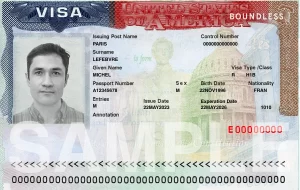
5. A machine readable immigrant visa (MRIV) in the holder’s passport. The MRIV will have an admission stamp, and the statement “UPON ENDORSEMENT SERVES AS TEMPORARY I-551 EVIDENCING PERMANENT RESIDENCE FOR 1 YEAR” which appears directly above the machine readable section. An MRIV with this statement, contained in an unexpired foreign passport and endorsed with the admission stamp, constitutes a temporary I-551, valid for one year from the date of endorsement on the stamp.
6. A United States Travel Document (mint green cover), which replaces the Reentry Permit (Form I-327) and the Refugee Travel Document (Form I-571). It is used by lawful permanent residents (as well as refugees and asylees) and is annotated with “Permit to Reenter Form I-327 (Rev. 9-2-03).”
• Citizens of the Federated States of Micronesia and the republics of Palau and Marshall Islands.
Note: Citizens of Palau are eligible only for the Federal Pell Grant, Federal Supplemental Opportunity Grant or Federal Work-Study (FWS). Citizens of Micronesia and the Marshall Islands are only eligible for the Federal Pell Grant. None of these students are eligible for Federal Direct Student Loans.
• For eligible noncitizens other than permanent residents:
1. Refugees with a Form I-94 or I-94A annotated with a stamp showing admission under Section 207 of the Immigration Nationality Act (INA). Also acceptable is the old Refugee Travel Document (Form I-571) or the new U.S. Travel Document cited in paragraph 3.f. above annotated with “Refugee Travel Document Form I-571 (Rev. 9-2-03).”
2. Asylees with a Form I-94 or I-94A and a stamp reflecting admission under Section 208 of the INA, or the same travel documents cited in 5.a. above.
Note: A refugee or an asylee may apply for permanent resident status and may have an I-94 that includes the endorsement “209a (or 209b) pending. Employment Authorized.” These students are eligible for federal student aid funds if the I-94 has not expired.
3. Parolees with a Form I-94 or I-94A with a stamp indicating they have been paroled into the United States for at least one year, with a date that has not expired.
4. Cuban-Haitian entrants with a Form I-94 indicating they have been classified as a “Cuban-Haitian Entrant (Status Pending). Reviewable January 15, 1981. Employment authorized until January 15, 1981.” This document is valid even if the expiration date has passed. However, if the I-94 is stamped “applicant for permanent residence”, the Cuban-Haitian entrant is not eligible for federal student aid and must request documentation of permanent residency status from the USCIS.


5. Victims of Human Trafficking are entitled to the same benefits as refugees under the Victims of Trafficking and Violence Protection Act (VTVPA). Because this status is certified by the U. S. Department of Health and Human Services (HHS) and not the DHS, these students must submit their certification or eligibility letter from the HHS to us for review and subsequent contact with the Office of Refugee Resettlement. The spouse , child or parent of a trafficking victim might be eligible for aid, but will have a T-visa (e.g., T-2 or T-3) which must be submitted to us along with the certification letter.
6. “Battered Immigrants-Qualified Aliens”. The student must submit a copy of DHS-USCIS I-797, Notice of Action form to OSFA for review. OSFA will then inform the applicant of any additional steps or additional documents needed to confirm his or her federal student aid eligibility. Students applying for federal Title IV aid as eligible non-citizens whose citizenship status is not electronically confirmed by the FAFSA process must provide OSFA with documentation. OSFA will then initiate a secondary confirmation process with the United States Citizenship and Immigration Service (USCIS) in the Department of Homeland Security (DHS). The confirmation of an eligible citizenship status must be received before students can be awarded any aid.
Ineligible Non-Citizens:
Persons with non-immigrant visas (includes those with work visas, students, visitors and foreign government officials) are not eligible for federal or state of Georgia aid. Following are examples of these Visas, but the list is not all inclusive: F-1, F-2, or M-1 Student Visas, B-1 or B-2 Visitor Visa; J-1 or J-2 Exchange Visitor Visa; H or L series Visas (which allow temporary employment in the U.S.), or a G series Visa (pertaining to international organizations), or a Notice of Approval to Apply for Permanent Residence (I-171 or I- 464), an I-94 stamped “Temporary Protected Status” or an approved Form I-817 “Application for Family Unity Benefits” ARE NOT ELIGIBLE for any financial assistance administered by this office.
From the Center for Immigration Studies in Washington, D.C.
Comparing program use by foreign- and U.S.-born-headed households
This report is based on newly released data from the 2022 Survey of Income and Program Participation (SIPP). Analysis of this data shows both immigrants and the U.S.-born make extensive use of means-tested anti-poverty programs, with immigrant households significantly more likely to receive benefits. This is primarily because the American welfare system is designed in large part to help low-income families with children, which describes a large share of immigrants. The ability of immigrants, including illegal immigrants, to receive welfare benefits on behalf of U.S.-born citizen children is a key reason why restrictions on welfare use for new legal immigrants, and illegal immigrants, are relatively ineffective.
Among the findings:
Please see the rest of the report here.
|