• Skip to primary navigation
  • Skip to main content
  • Skip to primary sidebar
  • Skip to footer
  • Home
  • DIS blog
  • Definition of terms – DHS
  • Birthright Citizenship
  • Contact us

Immigration Politics Georgia

looking for a better life • news and pro-enforcement opinion

  • Illegal Alien Lobby
  • georgiafornia
  • SPLC
  • report illegal aliens/illegal employers
  • Fast Facts from the original DIS blog

Recent Posts Achrives

Martha Zoller and Rep Todd Jones on air, March 27, 2023 Re: SB 233 “school choice” #BrianKemp

March 28, 2023 By D.A. King


In the closing days of the 2023 push for “school choice” in Georgia, Martha Zoller had Rep Todd Jones on her show yesterday (here). He is carrying this year’s school choice bill in the House. I listened in for the first time in awhile.

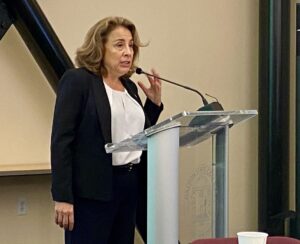
Martha Zoller

We were happy (surprised) to hear Rep Jones finally mention illegal aliens as related to the “educational freedom”, “put parents in charge,” “Promise Scholarship” topic. We were disappointed that he didn’t mention that in the current version of SB 233 there is no language that excludes illegal alien parents from the state benefit process or serving on an oversight committee.

There seemed to be some confusion on Martha’s part about what informed, pro-enforcement watchers were saying about illegal aliens as related to being eligible students.

Audio and transcript on the bottom.

Martha found time later in her show to mention me and suggest that I arrange an interview on her show. We were not aware of that possibility. The usual process of radio show hosts having guests on for interviews is that the host invites the guest. But it seems that Martha has some resentment towards me for not memory-holing Gov Brian Kemp’s defiant betrayal on his 2018 campaign promises regarding “criminal illegals,” the promised  public registry of criminal illegals, the “Brian Kemp Track and Deport plan” and his pledge on ending “sanctuary cities.”

We now have sanctuary counties in Georgia.

  • Related: Under Gov Brian Kemp, Georgia is a sanctuary state for “criminal illegals”

Martha now says Kemp has done a lot on illegal immigration in Georgia, just different things than he said he would do – while continuing to try to divert listener’s attention to “the border.” During the last campaign Martha explained that Kemp had not done what he promised because things had changed at the border (even more illegal aliens crossing). We’ll get to all that and more after the legislative session is over.

Meantime, I am happy to be on Martha’s show anytime she wants me on. I wonder if I should regard  it as a hostile interview.

Audio (five-ish minutes) & partial transcript

https://immigrationpoliticsga.com/wp-content/uploads/2023/03/Rep-Todd-Jones-Zolker-Mar-28-PARTIAL-1.m4a

Rep Todd Jones:

“… my swearing in in January of 2017.

Martha Zoller:

And then tell us about Senate Bill 233.

Rep Todd Jones:

Sure. So, Senate Bill 233, uh, effectively the- the Georgia Scholarship Promise Act, is what many are calling a voucher, but to me it’s an opportunity to provide families who are right now districted to a bottom 25% school within the state of Georgia, to provide them with an alternative, provide them with an opportunity. Frankly, to provide them hope.

Martha:

Now, you are getting some pushback from a lot of areas, okay, but one of them is in some of the anti illegal immigration groups, are, and, uh, many of them are Republicans, are- are pushing back saying that this is gonna open the door to illegal immigrants, uh, in education. Now I would argue that we already are required by the, by the Supreme Court to educate all children that are in our country regardless of their immigration status, but is there any foundation or any accuracy to some of the claims being made there?

Rep Todd Jones:

Yeah. So, when we were forming 233 with Senator Greg Dolezal, he’s the primary author of this, uh, on the Senate side. I’m honored to be carrying it on the House side. There was a series of things that we wanted to be able to do to make it clear, uh, what parents would be, uh, allowed to be able to take advantage of this voucher or the students, what a school would have to do. If it was a private school, what would have to occur for a homeschooling student, a hybrid school, et cetera. What would be accountability standards? What were the financial standards? And all the transparency that goes along with it. We wanted to make it the strongest school choice bill in the entire country in terms of, I’ll say, accountability.

Uh, in terms of this question around I’ll say illegal, uh, immigrants receiving the voucher, I can say this. To your point, the Supreme Court’s been very clear in terms of being able or having to educate students within the public school system, but we added in to 233 not only are you an existing public school student, but you also are eligible for HOPE. And HOPE, as you know, is effectively our opportunity to provide kids a pathway into the university system and be able to cover anywhere between 90% to 100% of their cost.

That does not provide for the funding of anyone who is here illegally. So ultimately, putting the guardrails around not just are they in the public school system, but also eligible for HOPE puts the guardrail in in terms of who can and who can’t. But the other thing I like to mention is, is that the voucher itself is not fungible cash. It’s not just cash that’s deposited into the parents’, um, I’ll say bank account, but rather it is a third party administered account that can only be released based on approved or pre-approved expenses that the commission has already reviewed and has indicated that those are expenses that are appropriate to be paid for by the account.

Martha:

You know, since about the 1850s or ’60s in New Hampshire and Vermont, there has been a system called Town Tuition. Uh, it is a system where basically the money follows the child. And it became about because there were a lot of small towns in New Hampshire and Vermont where maybe they didn’t have enough money to have a middle school and a high school, or whatever. So there’s been this, you can go to … It used to be you can go to parochial schools, you can go to private schools. Up until the 1980s, you could go to parochial schools. And they’ve had this in place for, you know, 150 years.

Um, hav- are you aware of that system? Had you heard about it? Has anybody looked at it if so? Because it seems like we got a model that’s worked for 150 years, and, you know, but nobody seems to know about it.

Rep Todd Jones:

So, I would, A, yes, I am aware of it. B, I also agree with you that no one is aware about it, is- is aware of those programs. But you’re starting to see maybe not exact replicas, but at least I’ll say, a- a- a good overlap, uh, in Arkansas, you’re starting to see, in Florida, in terms of what they voted last Thursday in terms of universal money follows the student. So, these are I’ll say concepts that are starting to sweep across the country, especially in those states that lean red or hard red. And we hope that our, and coming back to 233, we feel as if we have tailored this in such a way, uh, that to your exact point, if the school’s in the bottom 25% of our state, we’re not looking to do anything adverse to that school.

I want to be clear. If a student takes a voucher from one of those school systems, the per capita funding actually goes up, not goes down, and that’s a long formula and a, probably for a longer conversation. But we see this as an and, Martha, not an or. We’re gonna continue to fund public education, totally fund public education and provide those students who are districted to a bottom 25% school to be able to have an opportunity to do something else, because let’s face it, education is the great equalizer.

Martha:

Amen to that, you know. Education and economics is what separates us. Okay.

Rep Todd Jones:

That’s right.

Martha:

And that’s what we need to- to look at. Um, of course, I’ve gotten a number of question when the people heard you were gonna be on. I got some questions that I’ve k- kind of compiled because they were all on the same topic. Um, Florida made some big changes in their education system back during Governor Bush. And- and e- essentially by adding choice-…”


 

Filed Under: Recent Posts Achrives

Dog & Pony Show prediction: SR 85 – Senate Republicans to consider ways to reduce pesky “onerous and burdensome” occupational licensing practices

March 24, 2023 By D.A. King


Update: SR 85 was put on the Senate Consent Calendar for Study Committees which was approved on March 27, 2023. Vote record here (Senate vote 295).

The 2021 House version of this effort did not allow public comment and handpicked all advocate “witnesses.”


From experience, we predict a star and regular “expert witness” will be media darling, illegal alien and FWD.us lobbyist Jaime Rangel.

Jaime Rangel, illegal alien and FWD.us lobbyist in the GA Capitol.

Did you know that Georgia apparently “has some of the country’s more burdensome occupational licensing laws and that onerous occupational licensing requirements can inhibit economic mobility, limit job prospects, and hinder small businesses?”

That is the opinion of the sponsors  of SR 85 under the Gold Dome. They are all Republicans.

  • See the list of sponsors.

At the “request” of the Georgia Chamber of Commerce, these GOP state senators want to create a ‘Senate Occupational Licensing Study Committee’  to decide how to “reform”occupational licensing  and “streamline processes, reduce barriers to work, and eliminate unnecessary rules and regulations.” They plan on a series of meetings to hear from the special interest community on how this can be done and maybe how other states have handled “reforming” this “onerous” system.

What, you may ask is the “onerous and burdensome” part of the Georgia occupational licensing system? In large part it refers to the fact that Georgia has laws in place that require verification of lawful presence for occupational and professional licensing. Shorter: Dismantle the laws – periodically obeyed and enforced – that are aimed at keeping black market labor out of Georgia’s workforce.

This writer has been working on the verification law, OCGA 50-36-1 since 2006.

I know because I followed this same dog and pony show study committee process when the House produced it in 2021. Then it was part of a study committee dedicated to “Innovative Ways to Maximize Global Talent.” It is the work of the partnership between the Georgia Chamber of Commerce et al and a leftist group known as the Coalition of Refugee Services. That partnership is known as Business and Immigration for Georgia or “BIG.”

  • Related: The Georgia Chamber of Commerce and “Diversity, Equity and Inclusion.”
Darlene C. Lynch of “BIG’. Photo, Dustin Inman Society

A “Progressive” woman named Darlene C. Lynch works for both CRSA and the “BIG Partnership” and organized and ran the 2021 Georgia House Special Committee “Innovative ways to Maximize Global Talent” that saw three 2021 Summer and Fall meetings – with two in Georgia’s public colleges. Back then the study committee produced the impetus for a bill (HB 932) that would have eliminated the current twelve month residency period before a (public) college -bound student could qualify for instate tuition. The bill only applied to foreigners migrating into Georgia. Americans moving here from other states were not covered under that measure. They would still pay the much higher tuition rate in their first year living here. About three times as much as a student who migrated here from Afghanistan, for example.

For clarity: The goal was and is for some foreigners (example) to be able to migrate into Georgia and qualify for instate tuition the same day while Americans moving here are required to be residents for a year before that could access the same tuition rate.

  • Related: For academic year 2020-2021, the average tuition & fees for Colleges in Georgia was $4,739 for in-state and $17,008 for out-of-state. Americans who relocate here would pay the higher amount in their first year of residence. Newly arrived foreigners would pay the lower amount. That is a difference of $1226.90. 

That same effort is back in today’s General Assembly in both the Senate and House. 

That 2021 special study committee was created by a resolution that passed unanimously in the House at the end of the 2021 session. Rep Wes Cantrell was the sponsor of the resolution (be sure to see all cosponsors) and served as the chairman of the agenda-driven committee that took zero pubic comment and arranged the witnesses.

Some of the agenda items from the hand-picked, pre-screened witnesses at the 2021 special committee mentioned above:

  • Changing state law so as to allow foreigners to be law enforcement officers in Georgia
  • Reciprocal agreements on occupational licensing rules with other states and foreign nations – put a different way, other states and nations would decide who was eligible to be receive occupational and professional licenses in Georgia.
  • “Relaxing” state law that requires immigration verification of applicants for occupational and professional licensing.
  • Lower tuition rates in public colleges for illegal aliens living in Georgia with DACA  status than the rate Americans and legal immigrants from other states pay.
  • Removing the existing 12 month residency waiting period before new Georgia residents can access instate tuition in public colleges for refugees – but not for Americans moving here from other states.
  • Reducing the educational period to become a medical doctor by two years, student loan forgiveness for foreign medical students and “relaxing the immigration issues for foreign medical graduates.”
  • Creating a new state bureaucracy to accommodate “an office or a division of cultural and linguistic responsiveness.”

I lost track of the number of times “…the number one state for business” was tossed out.

I covered the meetings extensively for the subscription news outlet Insider Advantage Ga and also posted those reports here.


Filed Under: Recent Posts Achrives

School choice – SB 233: GOP lawmakers ignore warnings on attention to immigration status of ‘parents’ at their political peril — Repost and updated

March 23, 2023 By D.A. King

UPDATE: March 14, 2024. The House passed SB 233 today with no debate on or attention to the below. Several House embers told us they “had to vote for school choice…” despite understanding that it will reward and encourage illegal imigtrati9on into Georgia. By our math, this is exactly three weeks after the murder of Laken Riley, allegedly by an illegal alien who migrated to our state.

Heads up to House Republicans: Designating the Promise Scholarship as a “state grant” would require applicants (“parents”) to participate in the verification of lawful presence process in OCGA 50-36-1 and is an easy, two line solution to the very real problem.

Hundreds of thousands of illegal aliens have been Georgia residents for more than a year.

Update: March 31, 2023 11:00 PM: SB 233 failed in the House, a vote to reconsider passed and the has been put back on the General Calendar for next year. See the Breitbart story “Georgia blocks plan to open K-12 grants to illegals.”

Update: March 28, 2023, 10:50 AM: GOP Gov Brian Kemp has publicly endorsed the bill and is now urging the House to pass it. There is still no language excluding illegal alien “parents” from the oversight process.

Update: March 24, 6:22 AM: The House took up this bill yesterday but ended up voting 95-70 (see “House vote 293”) to table the measure – after Gov Kemp sent word through a floor leader that he supports the school choice legislation as is. *Notable that 13 members were excused from voting.

Rep Will Wade offered a plea for passage from the Well before Pro Tem Jan Jones moved to table the illegal alien -friendly measure. Two minute audio from House floor:

https://immigrationpoliticsga.com/wp-content/uploads/2023/03/SB233-table.m4a

__________________________

Most conservative Georgians do not want illegal aliens to be able to apply for any non-fed mandated benefit, direct the destination of state funds, be reimbursed for out-of pocket expenses, or serve on a “Parent Review” committee that determines what expenses are eligible to be considered as a “qualified education expense” under state law.

Despite more than a year of warnings to Republican lawmakers under the Gold Dome, language in the pending “school choice” bill does not require “parents” (who make the application to begin the proposed new state grant process) to be U.S. citizens or have legal immigration status.

  • Best solution: Amend the bill to require “parents” to be verified as U.S citizens or Lawful Permanent Residents (green card holders) as is the well-disguised requirement for student eligibility.
  • A weaker (partial) solution: Clearly designate the scholarship as a “state grant’ in the bill and add sentence that requires verification under OCGA 50-36-1.

(Beginners guide: We think the “Promise Scholarship” should be regarded as a “state grant” and thereby a public benefit under Georgia’s verification of lawful presence law OCGA 50-36-1. We have repeatedly urged all concerned to make that clear (or not) in the bill. If it is a state grant, the applicant (the “parent”) would be required to complete the prescribed verification process to swear to “lawful presence.”)

Below is another line-by-line write up on part of the role of “parents” in the administration of and participation in the proposed new state “Promise Scholarship.”

  • UPDATE Nov. 16, 2023, 9:05 AM The current version of SB 233 is LC 49 1473 according to the House Clerk just now.

Modified structure.

SB 233 As amended by the House Education committee

* LC 49 1450

See also LC 49 1458S and LC 1458S/hrcs (lines may not exactly match in later versions).

Line #

37  ‘Parent‘ means a biological parent, legal guardian, custodian, or other person with

38 legal authority to act on behalf of a student.


64  (G) Other expenses authorized by the State Board of Education or the commission; or

65  (H) Individual education expenses authorized by a majority of the parent review

66  committee provided for in Code Section 20-2B-6.


72  (a) A student shall qualify for a promise scholarship account under this chapter if:

73  (1) The student’s parent resides within Georgia and has been a Georgia resident for at

74  least one year; provided, however, that the one-year requirement shall not apply if the

75  student’s parent is an active duty military service member stationed in Georgia within the

76  previous year;


201  (3) The commission shall develop a system for parents to direct account funds to

202  participating schools and service providers by electronic funds transfer, automated

203 clearing-house transfer, or another system that the commission finds to be commercially

204 viable, cost-effective, and easy for parents of participating students to use. The

205 commission shall not adopt a system that relies solely on reimbursing parents for

206 out-of-pocket expenses, but may determine certain qualified education expenses that must

207 require reimbursement or preapproval for purchase. The commission is authorized to

208 qualify private financial management firms to manage the payment system.


231  (a) To assist in the determination of whether certain expenses meet the requirements to be

232  considered a qualified education expense under this chapter, a parent review committee

233  shall be established.

234  (b)(1) The committee shall comprise one person with relevant knowledge, skills, and

235  abilities and eight parents of participating students appointed by the president of the

236  commission. Four of the parents shall reside in local school systems with student

237  enrollment greater than 10,000, and four of the parents shall reside in local school

238  systems with student enrollment less than 10,000.

239  (2)(A)Members of the committee shall serve for staggered three-year terms and may

240  be reappointed; provided, however, that no individual shall be permitted to serve more

241  than three terms.

Filed Under: Recent Posts Achrives

Sen. Greg Dolezal omits requirement that students in SB 233 be U.S. citizens or green card holders in bill presentation – Video & transcript

March 21, 2023 By D.A. King

House Education committee 8:00 AM meeting, March 21, 2023 Left: Rep Todd Jones, (R) Sen. Greg Dolezal in 8:00 AM House Education committee hearing.

Why do you think Sen Dolezal didn’t tell the committee and the world about the illegal immigration component of his bill?

Eligible students must be U.S. citizens or green card holders. Why doesn’t the bill have the same requirement for the “parents?” We’ll tell you in another post.

  • Related: A line-by-line look at the role of parents in the proposed new state “Promise Scholarship” grant 

__

Sen. Greg Dolezal (R- Cumming) Lead sponsor, SB 233 “school choice” – presenting the bill as passed by the senate to the House Education committee. Partial transcript. This begins after start of presentation and stops well before the end.

“Um, I thought I would start, Mr. Chairman, the same way I started in the subcommittee yesterday, which is simply to talk about this bill from a high level, what this bill does, who it does it for, how it will function, and what it is that we’re doing.

Senate Bill 233 is the Georgia Promise Scholarship Act, and from… At a high level, it takes the state funding for students who are currently enrolled in public school, it allows their parents to redirect those funds to an educational outcome, and a pathway of their choice.

That can be homeschool, virtual school, private school, co-ops, and as the education industry continues to innovate, hopefully we’ll continue to see further opportunities for parents to pursue excellent education outcomes for their children as we move into the future.

So, in the colloquial terms, as we’ve heard these… This term bantered about, it’s a money follows the child program. Mr. Chairman, I think it’s important to just talk through a high level of how schools are funded in the state of Georgia.

You have three buckets of funding, federal funding, state funding, and then the local funding, the local funding comes from the tax digest. The state funding is appropriated on a per capita basis, as you know, and it is designed to cover the marginal costs of adding a student to a system, so therefor the state funding for every school system in the state of Georgia fluctuates as the head count fluctuates, which is almost guaranteed to be some fluctuation year over year as you have [inaudible 00:01:36] student that move through the system.

The local funding, which comes from the local tax digest is designed to cover the fixed cost. That’s your building costs, and other hard costs that tend to be more static in nature, and don’t fluctuate as much via head count.

That funding is obviously based on the tax digest, and not at all tied to head count. What the bill, as it passed the Senate will do, it was… It will allow students to take $6,000, which is slightly less than the average that the state spends per student, uh, in the K through 12 public education system, and allow them to pursue one of those opportunities.

–>Who is eligible for the program? Like I mentioned, the students who are currently enrolled in public school, or those entering public school for the first time, and then the students who were attending a school that would be deemed to be in the bottom 25%, so the bottom quartile of schools in the state of Georgia *(actually, lines 71 & 72 create the requirement that the student be a U.S. citizen or Lawful Permanent Resident (green card holder) – also found on lines 82 & 83 in the latest version of the bill).

  • Update, March 22, 2023 6:20 AM: The Republican-majority House Education committee passed the latest version of SB 233 out on an unaccountable voice vote yesterday.

How is the funding spent? If you’re familiar with FSA programs, or other things that are administered by a third party, this would be very similar. These, uh… The state finance commissioner would stand up a third party administrator, and the, the funds would flow through that, that third party…”

end of transcript.


Filed Under: Recent Posts Achrives

SB 195 dismantles state law on illegal aliens accessing occupational licenses: It passed senate with zero “no” votes

March 19, 2023 By D.A. King


Update: SB 195 saw significant change (improvement) in the House and passed that body on March 27, 2023. See House vote 319 here.

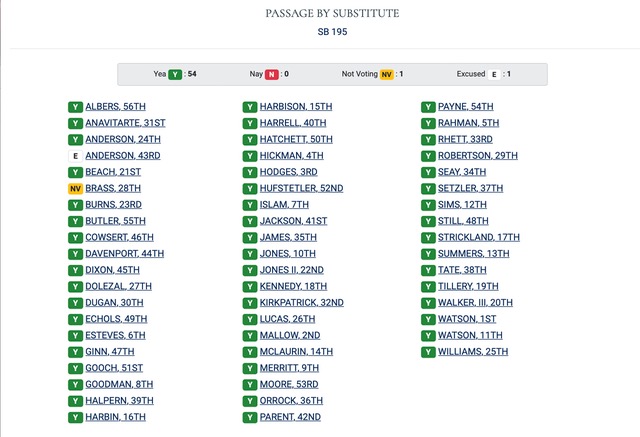
SB 195 is yet another Republican bill under the Gold Dome apparently aimed at dismantling law we worked to put in place making life more difficult for illegal aliens. It passed the senate on March 6 without any member voting against it (vote record on the bottom).

The Georgia Chamber of Commerce goal is to allow a member of the U.S. military and their spouses to see a fast track to obtaining a professional or occupational license. According to the bill, generally, if a spouse of a member of the military moves to Georgia and already “holds a current and valid license to practice a profession, business, or trade issued by another state for an occupation with a similar scope of practice in this state” the Georgia licensing process will be “expedited.”

Professional and occupational licenses are “public benefits” under state law.

Bills we worked to see passed in 2006, 2009, 2011, 2012 and 2013 deal with a verification system in which applicants for occupational and professional licenses must swear on an affidavit they are eligible for the public benefit because of U.S. citizenship of are have “lawful presence.” That system is set up in OCGA 50-36-1. That existing verification system should not be waived for anyone, including a spouse of a member of the military who could be in the U.S. illegally.

Sen. Larry Walker (R- Perry) lead sponsor of SB 195. Other sponsors here.

The bill is easily fixed with the addition of this sentence: “Nothing contained in this Code section shall be construed to permit the issuance of a license without verification under Code Section 50-36-1.”

Please contact your own state Rep and point this out? We doubt this is the only such bill.

Also please contact the chairman of the House Regulated Industries committee, Rep Alan Powell at his Gold Dome office 404-463-3793 – alan.powell@house.ga.gov . just leave a polite message on voice mail or with the staffer who answers the phone: We are watching SB 195 and want to be sure you add ‘belt and suspenders’ language to keep illegal aliens out of our occupational and professional licensing process.”


Filed Under: Recent Posts Achrives

Correction, apology and clarification: Partially inaccurate analysis of SB 233 – “school choice”

March 17, 2023 By D.A. King


Re; SB 233 as passed the senate (SB233/CFSA)

  • Update: I retract the below correction apology clarification and apology 

Correction: The conclusion I came to and posted here regarding eligibility of students for the proposed new state grant known as the “Promise Scholarship” in SB 233 was inaccurate. I wrote that aliens illegally paroled for admission into the United States by the Biden administration would be eligible for the proposed new benefit. That conclusion is wrong. In fact, eligibility for the benefit requires that a student be a United States citizen or a “permanent resident alien” (green card holder) who meets the definition of an eligible noncitizen under federal Title IV requirements.”

That restriction does not include recipients of Biden’s illegal parole as I wrote. I deeply regret the obvious error.

As Georgia’s only full time pro-enforcement voice on immigration, we strive for accuracy and have promised swift correction on any inaccurate information. I have proven that no matter how many times one checks his work, if the same glaring error is repeated in the analysis process the conclusion will be flawed.

One of the first things I was taught as a seventeen-year-old recruit was that “Marines do not make excuses.” That said, I wish I had paid much closer attention in grade school class on Roman numerals.

Including state Rep Will Wade, and Senator Colton Moore’s Chief of Staff Michael Gargiulo, many thanks to the various people who politely convinced me to check my work yet again. I am profoundly sorry for my mistake and grateful for the confidence so many people show for our credibility.

Clarification: As the state-funded private school tuition scholarship proposed in SB 233 would benefit entire families, we have been consistent in our opinion that students and “parents” (applicants) be U.S. citizens or green card holders (“LPRs” – Lawful Permanent Residents).

I have repeatedly pointed out that we see no provision that “parents” are required to have that status  – or have any lawful immigration status. Due to the involvement of “parents” in the application process, oversight authority and apparent ability to access payments for “certain qualified education expenses,” we believe the absence of that language is crucial in any judgment of the pro-enforcement fairness and viability of the measure. Please see more on parents here.

We are of the opinion that any new “Promise Scholarship” would be a state grant public benefit under OCGA 50-36-1 and that applicants (“parents”) would be required to complete the verification of “lawful presence” in that code section. Assuming this is the case, it would not alone limit the participation of “parents” to U.S. citizens or LPRs. It would allow “parents” with non-immigrant visas and Biden’s illegal parole to apply and participate. We respectfully recommend that legislators educate themselves on this matter.

In the interest of “a belt and suspenders” clarity, the bill should contain language on this point. We also note that similar previous legislation did not require students to be U.S. citizens or LPRs, only cited 50-36-1 as an eligibility and verification reference and was murky in it’s language and wrong in its presentation.

dak


Filed Under: Recent Posts Achrives

A line-by-line look at the role of “parents” in the proposed new state “Promise Scholarship” grant  SB 233

March 15, 2023 By D.A. King


There is no requirement in the bill that “parents” who apply for benefits be U.S. citizens or have legal immigration status. Existing law requires verification of “lawful presence” for applicants but that law (OCGA 50-36-1) sees spotty compliance and enforcement. Wording should be added to the bill that inserts language referring to that law. 


PARENTS    SB 233 AS PASSED SENATE

 Creation of a new state grant to be known as a “Promise scholarship” for which parents  must apply for student’s access to state funds.

___

There is no requirement that “parents” be U.S. citizens or have legal immigration status.

Lines 32 & 33: “Parents” can also be a legal guardian, custodian, or other person with legal authority to act on behalf of a student.”

Lines 66 & 67: A student shall qualify for a promise scholarship account under this chapter if:  The student’s parent or parents currently reside within Georgia;

Lines 78-81: It is the “parent” who begins the process of accessing the new “Promise scholarship” state grant for the student (and thereby the family) by submitting an application to the state – “The student’s parent submits an application for an account to the commission no later than the deadline established by the commission.”

Lines 101-104: “Parents” are the recipient of the state funds for the “Promise scholarship” and student account funds are a result of the choice of the parent.

“Any account funds directed to a participating school or service provider are so directed on behalf of the participating student’s parent, the recognized recipient of such participating student’s account funds, and wholly as a result of the genuine and independent private choice of the parent.”

The “parent” signs an “agreement” promising to do and not do certain things in relation to the student’s education.Lines 105-108:  The parent of each student participating in the program shall comply fully with the participating school or service provider’s rules and policies. Any parent who fails to comply with the provisions of this chapter and commission regulations relating to the program shall forfeit the account and all account funds therein.  (If there is monitoring and then enforcement).

 Lines 156 -159: “The commission shall develop a system for parents to direct account funds to participating schools and service providers by electronic funds transfer, automated clearing-house transfer, or another system that the commission finds to be commercially viable, cost-effective, and easy for parents of participating students to use.

The new state grant would set up a system of reimbursements for out-of-pocket expenditures for…parents.

Lines 160 – 163: (The) commission shall not adopt a system that relies solely on reimbursing parents for out-of-pocket expenses, but may determine certain qualified education expenses that must require reimbursement or preapproval for purchase (italics mine). The commission is authorized to qualify private financial management firms to manage the payment system.

“Parents” will be appointed by the state to serve on an oversight committee that makes decisions on eligible/qualified expenses.

Lines 186 – 192 “To assist in the determination of whether certain expenses meet the requirements to be considered a qualified education expense under this chapter, a parent review committee shall be established. The committee shall be composed of eight parents of eligible students. Four of the parents shall reside in local school systems with student enrollment greater than 10,000, and four of the parents shall reside in local school systems with student enrollment less than 10,000.”

There is no requirement that “parents” be U.S. citizens or have legal immigration status.

___

We have a solution: Only U.S. citizens and green card holders should be allowed to apply for or benefit from “Promise scholarship” benefits. 

Filed Under: Recent Posts Achrives

Republican Senate ‘school choice’ bill: ‘A Mackerel in the Sun’ #SB233

March 12, 2023 By D.A. King

  • Update: May 22, 2023 With the benefit of time and sleep, I retract the below correction and apology. I was right the first time.

Correction: The conclusion I came to and posted here regarding eligibility of students for the proposed new state grant known as the “Promise Scholarship” in SB 233 was inaccurate. I wrote that aliens illegally paroled for admission into the United States by the Biden administration would be eligible for the proposed new benefit. That conclusion is wrong. In fact, eligibility for the benefit requires that a student be a United States citizen or a “permanent resident alien” (green card holder) who meets the definition of an eligible noncitizen under federal Title IV requirements.”

That restriction does not include recipients of Biden’s illegal parole as I wrote. I deeply regret the obvious error.

As Georgia’s only full time pro-enforcement voice on immigration, we strive for accuracy and have promised swift correction on any inaccurate information. I have proven that no matter how many times one checks his work, if the same glaring error is repeated in the analysis process the conclusion will be flawed.

Only U.S. citizens and green card holders should benefit from or participate in any new state grant for K-12 private school tuition

___

School choice is an idea worthy of serious consideration. Including illegal aliens in any part of a new state grant isn’t.

The GOP-controlled state senate recently passed SB 233, a deeply flawed bill titled “The Georgia Promise Scholarship Act” – otherwise known as “school choice” and “educational freedom.” See also “putting parents in charge.”

Watching the rush to passage and the obfuscation of the senate Republicans to push the odiferous measure through reminded this writer of the scenario surrounding immigration legislation in Washington D.C. a decade ago.

During the successful struggle in 2013 to stop that year’s attempt at amnesty for illegal aliens, then Alabama Senator Jeff Sessions described the “immigration reform” legislation as “a mackerel in the sun.” He pointed out that the bill was meant to be passed into law before too many people had read it and before too many facts were provided to the American public.

Sessions advised inspection and comprehension of the contents of the most horrible measure. He knew that the light of day would expose the truth about the “Gang of Eight” amnesty.

“The longer it lays in the sun, the more it smells, as they say about the mackerel” is how Sessions described his reason for the roadblocks he put in front of passage to the New York Times. The amnesty bill failed in the U.S. House because of too much information. Former U.S. Attorney General Sessions is a personal hero here.

The “school choice” bill that the senate passed was dropped into the senate hopper on February 22 and passed just five legislative days later on the senate floor. That unfamiliar odor you may be smelling could well be coming from Atlanta and the stench of this Republican-concocted “school choice” legislation after only a week of being out in the open.

  • Related: We warned and informed GOP senators on the immigration-related problems in the bill well before they voted

The contents of SB 233 create a new state grant for families of K-12 students to use to pay for private school education and other expenses as an alternative to public school education.

The bill contains language that allows students attending private school at taxpayer expense to be formerly “inadmissible aliens” who have been illegally granted mass “parole” by the Biden administration. That scam was found to be unlawful last week by a federal court in Florida.

Parole, even when it is done legally, does not confer lawful border entry status. Legal immigrants do not need parole.

Related: A retired INS agent on SB 233 in the Brunswick News

Amazing, but true: the “school choice” bill (SB233) does not exclude illegal alien parents from the administration process. Processing of state benefits to eligible families begins only when “parents” file an application to begin the $6000 annual proposed new grant payments for K-12 students to attend private school.

GA state Senator Greg Dolezal, lead sponsor of SB 233 – “school choice” 2023 edition.

“Parents” includes a “legal guardian, custodian, or other person with legal authority to act on behalf of the student.” The bill authorizes “parents” to be part of an oversight committee that has authority to decide on eligible expenses in the use of state funds. “Parents” can be paid for unforeseen out-of-pocket expenses.

Again: There is nothing in the bill that says “parents” must be in the U.S. lawfully.

Lead sponsor on SB 233 is Sen. Greg Dolezal (R-Cumming). Dolezal did not mention anything regarding illegal immigration when he presented the bill. Floor debate did not include any discussion of the state’s illegal immigration crisis.

The bill was intentionally rushed through the committee process while this writer was refused an opportunity to speak during the much-abbreviated public comment period. Because I was the first person to sign up to speak on the bill, the committee chairman of the senate Education and Youth committee, Republican Sen. Clint Dixon (Buford), began selection of speakers from the bottom of the list. He ended the comment period when he worked back up the list to my name. That cheap and cowardly abuse of power is on official archived video record.

As if to prove they have forgotten that real conservatives don’t do anything that rewards or encourages illegal immigration into Georgia, every Republican senator voted in favor of final passage.

With the troubling bill now in the House, conservative Representatives should withhold action until next year so there is time to understand it and make an educated decision on their own vote. Idea: Only U.S. citizens and green card holders should be eligible for the proposed “Promise Scholarship.”

Pro-borders voters should step in and do for the Georgia senate’s “school choice” bill what Jeff Sessions did to the failed 2013 amnesty try. Contact your state Rep and tell them to ask the Speaker to wait until next year to consider “school choice.’

Let this anti-enforcement mackerel sit in the sun over the summer.

_

A version of this essay is publish in the March 12 edition of  The Islander newspaper in Glynn County. GA. and on the subscription website Insider Advantage Georgia on March 15, 2023.

Filed Under: Recent Posts Achrives

Another immigration expert on SB 233, “school choice” & illegal aliens – Robert Trent in the Brunswick News #GregDolezal

March 11, 2023 By D.A. King

Note: Letter writer Bob Trent is a retired Senior Special Agent of the former Immigration and Naturalization Service (USINS). He served on metropolitan area drug, and organized crime task forces for many years and supervised special agents assigned to the Joint Terrorism Task Force. In addition, he spent ten years as a uniformed border patrol agent assigned to both the northern and southern borders. Bob’s final assignment was as the Assistant Director, Enforcement Training, U.S. Immigration Officer Academy, Federal Law Enforcement Training Center, Glynco, GA. Bob is an old friend here. And, as we repeatedly predicted, a federal judge has launched a blistering attack on the Biden administration’s outrageous border parole scam while finding it unlawful.
 * What is the role of “parents” in SB 223? See here.
* See the list of bill sponsors below the letter published today.
dak.
_____


Brunswick News

Letters to the editor

Saturday, March 11, 2023

“Pro-borders, conservative voters should watch state Sen. Mike Hodges regarding illegal immigration. Georgia is already home to more illegals than Arizona.

Hodges doesn’t seem to understand that rewarding illegals with new state benefits isn’t an effective method of deterring the illegal migration into our state. “Exhibit A” for that case is Hodges’ March 6 vote under the Gold Dome for passage of SB 233, billed as “school choice” legislation that will provide a new annual state grant of $6,000 per year to Georgia families for private school tuition.

Amazing but true: the bill does not exclude illegal alien parents from the administration process that begins only when parents file an application with the state for the payments.

“Parents” include a “legal guardian, custodian, or other person with legal authority to act on behalf of the student.” The bill also authorizes “parents” to be part of an oversight committee that has authority to decide on eligible expenses in the use of state funds.

Repeat: There is no requirement that the “parents” be in the U.S. lawfully.

The bill also includes language saying the students attending private school at taxpayer expense can be formerly “inadmissible aliens” who were illegally granted “parole” by the Biden administration.

Parole does not confer lawful immigration status. Twenty states are suing the Biden administration to overturn this violation of our immigration laws.

Hodges went along with the herd. All senate Republicans voted to pass the bill. We should watch the GOP House members.”

Robert Trent

St. Marys (here)

_

SB 233 sponsors

No.Number in list Name District
1. Dolezal, Greg 27th
2. Brass, Matt 28th
3. Still, Shawn 48th
4. Moore, Colton 53rd
5. Setzler, Ed 37th
6. Gooch, Steve 51st
7. Kennedy, John 18th
8. Watson, Ben 1st

Filed Under: Recent Posts Achrives

Rep Jesse Petrea in Breitbart News: Georgia GOP Rep. Champions Transparency Bill for Biden’s Migration #HB136

March 4, 2023 By D.A. King

Asylum-seekers board a bus after being processed by US Customs and Border Patrol agents at a gap in the US-Mexico border fence near Somerton, Arizona, on December 26, 2022. – The United States is seeing a rising number of asylum-seekers turning themselves in at the US-Mexico border in anticipation of the lifting of Title 42, a pandemic-era policy used to bar migrants from entering the US. (Photo by Rebecca NOBLE / AFP) (Photo by REBECCA NOBLE/AFP via Getty Images)


“We’re talking about people who illegally came here, and then after illegally coming here, committed a violent or a sexual crime on our people,” he said. Opponents “want to deny that or they want to pretend it isn’t so — knowing it is — and I think that’s inappropriate,” (Petrea) said.”

“I’ve got to get on and off the House floor and I’ve got to do it by Monday, and I think I can,” Petrea said. “My chances [for passage] in the Senate would be very good,” he said.

________________________

Republican legislators in Georgia may get a chance to vote for some control over — and transparency into — the chaotic flood of President Joe Biden’s illegal migrants into their state.

“Clearly, there is no control of the issue,” said Republican Rep. Jesse Petrea (R-Savannnah), whose draft bill (HB 136) can be voted through the House if it first gets through the House’s rule committee by Monday.

House Bill 136 “is a very simple public safety bill,” he told Breitbart News. “It requires the Department of Corrections to post quarterly on their official website the number of criminal illegals in our Georgia correctional system.”
The critical hurdle is getting approval from the 32-member committee chaired by Rep. Richard Smith (R-Columbus). The committee decides which bills are allowed onto the floor for a vote.


People hold up signs as they protest the U.S. Immigration and Customs Enforcement agency (ICE) and the recent detentions of illegal immigrants in Washington, DC on July 16, 2018. (ANDREW CABALLERO-REYNOLDS/AFP via Getty Images)

“I’ve got to get on and off the House floor and I’ve got to do it by Monday, and I think I can,” Petrea said. “My chances [for passage] in the Senate would be very good,” he said.

However, a similar bill “was stopped in the Republican rules committee of the House in 2019,” said D.A. King, the founder of the New Dustin Inman Society, which seeks to track and reduce the smuggling of illegal migrants into Georgia.

He told Breitbart News:

The resistance from the [GOP] establishment comes from the fact that this bill will create hard, accurate, and official numbers on at least one monetary cost of illegal immigration in Georgia — that being the cost of prison and incarceration.

We have learned in committee that there are about 1,500 criminal aliens in the prison system with ICE detainers [confirmatiom of illegal status by the federal agency]. But we know there are more criminal aliens because, obviously, all criminal aliens in the system do not have ICE detainers. I personally think it could be as high as another third.

We also learned that the cost of prison confinement is $73 per day. If you do the math on the $73 per day times the 1,500 ICE detainers, you come up with about $40 million a year that taxpayers are paying for the incarceration of these undocumented [and undeported] workers. That number will obviously go up.”

Read the entire report here.


Filed Under: Recent Posts Achrives

  • « Go to Previous Page
  • Page 1
  • Interim pages omitted …
  • Page 11
  • Page 12
  • Page 13
  • Page 14
  • Page 15
  • Interim pages omitted …
  • Page 51
  • Go to Next Page »

Primary Sidebar

 “Journalism is printing what someone else does not want printed: everything else is public relations.” Attributed to George Orwell.

miss something? see Post Archives and fast facts archives here

Categories

Brian Kemp
Photo: mdjonline.com

#BigTruckTrick

Days since GA Gov. Brian Kemp promised action on 'criminal illegals,' sanctuary cities, a criminal alien registry and related legislation:

2711

The Southern Poverty Law Center: Part Karl, Part Groucho

An Illegal Alien in Georgia Explains How To Drive Illegal Aliens Out of Georgia – SB529, 2007

https://youtu.be/oxe1WO27B_I

Gwinnett County, GA Sheriff Kebo Taylor and state law


About the author (click photo)

DA King

Foreign cops & lower college tuition for illegals than Americans, anyone? *Complete coverage of GA. House Study Committee “Innovative Ways to Maximize Global Talent”

ANSWERING THE SMEARS AJC/SPLC

Answering the smear: “blow up your buildings…” How a lie passed on by the AJC in 2007 is still being used against D.A. King (me)

FOREVER 16: REMEMBER DUSTIN INMAN

The Southern Poverty Law Center – a hate mongering scam

https://youtu.be/qNFNH0lmYdM

IMMIGRATION & WORLD POVERTY – GUMBALLS

https://youtu.be/LPjzfGChGlE?t=1

       CATO INSTITUTE: OPEN BORDERS

Georgia is home to more illegal aliens than green card holders

More illegal aliens than lawful permanent residents (green card holders) Image: GBPI.org

On illegal immigration and Georgia’s higher-ed system

Illegal aliens protest to demand "equity." Image: Twitter

Footer

Follow these immigration experts on Twitter

Follow these immigration experts on Facebook

contact georgia state legislators

State House Reps and state senators – contact georgia state legislators here.

If you don’t know who represents your and your family in Atlanta, you can find out here.

Contact the Georgia Delegation in Washington

Contact info for the Georgia delegation in Washington DC here. Just click on their name.

Copyright © 2026